Why Choose Slim Frame Aluminum Sliding Doors?
Slim frame aluminum sliding doors bring more than a clean, modern outline to a home. Their narrow sightlines can make a patio feel closer, while large glass panels invite daylight into kitchens and living rooms. The U.S. Department of Energy’s Energy Saver guidance estimates that windows account for about 25%–30% of residential heating and cooling energy use. This is a useful benchmark, not a performance promise for any particular door. Actual results depend on glazing, frame design, weather seals, orientation, and installation. Details matter.
The design idea also has a familiar architectural reference. Ludwig Mies van der Rohe’s well-known maxim, “Less is more,” captures the visual appeal of reducing the frame’s presence. He was speaking about architecture, not prescribing a door specification. That distinction matters. A slim profile should still provide suitable structural support, smooth operation, and dependable weather resistance. Ask suppliers for tested performance data, including air leakage and thermal ratings where available, rather than relying on appearance alone. On a showroom floor, a wide glass panel can look effortless; at home, a poorly specified track may collect grit or feel stiff. That trade-off is easy to overlook. The right choice balances views and daylight with comfort, maintenance, and the building’s needs. Slim frame aluminum sliding doors can deliver a refined connection to the outdoors, but the frame should be judged as carefully as the glass.
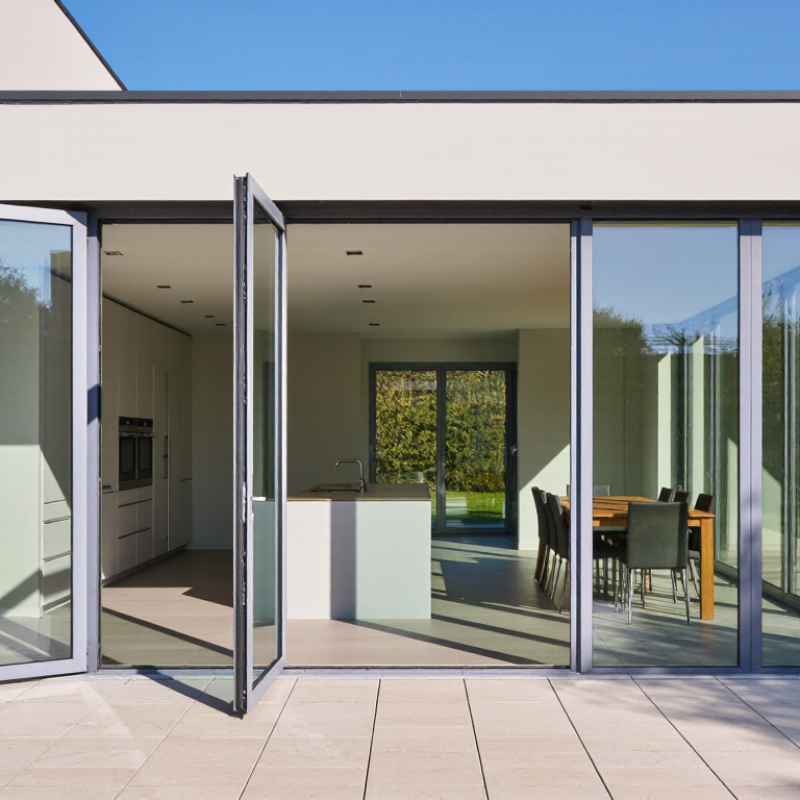
What Defines a Slim Frame Aluminum Sliding Door
A slim-frame aluminum sliding door uses narrow aluminum profiles to hold large glass panels. One or more panels move horizontally along a track, often beside a fixed panel. The reduced visible frame creates a wider, more continuous view outdoors. That is the defining idea. Exact frame widths vary by design, so “slim” is not one universal measurement.
Aluminum is strong for its weight, allowing manufacturers to create relatively narrow frame sections. The door’s performance still depends on more than appearance. Glass thickness, panel size, track design, rollers, seals, and installation all affect how smoothly it operates. A well-fitted panel should glide without scraping, while perimeter seals help limit drafts and water entry. Small details matter.
Thermal performance deserves a closer look. Aluminum conducts heat, so many systems use a thermal break between the inner and outer frame sections. The glass specification and installation also influence comfort; a slim profile alone does not guarantee an energy-efficient opening. Before choosing a door, compare clear opening dimensions, locking hardware, drainage, and maintenance needs. A very narrow frame may reduce sightlines, but it can also come with design limits. The label can be a little vague. Check the actual drawings and specifications.
How Its Frame, Glass, and Sliding System Work
Why Choose Slim Frame Aluminum Sliding Doors?
A slim-frame aluminum sliding door uses narrow profiles to keep the view open while supporting large glass panels. The frame’s strength depends on its design, panel size, and installation—not just its appearance. Aluminum resists warping well, but thermal breaks matter because metal can transfer outdoor temperatures indoors. A slim look is not automatically a better fit.
Glass affects comfort, safety, and daylight. Double glazing can help reduce heat transfer and outside noise, while coatings may limit glare. The right choice depends on climate, orientation, and how the room is used. The sliding system matters too: rollers carry the panel, and the track guides it. Smooth movement needs correct alignment, suitable hardware, and a clear track. Even a well-made door can feel rough if installation is slightly off.
Tips: Slide the panel before buying, if possible. Check for steady movement, secure locks, and accessible track cleaning. Ask how the glass and frame handle your local weather. One detail is easy to overlook: drainage and seals need occasional inspection.
Key Benefits for Light, Space, and Everyday Use
Slim-frame aluminum sliding doors reduce the visual weight around large panes of glass. In a kitchen or living room, that can make the garden feel closer and bring daylight deeper into the space. The difference is clearest on an overcast morning, when a bulky frame can feel especially prominent. More glass helps, but it is not magic.
The U.S. Department of Energy estimates that windows account for 25–30% of home heating and cooling energy use. That figure covers windows broadly, not slim-frame sliding doors specifically. Performance depends on the glazing, frame design, weather seals, and installation. Ask for tested U-factor and air-leakage ratings; the National Fenestration Rating Council explains how these measures help compare products. A narrow frame alone does not guarantee lower energy bills.
For everyday use, sliding panels need no swing clearance, so furniture can sit closer to the opening. Aluminum frames are also relatively slim and durable, though their thermal performance depends on effective thermal breaks. Check the track in person: a low threshold can ease movement, while a poorly drained track may collect grit or water. I’d also consider the room’s style; a very minimal frame can look stark beside traditional trim. Light matters. So does upkeep.
Performance Factors: Insulation, Security, and Durability
Slim-frame aluminum sliding doors offer broad glass areas, but the slim profile alone does not guarantee comfort. A thermal break separates the exterior and interior aluminum, reducing heat transfer through the frame. The U.S. Department of Energy’s Energy Saver guidance estimates that windows can account for 25–30% of residential heating and cooling energy use. That figure is a useful reminder, not a promise of savings from any particular door. Compare whole-unit NFRC-rated U-factors and solar heat gain coefficients, rather than judging glass alone. Cold edges matter.
Security depends on the complete assembly. Check that the locking points engage firmly, the track resists lifting, and the frame is anchored into sound structure. Laminated glass can help hold fragments together if broken, but it does not make a door unbreakable. Ask for test documentation under NAFS, the North American Fenestration Standard, which evaluates air leakage, water penetration, and structural performance. For durability, look for drainage paths, corrosion-resistant finishes, and replaceable rollers. Dust and grit can wear tracks faster than expected. Even a well-rated door may perform poorly if installed out of square or left without adjustment; that practical detail is easy to overlook.
Where Slim Frame Aluminum Sliding Doors Fit Best
Slim-frame aluminum sliding doors fit best where a view or connection between rooms matters. In a living room opening onto a garden, broad glass panels can bring daylight deeper into the space while keeping the frame visually quiet. You can watch rain on the paving from indoors. The slim profile helps, but it cannot make a small opening feel enormous.
They also work well between a kitchen and a covered patio, or along a compact balcony where a swinging door would take up valuable floor space. In offices and studios, sliding panels can separate areas without blocking borrowed light. For a real project, check the opening width, floor level, and room for the track before choosing a layout. A low threshold may feel seamless, yet water management and accessibility still need careful attention.
Not every room suits them. Sliding panels need somewhere to travel, and only part of the opening may be clear at one time. In bedrooms or street-facing rooms, consider privacy and suitable glazing; clear glass can feel exposed after dark. Tracks can also collect dust, especially near outdoor entrances. Small detail, real annoyance. A site measurement and a conversation about daily use often reveal whether the doors will feel practical, not just elegant in a drawing.
Why Choose Slim Frame Aluminum Sliding Doors?
Where Slim Frame Aluminum Sliding Doors Fit Best
Slim frames suit spaces where broad views and abundant daylight are priorities, such as patios, gardens, and commercial frontages. The widths shown are illustrative design examples, not standard sizes; actual openings depend on the building, door configuration, and structural requirements.
