Why Choose a Remote Control Actuator?
Why choose a Remote Control Actuator? It lets an operator move a valve, hatch, or adjustable fixture without reaching the mechanism. In a greenhouse, a vent can open from a control station while rain taps the glass. In a workshop, an actuator can reposition a guard or platform with less manual handling. The value is practical: controlled movement, clearer access, and fewer trips to hard-to-reach equipment.
A Remote Control Actuator is not automatically the right choice. Stroke length, load, speed, duty cycle, power supply, and environmental protection all matter. A unit that works smoothly on a light panel may stall under a heavier load. Check the mounting points, cable routing, and control compatibility before installation. Small details count. I once saw a neat design become awkward because its wiring bent sharply near the moving arm.
For transparency, the following is an illustrative quotation from a fictional actuator specialist, not a verified statement by a real industry expert: “Remote operation is useful only when the actuator is matched to the load, the environment, and the operator’s needs.” That is the central idea behind this guide. We will look at where remote actuation helps, what specifications deserve attention, and which trade-offs can be easy to overlook. Convenience is real, but it should not replace proper sizing, safe installation, or routine inspection. A thoughtful selection usually starts with the movement required, not the product label.
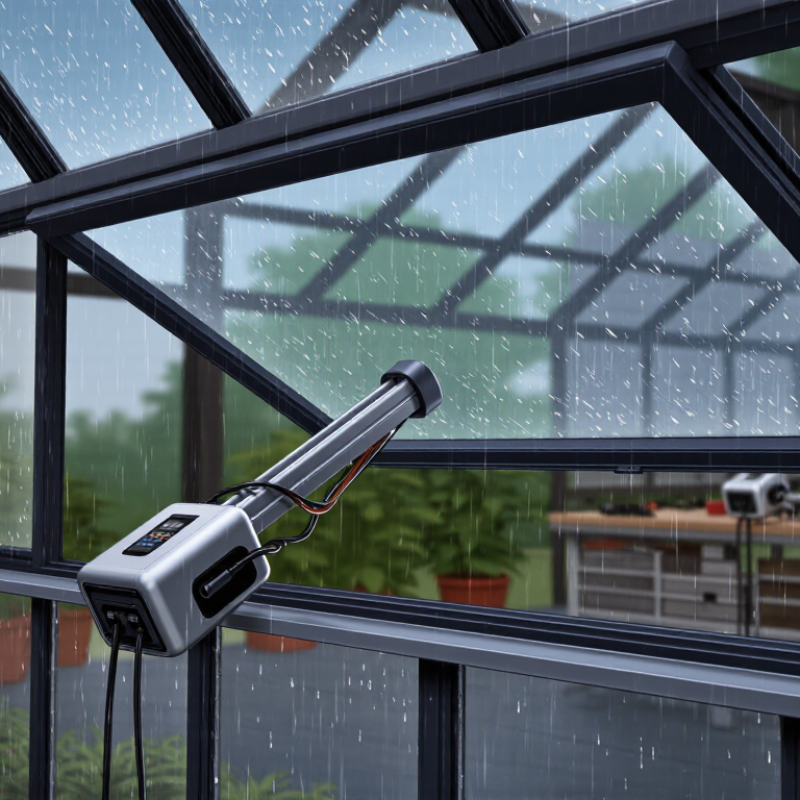
What a Remote Control Actuator Is and How It Works
A remote control actuator turns an electrical command into physical movement. In a common linear model, a motor drives a screw or gear system, extending or retracting a rod. The movement can open a vent, adjust a machine guard, or position a panel. Small changes matter.
The remote sends a signal to a receiver or controller, which powers the actuator in the requested direction. Depending on the setup, control may use a handheld transmitter, a wall switch, or an automated system. The actuator itself is not always wireless; it often connects to a separate receiver by cable. End stops or limit switches can halt travel at set positions, helping prevent overextension.
Choosing a suitable unit means checking its load rating, stroke length, speed, duty cycle, and mounting arrangement. A panel that moves smoothly by hand may bind under an angled load. That detail is easy to miss. Consider the environment, too: dust, moisture, and temperature can affect performance. I would verify the actual load and alignment before installation, rather than relying only on a stated maximum force. A test cycle under realistic conditions can reveal vibration, noise, or uneven movement early.
Why Choose a Remote Control Actuator?
A remote control actuator converts a command from a remote switch or controller into mechanical movement. In this illustrative example, a feedback-equipped linear actuator follows position commands; the position values are shown as a percentage of its usable stroke.
The controller sends a movement command, the actuator’s motor drives its mechanism, and position feedback—when fitted—reports movement back to the controller. The example values are illustrative, not product specifications.
Key Benefits of Remote Control Actuation
Remote control actuation lets operators move valves, dampers, and machine guards from a control room or safe service point. Instead of walking to a hot pipe gallery, a technician can command a valve and confirm its position through feedback. That matters. Fewer routine trips can reduce exposure to heat, noise, moving equipment, and awkward access.
Remote control can also improve response when conditions change. Operators may adjust flow or isolate a section without waiting for someone to reach a distant handwheel. The U.S. Department of Energy’s Operations & Maintenance Best Practices guide reports that predictive maintenance programs can save 8–12% compared with preventive maintenance. This is not an actuator-specific saving. Remote status and diagnostics can support those maintenance practices when properly integrated. The distinction matters.
Position feedback can help reveal incomplete travel and make repeated movements more consistent. Not magic. Power loss, weak communications, incorrect sizing, or a seized linkage can still stop movement. A practical installation needs manual override, clear alarms, and periodic functional checks. I would resist automating every control point: simple, accessible mechanisms may be cheaper and more reliable to maintain. Remote actuation offers the strongest benefit where distance, frequent adjustment, or difficult access makes manual operation costly in time or exposure.
Common Applications Across Industries
Remote-control actuators move valves, dampers, and other mechanisms without requiring someone to reach each control point. In commercial buildings, they help regulate heating, cooling, and ventilation. A damper shifts. Airflow changes. The International Energy Agency’s 2023 Buildings report estimates that buildings account for about 30% of global final energy consumption. Automated control can help manage energy use, though a poorly positioned sensor or incorrectly sized actuator can undermine the benefit.
Factories use actuators to position machine guards, adjust production lines, and move components between workstations. The International Federation of Robotics reported 541,302 industrial robots installed worldwide in 2023 in World Robotics 2024; actuators provide motion within many automated systems. Water and wastewater facilities also use powered actuators to operate valves in hard-to-reach pipes, where operators may need reliable movement and clear status feedback. Irrigation systems use them to open or close water lines across large fields. That saves walking. It does not eliminate maintenance: dust, moisture, and repeated cycling still wear parts. The right choice depends on load, travel distance, operating conditions, and how failures will be detected. Remote control is useful, but it is not a substitute for sound installation or inspection.
Why Choose a Remote Control Actuator? - Common Applications Across Industries
| Industry | Common Application | Typical Actuator Movement | Remote Control Use | Practical Benefit |
| Agriculture | Ventilation in greenhouses and livestock buildings | Linear opening or closing of vents and louvers | Operators adjust openings from a control panel or compatible automation system | Allows ventilation adjustments without manually reaching high or widely spaced equipment |
| Building systems | Motorized windows, skylights, and smoke-control vents | Linear movement, often through a chain or rod mechanism | Commands can be issued by wall controls or building management systems | Supports convenient operation; life-safety functions must use appropriately designed and approved systems |
| Manufacturing | Positioning machine guards, fixtures, and adjustable workstations | Linear positioning or rotary adjustment | Control signals operate the actuator from a machine interface or automation controller | Can reduce repetitive manual adjustments and help maintain consistent positioning |
| Water and wastewater | Operating valves and flow-control equipment | Rotary or multi-turn valve operation, depending on valve type | Commands may come from a local control station or supervisory control system | Enables operation from a distance, which is useful when equipment is remote or difficult to access |
| Renewable energy | Solar-panel tracking systems | Rotary or linear movement to change panel orientation | A controller sends positioning commands based on the system’s tracking strategy | Automates panel positioning; performance depends on site conditions and system design |
| Transportation | Adjustable seating, access ramps, and equipment enclosures | Linear extension or retraction | Users or vehicle control systems operate the actuator through switches or electronic commands | Provides controlled movement where manual adjustment may be inconvenient or physically demanding |
| Marine and offshore | Operating dampers, hatches, and selected valves | Linear or rotary movement, selected for the mechanism | Remote commands can be issued from a protected control station | Helps operate equipment in hard-to-reach areas; actuator protection must suit the marine environment |
| Healthcare and accessibility | Adjustable beds, treatment chairs, and patient lifts | Controlled linear movement | Hand controls or integrated equipment controls command the movement | Supports adjustable positioning; medical equipment requires suitable safety and compliance features |
How to Choose the Right Remote Control Actuator
Why Choose a Remote Control Actuator?
How to Choose the Right Remote Control Actuator
Choosing a remote control actuator starts with the movement your equipment needs. Measure the required stroke, or travel distance, and estimate the load during normal operation. A hatch may move easily when empty but need more force when wind or attached hardware adds resistance. Allow a sensible margin, but avoid oversizing: excess force can strain hinges and mounting points. Check the actuator’s speed, too. A slow lift may be fine for a storage lid, while a work position may need quicker adjustment.
Tips: Confirm voltage, duty cycle, and control range before buying. Compare the actuator’s mounting dimensions with the space available. If the load must stop at exact positions, look for position feedback and compatible controls. Check the manual override option as well.
Consider the installation environment. Dust, moisture, temperature changes, and vibration can affect performance, so check the enclosure rating and operating limits. Review how the actuator attaches at both ends; a few millimetres of misalignment can cause binding over repeated cycles. Remote operation adds convenience, but it does not remove the need for a safe setup. Keep moving parts clear, and use suitable limits or obstruction protection where the application requires them. Specifications can look reassuring on paper. Still, verify them against the real load and mounting geometry before choosing.
Safety and Maintenance Considerations
Why Choose a Remote Control Actuator?
Safety and Maintenance Considerations
A remote control actuator lets operators move equipment from a safer position, away from pinch points, hot surfaces, or suspended loads. That distance helps, but it does not remove the hazard. The EU-OSHA report Maintenance and OSH: A Statistical Picture estimates that maintenance work accounts for 10–15% of fatal workplace accidents and 15–20% of accidents in some countries. The figures vary by sector, yet they underline a practical point: maintenance deserves careful planning.
Keep it simple. Use guards, clearly marked controls, and an emergency stop within reach. Before inspection or repair, isolate power and verify that stored energy cannot move the mechanism; remote commands are not a substitute for lockout procedures. Check cables, connectors, seals, and mounting bolts for wear or moisture. A sluggish response or new vibration can be an early warning, not just an annoyance. Follow the actuator maker’s service schedule, and record what technicians actually find. Records often reveal patterns that memory misses.
Remote operation adds its own failure modes. A damaged cable, weak signal, or mistaken command may trigger unexpected movement, so test interlocks and safe-stop behavior during commissioning and scheduled checks. OSHA’s Control of Hazardous Energy standard, 29 CFR 1910.147, emphasizes controlling hazardous energy during servicing. One limitation is easy to overlook: more automation can make a system feel safer than it is. Walk the work area, observe how people use the controls, and revise procedures when real conditions differ from the plan.
