
10 Wheel Cover Injection Molding Tips for Global Buyers
Wheel Cover Injection Molding looks straightforward until a finished part shows sink marks, uneven gloss, or clips that break during installation. Those defects often begin much earlier, with material choice, mold design, or inconsistent process settings. For global buyers, the challenge is not simply finding a low unit price. It is confirming that samples, production controls, packaging, and delivery expectations match the intended market.
A composite process specialist, Elena Park, sums up the central trade-off: “A reliable wheel cover starts with a stable process, not a clever repair.” This is an editorially created composite quotation, not a statement from a named, independently verified expert. The distinction matters: sourcing decisions deserve evidence, not invented credentials.
This guide presents 10 practical Wheel Cover Injection Molding tips for evaluating suppliers and reducing avoidable surprises. It covers resin selection, shrinkage, mold flow, gate placement, cooling, surface texture, color consistency, dimensional checks, production trials, and supplier communication. Look closely at a sample’s rim, center cap, and mounting clips; small variations can affect fit and appearance. Ask how the supplier records process changes and inspects parts across a production run. A polished sample is useful. It is not proof of repeatability.
Even a careful checklist has limits. Part geometry, vehicle fit, and operating conditions vary. Use the tips to frame specific questions, then confirm critical requirements with drawings, test data, and a production trial.
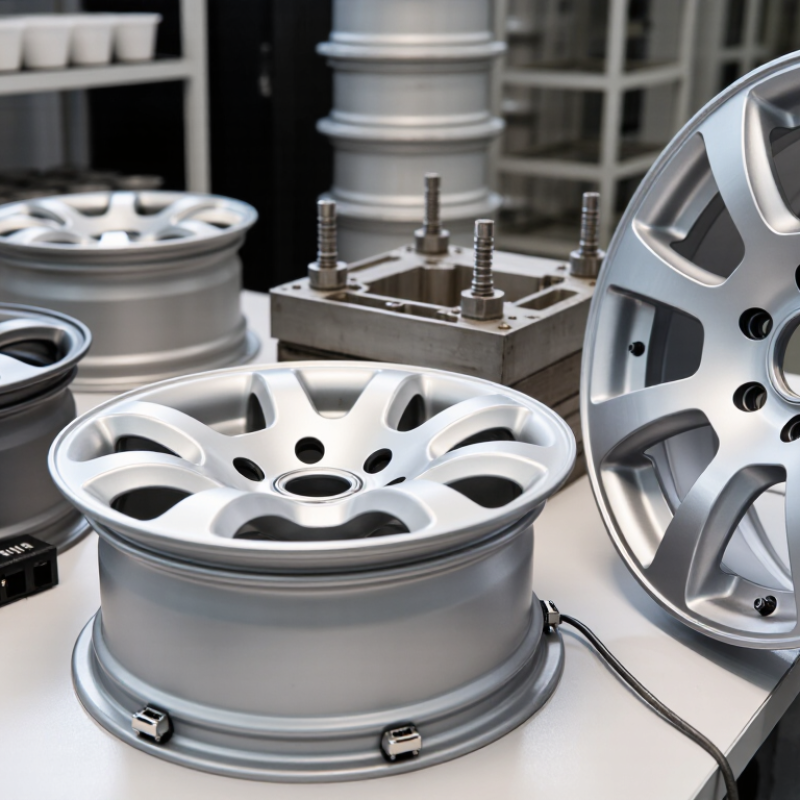
Wheel Cover Requirements and Material Selection
Wheel covers must fit the wheel securely without rubbing the tire, brake components, or valve stem. Define the wheel size, mounting method, clip positions, and acceptable gaps before approving a mold. A cover that looks centered in a drawing may sit unevenly on a real wheel. Check samples on several wheel variations, not just one.
Material choice affects impact resistance, appearance, weight, and molding consistency. Impact-modified polypropylene is often practical for flexible clips and everyday knocks. Confirm its cold-impact performance if the covers will face low temperatures. ABS can support a crisp surface finish, but outdoor exposure may require suitable UV protection. Ask suppliers for grade data and test molded parts, since a resin datasheet cannot predict every finished-part result.
Inspect the clip roots closely. These small areas carry repeated installation stress, while thin sections can become brittle or fill poorly. Rib layout and wall thickness also influence shrinkage and warpage. Keep wall sections reasonably uniform, then review actual molding trials. A small fit issue can become costly at volume. Recycled content may reduce material cost, but its color and flow can vary between batches. That trade-off deserves testing, not optimism. Include heat, vibration, impact, and retention checks in the approval plan, and record the conditions used.
10 Wheel Cover Injection Molding Tips for Global Buyers - Wheel Cover Requirements and Material Selection
| No. | Tip | Requirement or Design Check | Material and Process Guidance | What Buyers Should Verify |
|---|---|---|---|---|
| 1 | Define the application and fitment first | Confirm wheel diameter, cover retention method, clearance to the valve stem, and compatibility with the intended wheel geometry. A wheel cover is generally a non-structural exterior trim component. | Choose the resin only after the fit, appearance, and service requirements are understood. Allow for material shrinkage and dimensional variation during tool design. | Review drawings, vehicle or wheel fitment data, installation method, and samples on the actual target wheel. |
| 2 | Select resin for the service environment | Consider temperature exposure, impact, weathering, chemical contact, color, and required stiffness. Requirements differ by vehicle, market, and intended use. | Polypropylene (PP) is commonly used for its low density and chemical resistance. ABS or PC/ABS may suit applications needing a different balance of rigidity, impact performance, or surface finish. Verify each grade’s data sheet. | Request the exact resin grade, technical data sheet, color details, and test results for the intended application—not just a generic polymer name. |
| 3 | Check impact performance, including in cold conditions | Cover damage can occur during handling, installation, or service. Impact behavior depends on both the resin grade and temperature. | Compare grade-specific impact data at relevant temperatures. Avoid assuming that a higher stiffness or filler content automatically provides better impact resistance. | Agree on a test method, sample conditioning, temperature, and acceptance criteria before production approval. |
| 4 | Specify UV and weathering resistance | Exterior covers can experience sunlight, rain, heat, and repeated temperature changes. Unprotected polymers may fade, chalk, or become brittle over time. | Use a resin formulation with suitable UV stabilization and color package. Weathering performance depends on the formulation, pigment, part thickness, and exposure conditions. | Define the applicable weathering test and exposure duration, and review color and appearance after testing. |
| 5 | Design a practical, uniform wall section | Large changes in wall thickness can contribute to sink marks, warpage, uneven cooling, or longer cycle times. Local features and geometry affect the suitable thickness. | Use a consistent wall-section strategy and smooth transitions where practical. Final dimensions should be established through design review, mold-flow analysis, and sampling rather than a universal thickness rule. | Review the part design for thick areas, ribs, bosses, and cosmetic surfaces; confirm dimensions on molded parts. |
| 6 | Design clips and retention features for assembly | Retention features must hold the cover securely while allowing installation and removal without excessive force or cracking. | Account for resin flexibility, clip geometry, mold direction, and dimensional variation. Material selection and clip design should be evaluated together. | Test installation and removal on representative wheels, including checks for retention, damage, and repeatability. |
| 7 | Plan gates, weld lines, and venting around appearance | Gate position and flow can affect weld-line locations, surface quality, filling, and balance. Air trapped in the cavity can contribute to burn marks or incomplete filling. | Review gate and vent locations during mold design. Use mold-flow analysis as a planning aid, then confirm results through molding trials. | Approve the parting line, gate vestige, cosmetic zones, and acceptable weld-line locations before tooling is finalized. |
| 8 | Control shrinkage and warpage | Large, curved covers can be sensitive to cooling balance, part geometry, material shrinkage, and ejection conditions. | Use grade-specific shrinkage data as a starting point. Optimize cooling layout, molding conditions, and tool compensation using trial results. | Request dimensional inspection data from molded samples and compare it with the agreed drawing and fitment criteria. |
| 9 | Set clear cosmetic and color standards | Specify acceptable limits for color variation, gloss, flow marks, sink, flash, scratches, and gate marks. Appearance criteria should be judged under consistent viewing conditions. | Match color using approved physical samples or an agreed color standard. Surface texture and pigment can affect perceived color and gloss. | Approve a reference sample and define inspection lighting, viewing distance, and defect limits before mass production. |
| 10 | Validate production consistency and traceability | Resin grade, color, molding conditions, and inspection methods should remain controlled between trial and production batches. | Establish approved process parameters and incoming-material checks. Confirm packaging protects the covers from deformation and surface damage during transport. | Request a control plan, batch or lot traceability, dimensional and visual inspection records, and pre-shipment sample approval. |
Note: Material choices, test methods, and acceptance limits should be agreed for the specific wheel cover design and target market. Resin properties and molded-part performance vary by grade, formulation, geometry, and processing conditions.