What Are the Top Types of Core Drill Rigs?
Core drilling looks simple from a distance: a rig, a hollow bit, and a clean circular opening. On site, the choice is more exacting. Concrete thickness, reinforcement, access, power supply, and water control all affect which Core Drill Rig will perform reliably. A compact handheld unit may suit small openings, while a stand-mounted rig offers steadier control for larger or deeper holes. That difference matters beside a finished wall, where a wandering bit can damage the surface.
The scale of construction helps explain why equipment selection deserves care. The U.S. Census Bureau reported $2.14 trillion in U.S. construction spending for 2024, underscoring the extensive work carried out across buildings and infrastructure. Spending totals do not measure core-drilling demand directly, but they show the breadth of projects where precise concrete openings may be needed. Industry guidance also stresses matching equipment to the material and working conditions—not choosing by motor power alone.
A named expert quotation should be checked against its original source. No source text or verifiable quotation was provided here, so I will not invent one or assign unsupported words to a specialist. This overview instead compares the main rig types by portability, stability, drilling capacity, and typical application. It also leaves room for a practical caution: specifications can look decisive on paper, yet access and setup often change the best choice on site.
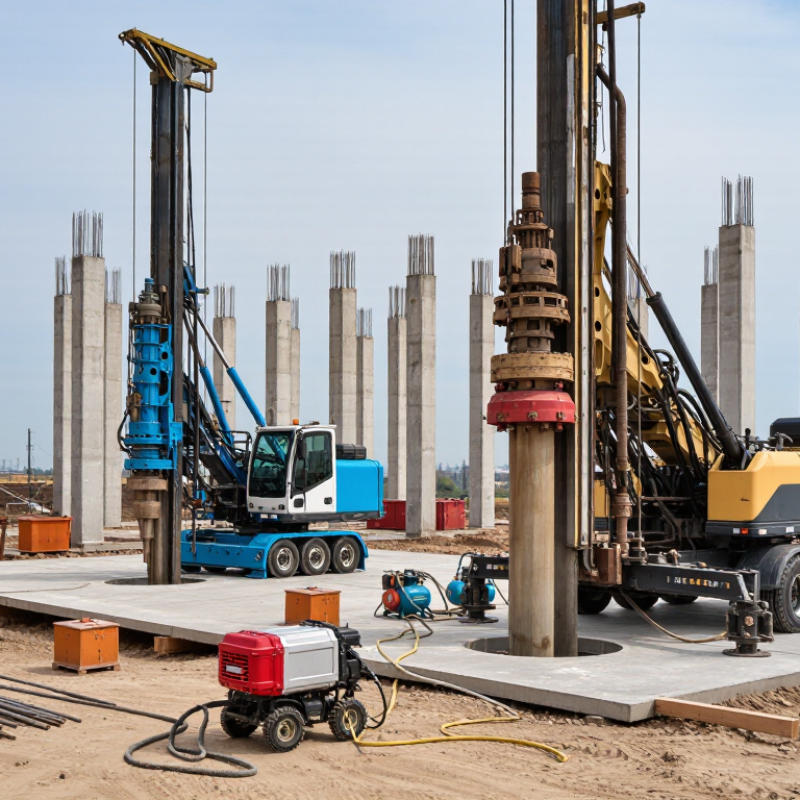
Core Drill Rig Types Classified by Mounting, Power, and Drilling Method
Core drill rigs are commonly classified by mounting, power source, and drilling method. Mounting affects stability and access. Handheld rigs suit smaller holes in masonry or concrete, but control becomes harder as hole diameter and depth increase. Stand-mounted rigs keep the barrel aligned for deeper, more precise drilling. Their bases may be anchored or secured with a vacuum pad. On damp or uneven surfaces, an anchor may provide more reliable support. Wall and ceiling rigs also need secure fixing and careful water management.
Power source determines where a rig can operate. Electric models are common indoors, while hydraulic or pneumatic systems suit sites with compatible power units and demanding workloads. The drilling method matters, too. Wet coring cools the bit and carries away slurry; dry coring uses less water but can generate substantial dust, making extraction important. Diamond segments grind through concrete, though reinforcement can slow progress and increase heat. There is no single best type. Compare hole size, material, access, power supply, and cleanup needs. These categories sometimes overlap, which can make selection less straightforward. Check the rig’s rated capacity and the structure before setup; a stable mount cannot make up for poor planning.
Handheld and Stand-Mounted Rigs for Concrete Core Diameters up to 202 mm
Core drill rigs for concrete generally fall into two useful groups: handheld units and stand-mounted systems.
Handheld rigs suit smaller openings, tight rooms, and short drilling runs, where an operator can control the tool directly. Their portability is valuable around plumbing penetrations and service routes. But bit diameter, concrete hardness, and operator strength all affect control.
Stand-mounted rigs support larger bits and longer, straighter cuts, including concrete cores approaching 202 mm when the rig is rated for that size. A fixed column helps maintain alignment and reduces twisting forces on the operator. That matters.
Secure the base with the approved anchoring or vacuum method, check clearance behind the slab, and manage water and slurry before starting. Rebar can slow the cut or shift the bit, so avoid forcing progress when resistance changes.
A stated maximum is not a routine working size; treating it that way is an easy mistake.
Keep it steady. Choose the rig by actual hole size, access, and mounting conditions—not diameter alone.
Hydraulic and Pneumatic Rigs for High-Torque Drilling in Tough Ground
Hydraulic and pneumatic core drill rigs can both deliver high torque, but they suit different job conditions. Hydraulic systems provide steady force for large-diameter holes through hard rock or reinforced concrete. Their controlled feed helps keep the bit aligned when resistance changes. The rig still needs a sound anchor. Torque cannot correct a loose setup.
Pneumatic rigs use compressed air to drive the drilling mechanism. They can be practical in confined or remote areas where an air supply is already available. On site, listen for pressure drops and watch the hose run; restricted airflow can slow the bit and affect performance. Air demand matters. A small compressor may struggle during sustained drilling, even when the rig itself is capable.
Ground conditions should guide the choice, not torque ratings alone. Fractured rock, wet cuttings, and changing hole depth all affect drilling progress. Match the rig with the right bit, feed pressure, flushing method, and anchoring arrangement. Still, the comparison is not always neat: some jobs favor hydraulic power, while others make pneumatic equipment easier to position and maintain. I would confirm the actual air or hydraulic supply before mobilizing, because a specification sheet cannot reveal every site constraint.
Surface and Underground Exploration Rigs for BQ-to-PQ Core Drilling
Core drill rigs are commonly grouped by where they work: on the surface or underground. Surface exploration rigs are mounted on tracks, trucks, or stable skids. They need room for the mast, drill rods, water lines, and core handling. On a remote hillside, a compact tracked rig can reach a prepared drill pad, while a larger setup may suit deeper holes and heavier tooling.
Underground rigs are built for confined headings and limited access. Their compact frames and adjustable masts help crews drill near tunnel walls or beneath low backs. Space is tight. Rod handling and ventilation matter. Both rig types may be configured for BQ-to-PQ core drilling, but the correct barrel, rods, bits, and feed system depend on the hole plan and ground conditions. Larger PQ tooling can require more torque and clearance than BQ equipment. Switching sizes is not just a bit change.
Before choosing a rig, check planned depth, access dimensions, rock strength, water supply, and core recovery needs. A rig that fits the opening may still be poorly matched to fractured ground. That is easy to overlook. Field conditions can also change, so crews should review drilling parameters and inspect recovered core regularly. No configuration is perfect; careful setup reduces avoidable delays and damaged samples.
Wireline Core Rigs: BQ–PQ Core Diameters Range from 36.5 to 85 mm
Wireline core rigs use a standard size sequence: BQ, NQ, HQ, and PQ. Common wireline dimensional tables list recovered core diameters of 36.5, 47.6, 63.5, and 85 mm, respectively. These are core dimensions, not borehole diameters. The distinction matters when estimating sample volume or choosing equipment. ASTM International’s D2113/D2113M-20 standard outlines practices for rock core drilling and sampling; operators still need to check a project’s size chart and ground conditions.
A 36.5 mm BQ core is narrow and easier to handle, but offers less material for testing. PQ’s 85 mm core provides a larger sample, though drilling and retrieval require suitably matched tooling. Bigger is not automatically better. Fractured rock, tight turns, or poor fluid control can reduce recovery at any size. In the field, crews inspect core runs, note breaks, and record recovery rather than relying on diameter alone. A clean-looking core can still miss weak zones. Size tables describe nominal dimensions; actual results deserve careful measurement.
