
PACKINT - Chocolate Machines

Top 10 LSX Series Flexible LED Display Manufacturers

For buyers planning curved stages, immersive retail displays, or compact exhibition booths, choosing a flexible LED supplier involves more than comparing prices. The LSX Series · Flexible LED Display category calls for careful attention to module design, installation needs, and long-term service. This guide introduces ten manufacturers and offers practical points for comparing their capabilities.

The comparison considers product specifications, including pixel pitch, module weight, bend radius, refresh rate, and maintenance access. It also looks at control-system compatibility, environmental ratings, warranty terms, and documented project experience. Specifications matter. However, published figures should be checked against current product sheets and tested under conditions similar to the intended installation. A tight curve, for example, may affect viewing distance, image consistency, or assembly time.

Manufacturer claims can provide a useful starting point, but they are not a substitute for a sample evaluation or a detailed technical discussion. Trade-offs are real. A lighter module may simplify rigging, while a particular cabinet design may make repairs easier. This guide aims to help readers ask focused questions about engineering, support, and application fit, rather than treat a ranking as a universal verdict. The best choice depends on venue dimensions, content, operating hours, and local service availability. Some details remain difficult to compare from public information alone; buyers should confirm them directly before making a decision.
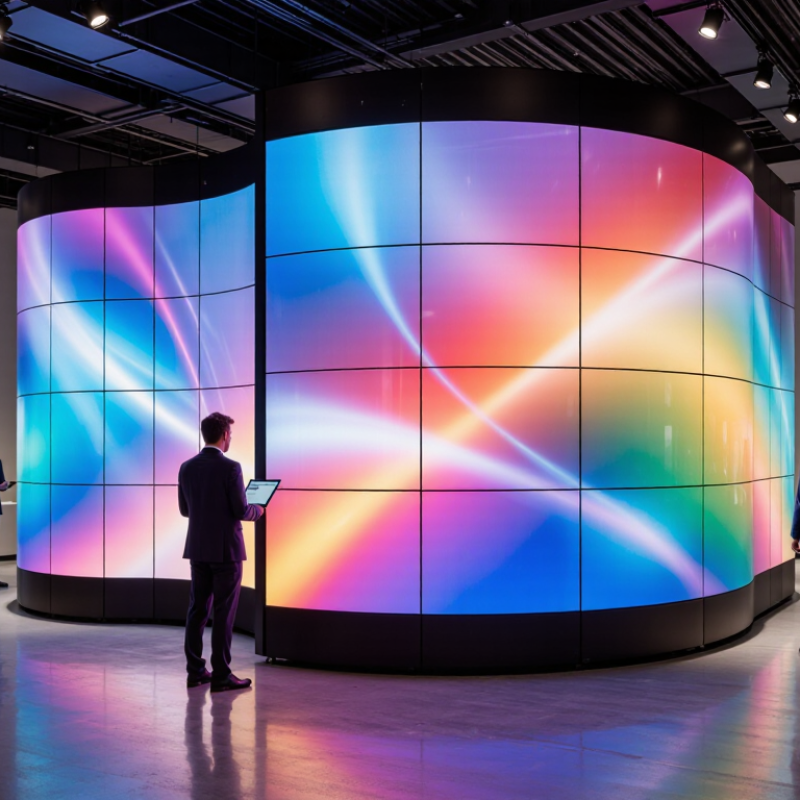
Top 10 LSX Series Flexible LED Display Manufacturers

Understanding LSX Series Flexible LED Displays

An LSX Series flexible LED display uses bendable modules to create curved screens for retail interiors, event spaces, and architectural features. Its flexibility can help a screen follow a column or rounded wall. It does not mean the panels can bend into any shape. Check the specified bend direction and minimum radius before planning an installation.

Pixel pitch affects how close viewers can stand. A fine pitch usually suits close viewing, while larger pitches may work for screens viewed from farther away. Brightness, refresh rate, and control compatibility also matter. Ask for measured specifications and a demonstration with moving content, not only static images. Small details count.

Installation needs careful planning. A curved frame must support the modules evenly, and cables need enough room to avoid strain. Leave access for service, especially where a screen sits above a shop floor or inside a tight display feature. Dust, heat, and repeated handling can affect long-term performance. A practical checklist should include module replacement, spare parts, power requirements, and warranty terms. I have seen elegant curves become awkward maintenance jobs when access was treated as an afterthought. That assumption can be wrong. A sample module and a simple curve mock-up can reveal gaps, visible seams, or unexpected reflections before the full screen is installed.

Typical Pixel Pitch and Approximate Viewing Distance

A general planning guide for flexible LED displays. The estimates use the common rule of thumb of roughly 1 meter of viewing distance per 1 millimeter of pixel pitch; actual results vary with content and viewing conditions.

Key Technologies and Design Features of LSX Displays

LSX series flexible LED displays use bendable modules to create curved walls, columns, and flowing stage backdrops. Their flexibility comes from carefully arranged circuit boards and compliant materials, not from unlimited bending. Each panel has a minimum bend radius; forcing a tighter curve can damage solder joints or shorten service life. Pixel pitch also matters. A closer viewing distance usually calls for finer pixel spacing, while larger installations may prioritize brightness and viewing angle.

Design quality depends on more than the visible curve. Lightweight frames help installers handle panels, and secure module connections reduce gaps across curved surfaces. Power and signal cables need tidy routing so they do not snag during assembly. Heat still needs room to escape. High refresh rates and consistent grayscale can make motion appear smoother, but calibration across modules is essential for even color. A small mismatch can stand out on a broad, dark background. Real installations also reveal compromises: a striking curve may make maintenance access less convenient.

Tips: Confirm the required radius, pixel pitch, and viewing distance before ordering. Test a sample curve, inspect cable paths, and ask how individual modules can be replaced. Keep a little tolerance in the design; site measurements are rarely perfect.

Top 10 LSX Series Flexible LED Display Manufacturers - Key Technologies and Design Features of LSX Displays

Comparison note: This table summarizes ten technology and design criteria for evaluating flexible LED display manufacturers. It does not rank or identify specific companies. Available features and performance specifications vary by product; confirm them in the relevant datasheet and test documentation.

No. Technology or Design Dimension Common Implementation Why It Matters What to Verify
1 Flexible Module Construction Flexible LED modules use a bendable circuit structure and are assembled into a display using a product-specific support or mounting system. Construction affects how a display conforms to curved, cylindrical, or other non-flat surfaces. Ask for the permitted bending direction, installation method, module dimensions, and mechanical limits.
2 Pixel Pitch and Resolution Pixel pitch is the center-to-center distance between adjacent pixels. Smaller pitch generally provides higher pixel density over the same area. Pixel pitch influences image detail and the viewing distance at which individual pixels are less noticeable. Check the actual pixel pitch, pixel configuration, display dimensions, and recommended viewing distance.
3 Minimum Bend Radius Flexible displays have a model-specific minimum bend radius; the allowable curvature depends on module design and installation conditions. Exceeding the approved curvature can stress components or connections and may affect reliability. Obtain the manufacturer’s bend-radius specification and confirm whether it applies horizontally, vertically, or in both directions.
4 LED Packaging LED display products may use surface-mount device (SMD) packages; some product families also offer other packaging approaches, such as chip-on-board (COB). Packaging can affect pixel structure, surface protection, maintenance, and the intended operating environment. Confirm the packaging type for the exact model and review its service and environmental limitations.
5 Refresh Rate and Grayscale Refresh behavior and grayscale performance depend on the display modules, driving electronics, and compatible control system. These characteristics influence motion rendering and tonal transitions; camera recording can also reveal flicker or scan artifacts. Request documented specifications for the complete display system and test it with the intended camera and content.
6 Brightness and Calibration LED display brightness is specified for a particular product and operating condition. Calibration can help maintain consistent color and brightness across modules. Appropriate brightness and uniformity support legibility and a consistent appearance in the installation environment. Check the rated brightness, calibration process, uniformity criteria, and any operating limits stated in the datasheet.
7 Viewing Angle and Color Consistency Viewing-angle performance depends on LED package, optical design, and measurement method. Wide or off-axis viewing may be important for curved installations where viewers are not directly in front of the screen. Review viewing-angle data and evaluate color and brightness from the expected audience positions.
8 Maintenance and Module Replacement Depending on the design, LED displays may support front or rear servicing; module access is determined by the mounting and cabinet system. Service access affects installation planning, repair time, and the space required behind or around the display. Confirm the supported service direction, replacement procedure, required tools, and availability of compatible spare modules.
9 Environmental Protection Ingress protection (IP) ratings apply to tested product configurations and specify protection against defined solid-object and water ingress conditions. Environmental suitability depends on the full installed system, not just the LED module. Verify the documented IP rating for the exact configuration, including seams, connectors, power supplies, and installation orientation.
10 Control System and Compatibility A display system combines LED modules with driving, receiving, and control components that process and distribute image data. Compatibility affects setup, supported content formats, system integration, and troubleshooting. Check input and control requirements, supported software, signal connections, configuration files, and system-level support documentation.

Criteria for Evaluating LSX Display Manufacturers

When evaluating LSX series flexible LED display manufacturers, look beyond headline pixel pitch. Ask for measured brightness, refresh rate, grayscale performance, and viewing-distance guidance for the intended venue. Request test footage showing smooth gradients and fast motion, not only polished promotional images. Can the display curve around a column without visible gaps? Check the stated bend radius against a physical sample, and inspect module edges, locks, and cable strain relief. Small details matter.

Reliability needs evidence. Review thermal test conditions, operating hours, pixel-failure procedures, and the availability of matching spare modules. For outdoor installations, confirm weather-resistance ratings and how they were tested; a label alone tells little. Ask who handles calibration, commissioning, and troubleshooting, and request response-time commitments in writing. Warranty language deserves careful reading. It can be vague. A supplier may offer strong specifications yet provide limited installation guidance, so compare the support plan with your project’s actual layout and maintenance access. I would also ask for a reference installation of similar scale, while remembering that one successful site cannot prove every future result.

Profiles of the Top 10 LSX Series Flexible LED Display Manufacturers

Profiles of ten LSX Series flexible LED display manufacturers are most useful when they compare practical capabilities, not just headline specifications. One supplier may focus on tight pixel pitch for close viewing, while another may prioritize lightweight cabinets for touring. Others may offer curved modules, custom shapes, rental hardware, or installation support. These are useful distinctions, but a profile should explain how each feature affects the finished display. A small bend radius, for example, matters only if the module stays aligned and accessible after installation. Fit matters.

Manufacturers also differ in how clearly they document brightness, refresh rate, module dimensions, and service procedures. Look for measured specifications, installation drawings, and warranty terms rather than broad claims. Ask how replacement modules are matched and how technicians reach the rear of a curved screen. The answer can reveal more than a polished product photo. Some details may remain unclear until a sample is tested; that is worth noting, not glossing over.

Tips: Request a demo module and check its flexibility by hand, without forcing it. Inspect seams, connectors, and surface finish under normal room lighting. Confirm that the proposed curve suits your structure, viewing distance, and maintenance access before comparing prices.

Applications and Selection Considerations for LSX Displays

Flexible LED displays suit spaces that rigid panels cannot follow: curved retail columns, exhibition arches, stage backdrops, and rounded lobby walls. They can create continuous images across bends. But flexibility alone does not guarantee a clean result. A tight curve may expose seams or distort text, especially when viewers stand close.

MarketsandMarkets estimated the global LED display market at USD 17.1 billion in 2023 and projected USD 27.7 billion by 2028. That broad market figure does not isolate flexible displays, but it signals growing investment in LED applications.

For an LSX installation, match pixel pitch to viewing distance, then check brightness against window glare and stage lighting. Ask for the minimum bend radius, module dimensions, refresh rate, and front- or rear-service access.

Test actual content on a sample section. Small text can look crisp in a showroom and muddy on a curved wall.

Check power draw and heat dissipation, too. Curves complicate maintenance. A specification sheet may not reveal that.