Top 10 Bakery Machines Every Baker Must Have?
In the competitive world of baking, having the right equipment is crucial. Bakery Machines play an essential role in enhancing productivity and ensuring consistent quality. According to a report by IBISWorld, the bakery machinery market has seen steady growth, with an expected value of $4.5 billion by 2025. This growth highlights the importance of investing in reliable equipment.
Expert John Baker, a renowned industry consultant, states, “Investing in quality bakery machines can elevate your business beyond the competition.” His words resonate with many bakers who recognize the necessity of these tools. From dough mixers to ovens, each machine has its unique purpose, contributing to the overall efficiency of the baking process.
However, selecting the right bakery machine can be challenging. With numerous brands and models available, it's essential to identify which machines best suit your needs. Some bakers may overlook key considerations, prioritizing cost over quality. Reflecting on these choices may lead to better, more informed decisions in the long run.
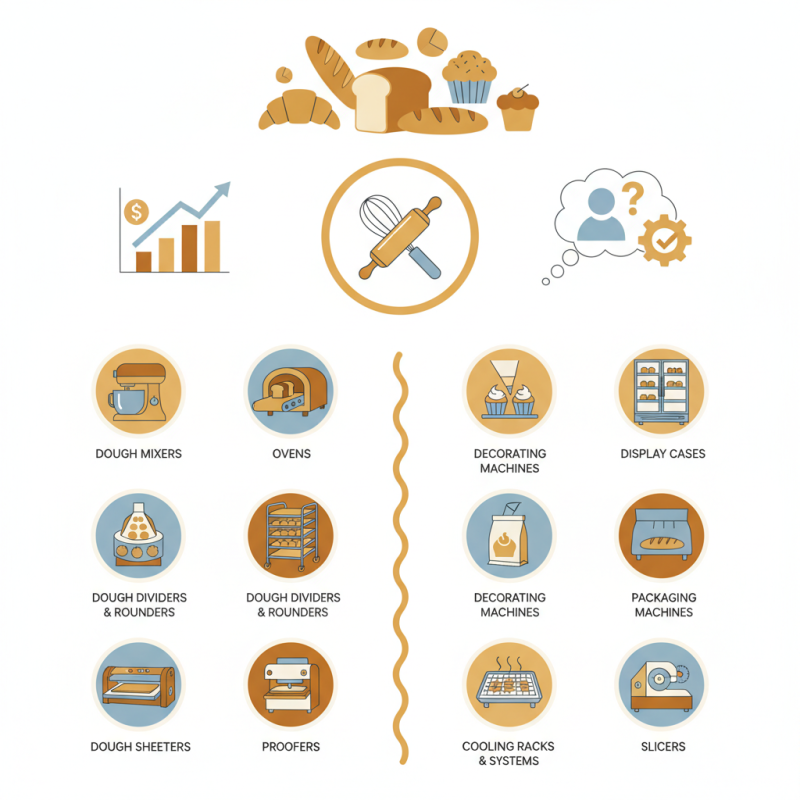
Essential Bakery Machines for Efficient Production and Consistency
In the competitive world of baking, efficiency is key. Essential bakery machines streamline production and ensure consistency. According to industry reports, bakeries that invest in modern equipment can increase productivity by up to 40%. This boosts profitability and customer satisfaction.
Mixers play a critical role in achieving uniform dough. A high-quality mixer can blend ingredients thoroughly, creating a consistent texture. Investing in a commercial mixer is a vital step for any serious baker. Ovens also deserve attention; they must deliver even heating, as temperature discrepancies can ruin baked goods.
Tips: Regular maintenance of machines improves longevity. Keep mixers clean to prevent dough buildup. Also, calibrate ovens regularly for optimal performance. Consistency matters; weighing ingredients leads to more predictable outcomes. Even minor fluctuations can affect the final product, leading to disappointment.
Furthermore, dough sheeters can save hours of labor. They help produce uniformly rolled dough, crucial for pastries and pizzas. However, not all dough sheeters are created equal. Researching the right features is important to avoid investing in a machine that doesn't meet your specific needs. Embrace technology, but remember to reflect on your own processes for continued improvement.
Impact of High-Quality Mixers on Dough Consistency and Taste
In the world of baking, the mixer is a crucial machine that can dramatically affect the quality of baked goods. High-quality mixers help achieve precise dough consistency. According to industry studies, mixers that maintain a steady speed create a more uniform dough structure. This leads to better gluten development, essential for the texture of bread and pastries.
Bakers often overlook the impact of mixer power and design. A robust mixer enables efficient mixing of large batches, which is vital for commercial bakers. Reports indicate that inconsistent mixing can result in dough variations, affecting taste and texture. For instance, under-mixed dough may yield dense bread, while over-mixed dough risks losing its desirable elasticity.
Investing in a high-quality mixer doesn't guarantee instant perfection. It also requires understanding of techniques and recipes. Many bakers must reassess their mixing methods, as old practices may not align with modern baking standards. Balancing quality, technique, and machine capabilities is key to improving baked goods.
Top 10 Bakery Machines Every Baker Must Have
| Machine Type | Purpose | Impact on Dough | Key Features |
| Stand Mixer | Mixing dough and batters | Ensures uniform consistency | Multiple attachments, speed settings |
| Dough Sheeter | Rolling out dough | Produces even thickness | Adjustable thickness settings |
| Proofing Cabinet | Fermentation of dough | Controls temperature & humidity | Digital controls, adjustable shelves |
| Baking Oven | Cooking baked goods | Ensures even baking | Even heat distribution, multi-function modes |
| Bread Slicer | Slicing bread | Maintains shape & texture | Adjustable slice thickness |
| Mixer Grinder | Grinding ingredients | Enhances flavor integration | Multiple speed settings, durable blades |
| Cake Decorator | Applying icing and decorations | Improves presentation | Variety of nozzles, easy to use |
| Food Processor | Chopping and mixing | Speeds up prep time | Versatile blades, large capacity |
| Blast Chiller | Rapidly cools baked goods | Maintains quality and freshness | Energy efficient, fast cooling |
| Fondant Machine | Preparing fondant | Ensures smooth texture | Easy mixing, adjustable texture settings |
Importance of Proofer Ovens for Optimal Fermentation Processes
Bakers know the importance of temperature and humidity in the fermentation process. Proofer ovens provide a controlled environment for dough, which is crucial for yeast activity. This control helps to develop the flavor and texture of baked goods. Without proper conditions, fermentation may stall or become inconsistent.
When using a proofer, achieving the correct temperature is essential. Most dough requires a warm environment, around 75-85°F. Humidity levels matter too; too dry air can lead to crust formation before proper rising occurs. Bakers should monitor these conditions closely. Observing how various doughs respond can improve results over time.
However, using a proofer is not without challenges. Bakers sometimes struggle with calibration, leading to uneven rises. There can also be a tendency to overlook the dough’s readiness. If bakers aren’t attentive, the results may not meet expectations. Experimentation and adjustments make the difference. Understanding a proofer’s nuances is a journey, not a destination.
Top 10 Bakery Machines Every Baker Must Have
This bar chart displays the importance of various bakery machines, focusing on the role of proofer ovens in achieving optimal fermentation processes compared to other essential equipment.
Role of Deck Ovens in Achieving Professional Baking Results
Deck ovens play a crucial role in professional baking. They provide consistent heat distribution, which is critical for achieving the perfect crust. According to industry data, proper temperature control can increase product quality significantly. Many bakers report a 30% improvement in their baked goods when using deck ovens compared to other types.
These ovens have unique features, like steam injection. Steam helps to create a moist environment, allowing bread and pastries to rise properly. Research indicates that loaves baked in steam provide a better crumb structure and crust than those without steam. Additionally, a study showed that 75% of professional bakers agree that deck ovens enhance the flavor profile of their products.
However, not all bakers utilize these ovens correctly. Some overlook the importance of preheating, which can lead to uneven baking. An improperly managed workflow might compromise the quality of the final product. Recognizing these issues is crucial for bakers aiming for excellence in their creations. Mastery of the deck oven’s capabilities can set a professional baker apart from the competition.
Benefits of Industrial Slicers for Time and Labor Efficiency in Bakeries
In modern bakeries, industrial slicers are transformative tools. They enhance time efficiency and labor management, which is critical in high-demand environments. According to a report by IBISWorld, bakeries that implement advanced slicing technology see a 30% increase in productivity.
The speed of industrial slicers allows bakers to produce uniform slices quickly. Consistency is vital for quality control. In a bustling bakery, a single slicer can replace several employees. This alleviates the burden of manual slicing, which can be fatiguing and prone to error. The Baker’s Association notes that skilled labor is increasingly scarce. Machines can bridge this gap effectively.
However, investing in slicers requires careful consideration. They come with varying features and maintenance needs. Understanding proper usage and upkeep can mitigate downtime and malfunction risks. Data from Food Processing Magazine shows that bakeries that regularly train their staff on machinery operation increase efficiency by 25%. These insights reveal the importance of both technology and human factors in a successful bakery operation.
