
PACKINT - Chocolate Machines

China Top Aluminum Perfume Bottle Manufacturers?

Choosing among China’s leading manufacturers of Aluminum Perfume Bottles takes more than comparing unit prices. The right supplier should match your design, fragrance compatibility needs, order volume, and quality requirements. Small details matter. A clean shoulder, even coating, and tightly fitted sprayer can change how a bottle feels in the hand.

Packaging educator Walter Soroka defines packaging as “the science, art, and technology of enclosing or protecting products for distribution, storage, sale, and use.” That principle applies directly to perfume packaging: appearance matters, but so do protection and reliable performance. Aluminum offers a lightweight, opaque format, while finishes such as brushed metal, anodizing, and custom printing create distinct shelf appeal. Ask suppliers how they test interior coatings, check closures, and control finish consistency. Request samples before committing. A polished sample alone, however, cannot prove consistent production.

This guide examines Chinese manufacturers through practical criteria: production capabilities, customization options, quality documentation, communication, and export experience. It also highlights questions buyers should ask about minimum order quantities, lead times, inspection procedures, and sample-to-batch consistency. Rankings can be useful, but they may overlook your specific requirements. Verify claims directly, compare like-for-like quotations, and confirm that the proposed bottle suits your formula and dispensing system. The best choice is not always the largest factory; it is the supplier whose evidence and process fit your project.
China Top Aluminum Perfume Bottle Manufacturers?

What Are Aluminum Perfume Bottles?

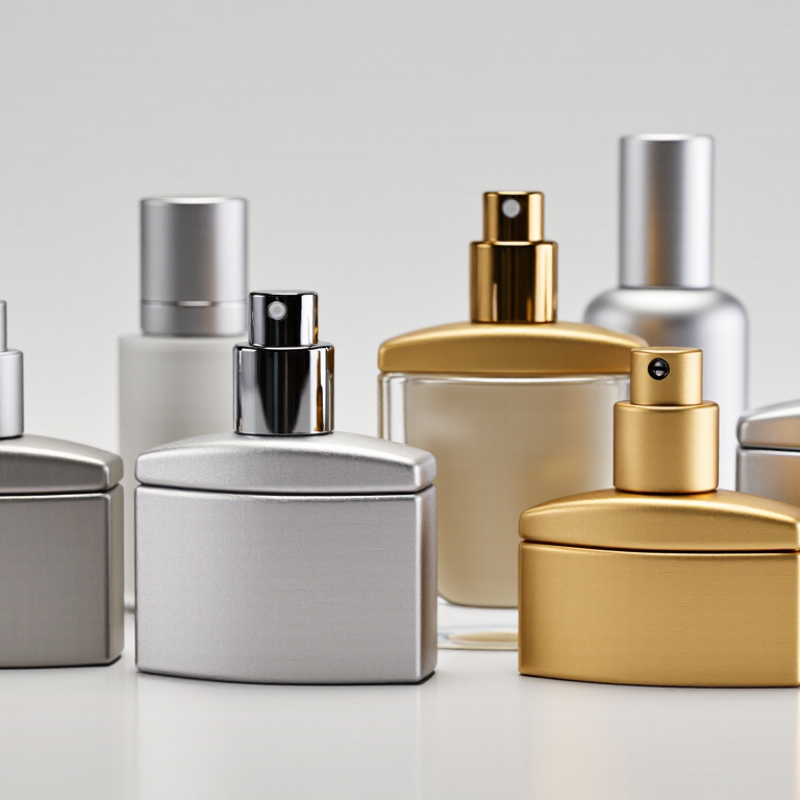
Aluminum perfume bottles are containers made from lightweight metal, usually formed as a small canister around a glass or coated inner reservoir. The outer shell helps shield fragrance from light and reduces the chance of dents during travel. Many designs include a fine-mist pump, a dip tube, and a close-fitting cap. A good spray should feel even, not spit droplets. Small details matter.

The inner surface is important because fragrance contains ingredients that may react with unsuitable materials. Manufacturers commonly use protective linings, then check that the bottle does not leak or affect the scent. This is where careful production shows. Still, aluminum alone does not guarantee quality; the pump, seal, lining, and assembly all play a part. A useful inspection includes testing several sprays and checking the closure after the bottle has been carried in a bag. The metal can also be brushed, colored, or printed, though finishes may scratch with repeated handling. I used to assume a heavier bottle felt more dependable, but weight is not a reliable test. Ask about lining compatibility and leak testing instead.

How Are Aluminum Perfume Bottles Designed and Manufactured?

Designing an aluminum perfume bottle begins with its shape, capacity, and intended feel in the hand. Designers consider shoulder curves, wall thickness, cap fit, and how the bottle stands on a shelf. A narrow neck can look refined, but it must still allow reliable filling and sealing. Small details matter. A paper sketch may look elegant; a working sample can feel too light.

Manufacturing usually starts with aluminum sheet or a formed body, shaped through processes such as impact extrusion or stamping. The surface is trimmed, cleaned, and checked for dents or uneven edges. A protective inner coating helps separate the fragrance from the metal, while exterior finishes may include brushing, coloring, or printing. Each coating needs consistent coverage. Even so, tiny finish variations can happen, so inspection under clear lighting is useful. Fit tests also check that the pump and cap sit securely.

Tips: Ask for a physical sample before approving a design. Check its weight, finish, spray function, and cap alignment. A small adjustment now can prevent a visible mismatch later.

China Top Aluminum Perfume Bottle Manufacturers? - How Are Aluminum Perfume Bottles Designed and Manufactured?
Evaluation or Production Stage Typical Options or Process Practical Specification or Check Why It Matters
Supplier evaluation Review manufacturing capabilities, export experience, quality procedures, and product samples. Ask for documented inspection criteria, material information, and evidence that the supplier can meet the project specification. There is no single objective “top manufacturer” ranking; suitability depends on the bottle design, order requirements, quality expectations, and delivery needs.
Product design Define the bottle shape, capacity, dimensions, finish, closure, and decoration before tooling or production. Confirm a dimensioned drawing and approve a physical sample. Test that the bottle, pump, and cap fit together. Early design review helps identify assembly, usability, and packaging issues before a production run.
Aluminum material Use aluminum sheet or a formed aluminum component, selected to suit the bottle construction and intended finish. Specify material grade, thickness, and applicable material documentation with the supplier; values depend on the design. Material and wall construction affect forming, appearance, strength, and compatibility with the chosen manufacturing process.
Bottle forming Common approaches include impact extrusion for seamless bodies and forming or fabrication methods for other constructions. Check body dimensions, wall consistency, neck geometry, and surface condition against the approved drawing. The forming method determines the body construction and influences which shapes and finishes can be produced.
Surface finishing Options may include polishing, brushing, anodizing, or applying a lacquer or other coating. Specify color, gloss or texture, coverage, and acceptable cosmetic defects using an approved sample. Finishing affects appearance and may also influence surface protection and decoration performance.
Decoration Depending on the surface and design, decoration may use printing, hot stamping, labeling, or engraving. Check artwork position, legibility, color consistency, adhesion, and resistance to handling using agreed acceptance criteria. Decoration methods have different visual effects and production constraints, so they should be confirmed on the actual bottle surface.
Interior and product compatibility Determine whether the inner surface needs a protective coating based on the fragrance formula and package design. Conduct compatibility and storage testing with the intended fragrance and closure system; do not assume every formula behaves the same. Testing can help identify changes such as corrosion, discoloration, leakage, or unwanted effects on the fragrance.
Pump and closure Select a compatible atomizer, collar, cap, and neck finish for the bottle design. Verify fit, spray function, sealing, and leakage performance on assembled samples. A well-made bottle still needs a compatible dispensing and closure system to function reliably.
Quality inspection Use agreed incoming, in-process, and final checks for appearance, dimensions, assembly, and function. Set inspection methods and acceptance limits in advance; sample size and criteria should match the order and quality plan. Clear criteria make inspection results more consistent and reduce disputes about defects.
Packaging and shipment Choose protective individual or bulk packaging based on the bottle finish, closure, and transport route. Review carton protection, packing configuration, labeling, and a shipment sample before dispatch. Appropriate packaging helps protect finished surfaces and components during handling and transportation.

What Defines a Leading Chinese Aluminum Perfume Bottle Manufacturer?

A leading Chinese aluminum perfume bottle manufacturer is defined less by a polished showroom than by repeatable process control. Ask for alloy specifications, neck-finish tolerances, coating records, and batch-level inspection results. Small deviations matter. A sprayer may fit one sample yet leak after repeated filling or temperature changes. Reliable suppliers test closure fit, spray output, corrosion resistance, and compatibility between the fragrance and the bottle’s inner lining. Request test methods and acceptance limits, not just a certificate. ISO 9001 certification supports documented quality systems, but it does not prove every bottle performs well. Real performance data matter more.

Sustainability claims should also be measurable. The International Aluminium Institute reports that recycling aluminium uses about 5% of the energy needed for primary production. Buyers can therefore ask for verified recycled-content figures, scrap-recovery records, and material traceability. Check whether coatings or mixed components complicate recycling. Factory audits should review equipment calibration, leak-test sampling, rejected-unit rates, and corrective-action records. No supplier is perfect. Even capable plants can produce uneven batches; vague answers deserve scrutiny, and additional sample testing may be prudent before approving a production run.

China Top Aluminum Perfume Bottle Manufacturers? What Defines a Leading Manufacturer?

Aluminum recycling energy benchmark

Recycling aluminum uses about 95% less energy than producing primary aluminum, according to the International Aluminium Institute. This industry-wide material benchmark can inform sustainability discussions, but it is not a ranking of perfume-bottle manufacturers or a bottle-specific measurement.

Source: International Aluminium Institute — Recycling. Primary aluminum production is indexed to 100; recycled aluminum is shown as 5, reflecting approximately 95% lower energy use.

Which Products and Services Do Chinese Manufacturers Offer?

Chinese aluminum perfume-bottle manufacturers commonly offer custom shells, atomizers, caps, collars, and coordinated gift packaging. Sizes range from compact travel formats to larger retail bottles. Finishes may include brushed metal, anodized color, screen printing, embossing, or protective coatings. Many suppliers provide OEM and ODM design, mold development, sample making, assembly, and export packing. Ask whether the inner product-contact component is glass or polymer; an aluminum exterior does not automatically mean an all-aluminum bottle.

Market context matters. Grand View Research estimated the global perfume market at USD 50.85 billion in 2023 and forecast 5.5% annual growth through 2030. That suggests continued demand for differentiated packaging, but it does not guarantee a supplier’s quality. The International Aluminium Institute recorded about 70.6 million tonnes of global primary aluminium production in 2023. This indicates a large material supply base, not that every alloy or finish suits perfume packaging. Small details count. A weak pump or poorly matched coating can spoil an otherwise attractive bottle.

Tips: Request a physical sample and test spray consistency, leakage, coating rub-off, and cap fit. Confirm minimum order quantities, mold ownership, lead times, and inspection criteria in writing. Compare samples after contact with the intended fragrance; some finishes may age differently than expected.

How Can Buyers Evaluate and Select a Chinese Manufacturer?

When evaluating a Chinese aluminum perfume bottle manufacturer, ask for measurable specifications, not broad promises. Confirm the aluminum grade, wall thickness, surface finish, and neck dimensions. A cap that feels secure on one sample may fit differently across a full production run. Request samples in the exact finish and size you plan to order.

Check how the manufacturer controls quality. Ask how often dimensions and coating are inspected, what records are available, and how defects are handled. If possible, review the production area or arrange an independent factory audit. Compare the approved sample with pre-production units before confirming bulk production. Also discuss minimum order quantities, lead times, packaging, and who pays for tooling. Clear answers matter. Vague replies are a warning sign, though not proof of poor workmanship.

Tips: Test bottles with your intended fragrance, then check for leaks after storage and transport-style handling. Ask for written inspection criteria and a sample approval record. Keep one approved sample as a reference. Small differences in color or coating can be easy to miss on a screen. I would also ask the supplier to explain one recent quality issue and how it was corrected; the answer may reveal more than a polished sales presentation.