
Finding a dependable supplier among China’s electric scooter manufacturers takes more than comparing catalog photos. This guide introduces 48 manufacturers for buyers assessing product range, production capability, customization, and export support. A 48v Electric Scooter may suit different riding needs, but voltage alone does not establish performance, safety, or value. Check the complete specification, including battery capacity, motor rating, braking system, and stated range.
Ask suppliers for current product documents, clear warranty terms, and details about quality checks. If possible, request a sample or arrange a factory audit through a qualified third party. Look for consistent answers about components, lead times, packaging, and spare parts. Small details matter. A sample’s weld finish, cable routing, and control response can reveal issues that a polished brochure hides. Still, one inspection cannot predict every production run. That deserves attention.
The manufacturers in this overview should be treated as candidates, not automatic recommendations. Compare each company against your destination market, order volume, service expectations, and budget. Verify certifications and test reports directly with the supplier and relevant issuing bodies; documents can vary by model and market. Also confirm who handles technical questions after shipment. A low quotation may leave important costs unclear. Careful checks take time, and they may not remove every risk, but they make supplier decisions more informed and easier to justify.
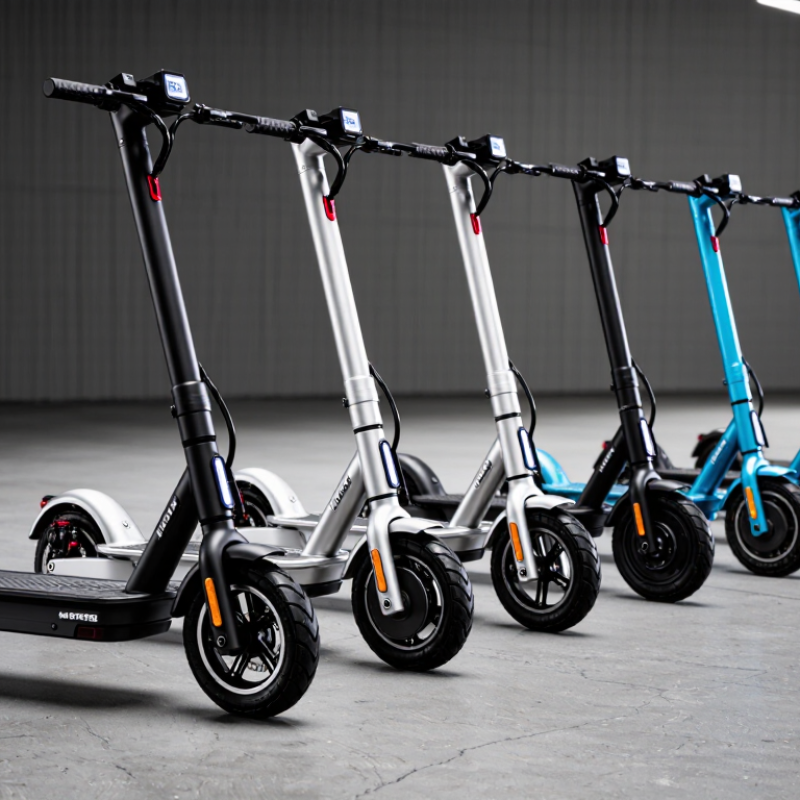
A 48V electric scooter uses a battery system with a nominal voltage of 48 volts. Its actual voltage changes as the battery charges and discharges. For example, many lithium-ion packs read about 54.6 volts when fully charged. Chemistry and pack design can affect these figures, so buyers should check the battery specification.
The battery pack, battery management system, motor controller, and hub motor work together. The management system monitors cell voltage and temperature, while the controller regulates power sent to the motor. A mismatch can cause weak acceleration or excess heat. That matters. Check the charger’s output and connector against the pack, too; a plug that fits does not guarantee compatibility. Brake cut-off sensors and well-routed wiring also support predictable operation, especially on wet or bumpy roads.
When comparing manufacturers in China, ask for component ratings and test records, not just a headline range. Range depends on rider weight, hills, tire pressure, speed, and temperature. A useful test specifies those conditions. Ask how the frame, battery enclosure, and wiring are inspected during production. A neat specification sheet can still omit important details. I would also request clear service instructions and replacement-part information, because small electrical faults can take time to diagnose.
China’s electric scooter sector is organized as a network of specialized suppliers, rather than a single factory system. Assembly plants source frames, motors, controllers, wiring, and battery packs from different companies. Guangdong, Zhejiang, and Jiangsu are important manufacturing regions, though supplier capabilities vary by location and product type. A 48V scooter may use familiar components, but battery quality, controller settings, and assembly checks still differ widely.
Scale is substantial. The China Bicycle Association reported about 42.28 million electric bicycles produced in 2023; this figure covers e-bikes, not scooters alone. The International Energy Agency’s Global EV Outlook 2024 estimated global electric two- and three-wheeler sales at around 13 million in 2023. These figures show the sector’s breadth, but they do not tell buyers how consistently one factory tests its products. That matters. Buyers should ask who makes the battery pack, how capacity is verified, and whether finished vehicles undergo road and electrical checks. Supplier chains can be efficient, yet responsibility may become unclear when a defect crosses company boundaries. A factory visit helps, but it is not proof of long-term reliability. Independent test records and clear component specifications are more useful evidence.
Profiles of leading Chinese 48V electric scooter manufacturers often reveal different strengths. Some factories focus on compact commuter models, with small wheels, folding frames, and simple displays. Others offer heavier scooters with wider decks, stronger suspension, and longer-range battery options. The right fit depends on the rider, terrain, and expected daily distance. A specification sheet helps, but it cannot show every detail of real-world handling.
Experienced buyers look beyond the product photos. They ask how the 48V battery is tested, which motor ratings are continuous rather than peak, and whether replacement parts can be supplied consistently. Factory profiles may also describe in-house assembly, quality checks, and customization services. Verify these details with documents, sample inspections, and clear written answers. A polished catalog is not proof of reliable production. This can be easy to miss.
Tips: Request a sample and inspect its brakes, wiring, welds, and folding latch. Ask for a test report tied to the exact configuration. Check packaging dimensions and spare-part lead times before placing a large order. Small differences matter. A supplier’s response to difficult questions can be informative, though one conversation is not enough to judge long-term reliability.
A 48V scooter is not defined by voltage alone. Buyers should compare motor rating, battery capacity, controller limits, wheel size, braking setup, and payload as one system. Ask suppliers for datasheets and test conditions, not just a headline range. Range varies with rider weight, temperature, terrain, speed, and tire pressure. That number can disappoint.
Production capability matters as much as the sample. Ask whether battery packs are assembled in-house or sourced, how cell batches are tracked, and what inspection records are available. Request a pilot order and confirm lead time, monthly capacity, spare-part support, and packaging dimensions. A polished sample proves little about repeatability. Design-change records are easy to overlook, even for experienced buyers. No checklist catches every production variation.
Tips: Compare identical configurations across quotes. Specify battery energy in Wh, not only Ah. Ask for charger output, warranty exclusions, and a written defect-handling process. Request photos of a finished production unit and its serial label. Keep a short checklist. It saves time, but paperwork cannot replace a factory audit or independent testing where appropriate.
| Comparison Area | Item to Compare | Indicative Specification or Benchmark | What Buyers Should Verify |
|---|---|---|---|
| Vehicle and Model | Intended use | Urban commuting, delivery use, or light recreational riding | Match the frame, suspension, braking system, and rated load to the intended use and local road requirements. |
| Motor rating | Request the continuous rated power and peak power separately; these are not interchangeable figures. | Check the motor label, specification sheet, and applicable market limits. Confirm whether the quoted rating is continuous or peak. | |
| Battery capacity | Compare pack voltage and capacity in amp-hours (Ah); calculate nominal energy as V × Ah in watt-hours (Wh). | Request the battery-cell specification, pack configuration, protection-system details, and test documentation. Treat advertised range as condition-dependent. | |
| Brakes, tires, and load | Compare brake type, tire size, maximum rated load, and the scooter’s own mass. | Ask for product drawings and test results. Confirm that the configuration is suitable for the intended terrain and jurisdiction. | |
| 48V Electrical System | Battery chemistry and nominal voltage | A lithium-ion pack commonly described as “48V” may use 13 series-connected cells; nominal voltage depends on the cell specification. | Confirm the actual cell chemistry, series/parallel configuration, nominal voltage, and pack capacity rather than relying on the “48V” label alone. |
| Charging voltage | For a 13-series lithium-ion pack using cells charged to 4.2V each, the corresponding full-charge voltage is 54.6V. | Verify that the supplied charger’s output matches the battery manufacturer’s specifications. Do not assume every 48V battery uses the same charging voltage. | |
| Controller and charger compatibility | Controller current limit and charger output should be specified for the exact motor and battery configuration. | Request electrical diagrams or component specifications and confirm protection against over-current, over-voltage, and over-temperature where applicable. | |
| Supplier and Production | Manufacturing scope | Establish which processes are performed in-house and which are outsourced, such as frame fabrication, painting, assembly, and battery-pack production. | Request a process-flow chart, facility details, and a clear list of outsourced components or operations. |
| Production capacity and lead time | Compare the supplier’s stated monthly capacity, minimum order quantity, sample lead time, and bulk-production lead time. | Ask for dated capacity figures and a written production schedule for the requested configuration; distinguish available capacity from theoretical capacity. | |
| Quality controls | Review incoming-component checks, in-process inspections, final inspection, and traceability procedures. | Request inspection records, defect-handling procedures, and applicable test reports. Confirm that the documentation covers the exact model and configuration. | |
| Compliance and Ownership Costs | Market-specific compliance | Requirements differ by destination market and may cover product safety, electrical systems, batteries, and transport. | Identify the destination-country requirements and verify certificates or reports with the issuing body. Check model numbers and certificate scope. |
| Warranty and spare parts | Compare warranty duration and coverage separately for the battery, motor, controller, and other components. | Obtain written terms covering exclusions, claim procedures, replacement parts, and expected parts availability. | |
| Customization and packaging | Compare available options such as color, display, lighting, accessories, manuals, and shipping-carton specifications. | Confirm minimum quantities, sample approval steps, packaging dimensions, and whether customization affects lead time or compliance documentation. |
Note: The electrical figures above describe common configurations, not a particular manufacturer or model. Specifications, production capacity, compliance, and lead times should be confirmed directly against the exact product configuration and destination market.
For buyers comparing China’s 48V electric scooter manufacturers, check test evidence, not just a certificate list. The IEA’s Global EV Outlook 2024 estimates that nearly 10 million electric two- and three-wheelers were sold worldwide in 2023, with China representing about 80% of sales. That scale makes consistent battery and production checks especially important. Request battery-pack test reports, charger specifications, and traceable serial numbers. Ask whether electrical safety testing follows relevant requirements such as UN Regulation No. 136, where applicable. Requirements vary by destination and vehicle category.
Review the quality system alongside product documents. ISO 9001 certification can indicate a managed quality process, but it does not prove that every scooter meets your market’s technical rules. For lithium batteries, request applicable transport test evidence under UN Manual of Tests and Criteria 38.3. Then inspect a production sample: brake response, cable routing, weld finish, and water sealing deserve close attention. A small gap around a connector can become an expensive field problem.
Tips: Match certificates to the exact model and battery configuration. Confirm audit dates, warranty terms, spare-part lead times, and who pays for retesting after design changes. Keep one detail in mind: supplier paperwork can look complete, while the tested sample differs slightly from the final shipment. Verify before placing a large order.