
Top 10 Renishaw Contact Tool Setter Models?
Choosing the right Renishaw Contact Tool Setter can influence machining accuracy, cycle time, and operator confidence. This guide examines ten widely recognized models and configurations for CNC machining environments. It considers contact design, mounting method, signal transmission, repeatability, and machine compatibility. These details matter when tools face coolant, vibration, chips, and frequent tool changes.
Real workshops rarely match catalog conditions. A setter installed beside a cutting area may collect oil and swarf within hours. A compact model may suit a small mill, while a stronger design may better support larger tooling. Cable routing also deserves attention. Poor routing can create avoidable damage, maintenance delays, or unreliable signals. Small differences become expensive over long production runs.
The comparison uses manufacturer specifications, application guidance, and practical installation considerations. It also recognizes that published repeatability does not guarantee identical results on every machine. Calibration quality, spindle condition, tool geometry, and environmental temperature can change performance. That point is easy to overlook. It should not be.
Some models may appear similar, yet their communication systems, trigger mechanisms, and mounting options can differ significantly. Users should verify current documentation before purchasing replacement parts or accessories. Product names and regional availability may change. This guide is therefore a starting point, not a substitute for engineering validation. The final choice should reflect actual tooling, workspace limits, probing routines, and production goals. A careful comparison can reduce setup errors and help create more consistent machining results.
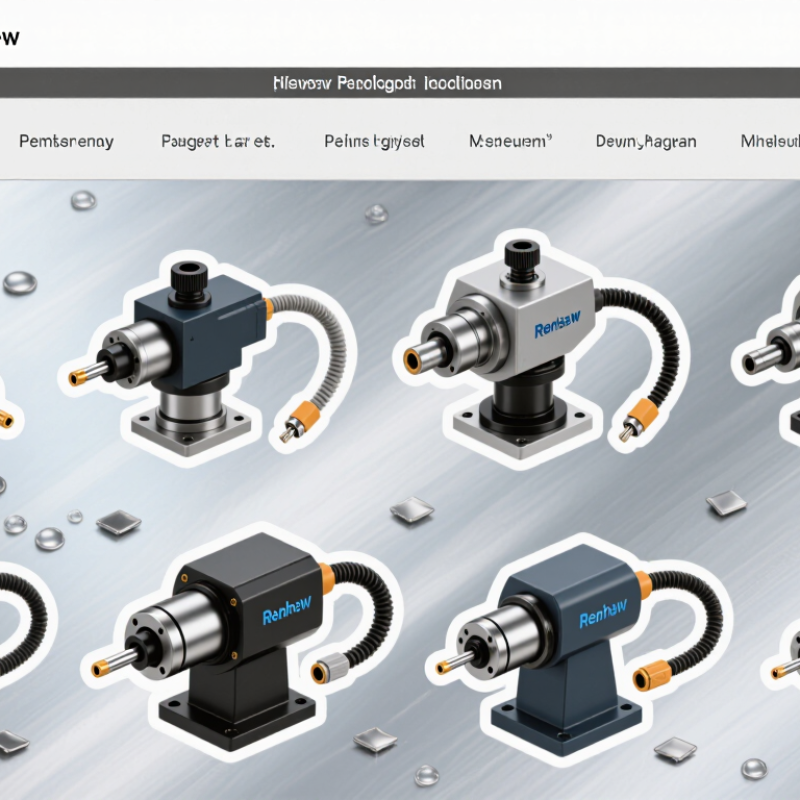
What Are Renishaw Contact Tool Setters and How Do They Work?
Contact tool setters are precision devices mounted inside or beside a CNC machine. They measure tool length, diameter, and possible breakage before machining begins. Their contact mechanism usually contains a stylus, switch, and protected sensing assembly.
During a measurement cycle, the cutter touches the stylus at a controlled feed rate. The setter records the trigger position and sends a signal to the machine controller. Software compares that position with the tool offset table. A tool that measures too short, too long, or unexpectedly wide can trigger an alarm.
On a production floor, this process reduces manual entry and setup variation. A carbide cutter may touch the stylus several times, while coolant drips from its edges. The machine should pause briefly before measuring, allowing liquid to drain. Even small chips can affect contact accuracy. Regular calibration remains essential, especially after a collision or stylus replacement.
Different models may support fixed, rotating, compact, or high-speed applications. Selection depends on spindle speed, available space, protection level, and required repeatability. In practical testing, repeatability can look excellent on a clean machine but weaken under heavy coolant and debris. That detail is easy to overlook. Contact setters improve process control, but they do not correct poor calibration, worn holders, or incorrect probing settings. I would also verify cable routing and signal timing before trusting unmanned cycles. Mistakes still happen.
Top 10 Renishaw Contact Tool Setter Models? - What Are Renishaw Contact Tool Setters and How Do They Work?
| Rank | Model | Probe Type | Typical Machine Use | Transmission / Connection | Stylus Arrangement | Key Protection Feature | How It Works |
|---|---|---|---|---|---|---|---|
| 1 | TS27R | Fixed contact tool setter | Vertical machining centres | Hard-wired interface connection | Horizontal stylus with replaceable tip | Sealed probe construction and stylus protection | The cutting tool touches the stylus during a controlled machine cycle. The contact signal is sent to the CNC control, which calculates tool length, diameter, or tool-breakage status. |
| 2 | TS34 | Compact fixed contact tool setter | Small and medium machining centres | Hard-wired connection through an interface | Compact stylus assembly for tool measurement | Protected contact mechanism for workshop environments | The tool is moved toward the contact surface at a controlled speed. Mechanical deflection creates a repeatable trigger signal for automatic tool measurement and inspection routines. |
| 3 | TS20R | Compact contact tool setter | Space-limited machining centres | Hard-wired signal transmission | Short, compact stylus configuration | Sealed body designed for coolant and chip exposure | When the tool contacts the stylus, the internal switch changes state. The machine control uses this trigger to register the tool position and compensate for tool wear or dimensional variation. |
| 4 | TS27R Metric Configuration | Fixed contact tool setter | Metric-specification machining centres | Wired interface connection | Replaceable contact stylus | Robust sealed housing with protected mechanism | The machine positions each tool against the stylus and records the trigger position. The measured value is automatically transferred into the appropriate tool offset register. |
| 5 | TS27R Imperial Configuration | Fixed contact tool setter | Imperial-specification machining centres | Wired interface connection | Replaceable stylus and contact tip | Sealing against coolant and machining debris | The tool setter provides a repeatable electrical or mechanical trigger when the tool touches the stylus. The CNC system then applies the measured tool-length or diameter correction. |
| 6 | TS34 Compact Configuration | Low-profile fixed contact setter | Compact vertical machining centres | Wired interface connection | Low-profile stylus arrangement | Compact sealed design for restricted machine spaces | The setter detects physical contact between the tool and stylus. This allows automatic measurement without removing the tool from the spindle or relying on manual gauges. |
| 7 | TS20R Compact Configuration | Fixed mechanical contact setter | Small-format CNC machining centres | Hard-wired interface connection | Short stylus for limited installation areas | Protected switch and sealed construction | The machine approaches the stylus using a predefined probing feed. A trigger is generated at contact, allowing the control to determine tool geometry and detect excessive tool-length errors. |
| 8 | TS27R Heavy-Duty Setup | Fixed contact tool setter | General-purpose and production machining | Wired interface connection | Durable replaceable stylus tip | Designed for regular coolant and chip exposure | The contact mechanism is used for automatic tool presetting, tool-length measurement, tool-diameter checking, and tool-breakage detection during or between machining cycles. |
| 9 | TS34 Production Setup | Fixed contact tool setter | High-repeatability batch production | Hard-wired interface connection | Replaceable stylus contact element | Sealed body for repeated production use | Each tool is measured against the same reference surface. Repeated triggering enables the CNC control to identify tool variation and maintain consistent machining dimensions. |
| 10 | TS20R Restricted-Space Setup | Compact fixed contact setter | Machines with limited table or guard clearance | Wired signal transmission through an interface | Compact stylus and mounting arrangement | Sealed construction with protected contact components | The tool is driven into the stylus under controlled conditions. Once contact is detected, the machine records the position and updates the relevant offset or tool-monitoring data. |