
PACKINT - Chocolate Machines

China Top 10 Restringing Rackets Machine Suppliers

China has become a significant sourcing destination for badminton and tennis equipment manufacturers. Its suppliers offer production experience, flexible customization, and competitive equipment solutions. This guide introduces the China Top 10 Restringing Rackets Machine Suppliers for buyers seeking dependable production partners.

A professional Restringing Rackets Machine should provide stable tension, accurate calibration, and smooth operation. Small differences matter. A poorly adjusted tension head can affect string performance and customer satisfaction. Therefore, this overview considers machine structure, tension range, control systems, durability, factory capability, and after-sales support.

The evaluation also looks beyond attractive product photographs. Supplier experience, export records, quality procedures, spare-parts availability, and technical communication deserve equal attention. Buyers may need machines for retail workshops, sports academies, professional clubs, or high-volume service centers. Each application requires a different balance between speed, precision, automation, and budget.

No ranking can fit every buyer perfectly. That is worth remembering. Some suppliers may excel in customization but provide limited local support. Others may offer advanced controls while requiring stronger operator training. Product information can also change over time, so direct verification remains essential. Request current specifications, factory videos, test results, warranty terms, and sample demonstrations before making a decision.

This article aims to provide a practical starting point, not a final purchasing verdict. With careful comparison, buyers can identify suppliers that match their technical needs, operating environment, and long-term service expectations.
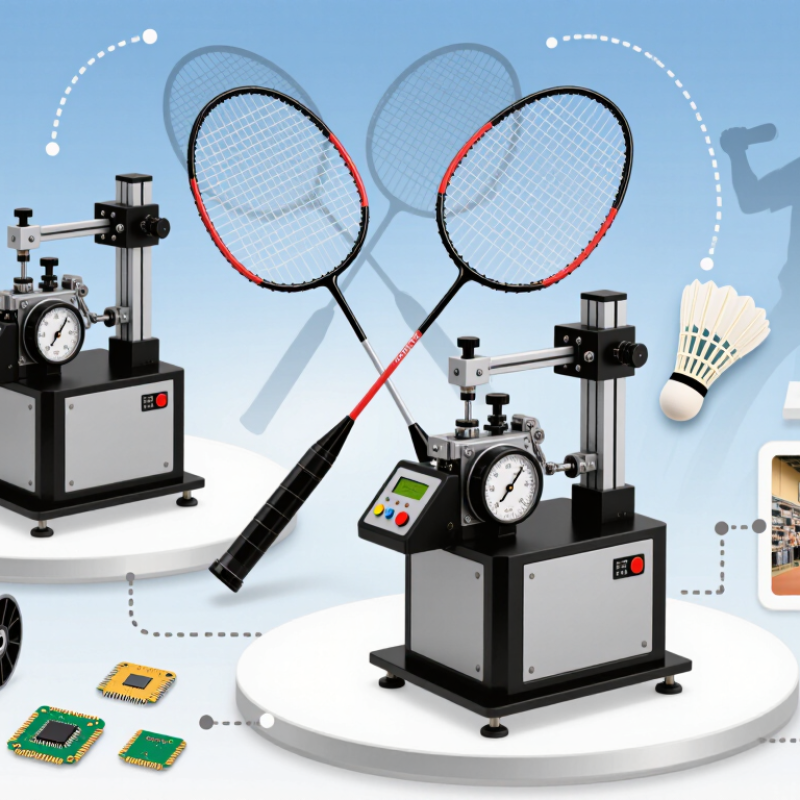
China Top 10 Restringing Rackets Machine Suppliers

What Are Racket Restringing Machines?

Racket restringing machines replace worn strings with controlled tension. They hold the frame, pull each string, and secure it with clamps. Most models include a mounting system, tension head, turntable, and calibration controls. Manual machines use a weight or crank, while electronic machines apply tension through a motor. The difference is practical. Electronic tensioning often improves speed and repeatability, especially in busy repair workshops.

Demand is linked to participation. The ITF Global Tennis Report 2024 estimates 106 million tennis players worldwide. In the United States, the SFIA 2024 Topline Participation Report recorded 23.8 million tennis players in 2023. These figures suggest a large service base, but they do not measure restringing frequency. That gap matters. Players with heavy topspin, frequent training, or high string tension may need more regular replacement.

A reliable machine should provide stable tension, firm clamps, and a frame-safe mounting system. Look for clear kilogram and pound settings. Check calibration regularly with a certified tension tester. Small errors become obvious on court. A one-kilogram difference can change feel and control, although the effect varies by string type and player technique. Reports rarely compare machine accuracy directly, so buyers should test samples before making broad claims. The best choice may not be the most expensive one.

How China’s Racket Stringing Machine Industry Is Organized

China’s racket stringing machine industry is organized around specialized manufacturing clusters, component suppliers, assemblers, and export channels. Some factories focus on electronic tension control, while others produce manual or mechanical models. This division helps suppliers serve clubs, schools, repair shops, and professional training centers.

A reliable supplier usually manages several stages in one facility. These include frame machining, motor assembly, calibration, software testing, and final inspection. Key checks include tension accuracy, clamp stability, turntable movement, and noise levels. A practical audit should also review test records, spare-part availability, packaging strength, and operator instructions. Small details matter. A loose clamp can damage a racket frame.

Many manufacturers sell through distributors, engineering teams, and direct export departments. Some accept customized colors, voltage settings, or control panels for overseas markets. However, customization may increase lead time and complicate maintenance. Buyers should request sample testing before placing large orders. Factory photos are useful, but they cannot replace performance data.

The “top 10” category should not rely only on online visibility or production claims. Supplier rankings can change as technology, service quality, and export experience develop. Public information is sometimes incomplete. That is an uncomfortable limitation. A careful comparison should combine factory capability, verified product testing, response speed, warranty terms, and long-term technical support. Clear records build trust.

Criteria for Ranking China’s Top Ten Suppliers

China Top 10 Restringing Rackets Machine Suppliers

Ranking China’s leading restringing racket machine suppliers requires more than comparing factory prices. The ITF Global Tennis Report 2024 estimated 106 million tennis players worldwide. Meanwhile, SFIA’s 2024 Topline Participation Report recorded 23.8 million U.S. tennis participants in 2023. This participation supports sustained demand for accurate, durable stringing equipment.

The ranking should begin with tension accuracy and calibration stability.

Independent testing should examine results across low, medium, and high tensions. A useful supplier must provide calibration records, operating instructions, and replacement parts. Frame mounting should remain firm during repeated pulls. Electronic models also need overload protection and consistent motor control. These details matter on a busy workshop floor.

Not just factory size.

Supplier experience deserves equal weight. Auditable export records, documented quality systems, trained technicians, and responsive after-sales support indicate stronger reliability. Reviews should be checked against warranty claims, delivery performance, and sample inspections. Price alone can distort the ranking. A cheaper machine may create higher labor costs when calibration drifts or parts arrive slowly. Still, this method has limits. Public supplier data is often incomplete, and testing one sample cannot represent every production batch. Rankings should therefore combine laboratory evidence, user feedback, factory audits, and transparent scoring. Safety compliance and ethical manufacturing practices should remain mandatory filters, not optional advantages.

Profiles of China’s Ten Leading Racket Stringing Machine Suppliers

China’s ten leading racket stringing machine suppliers differ in engineering focus, factory scale, and service depth. These profiles examine practical evidence rather than attractive catalog language. Supplier One emphasizes computerized tension control, with clear calibration records and adjustable pulling speeds. Supplier Two focuses on compact manual machines for clubs and teaching centers. Supplier Three combines electronic tensioning with six-point mounting, helping reduce frame movement during installation.

Supplier Four serves professional workshops with heavier turntables and foot-pedal operation. Supplier Five develops portable units, useful for tournament technicians who travel frequently. Supplier Six is stronger in replacement clamps, grippers, and maintenance support. Supplier Seven highlights simplified digital interfaces, although operators should verify software stability before purchasing large quantities. Supplier Eight offers reinforced frames and wider mounting supports for different racket shapes. Supplier Nine competes through flexible customization, including voltage options and packaging adjustments. Supplier Ten appears focused on export coordination, documentation, and spare-part availability.

Factory visits, sample testing, and technician interviews reveal more than product photographs. A stable machine should hold tension consistently across repeated pulls, not only during a demonstration. Ask for calibration methods, warranty boundaries, response times, and training materials. Small details matter: clamp teeth should release cleanly, turntables should rotate without rough resistance, and emergency stops should be easy to reach. Some suppliers provide excellent hardware but limited after-sales guidance. That weakness deserves attention. Even experienced buyers can overlook noise levels, packing damage, or local service coverage. These profiles are useful starting points, not final verdicts.

China Top 10 Restringing Rackets Machine Suppliers - Profiles of China’s Ten Leading Racket Stringing Machine Suppliers

Rank Supplier Profile Manufacturing Region Main Machine Category Supported Rackets Typical Tension Range Tension System Clamping System Control Features Typical Buyer Segment
1 Supplier Profile 01 Guangdong Electronic constant-pull machine Tennis, badminton, squash 10–90 lb Motorized constant pull Fixed and rotating supports Digital tension setting, pre-stretch, knot function Professional stringing shops and clubs
2 Supplier Profile 02 Zhejiang Electronic tabletop stringing machine Tennis and badminton 8–88 lb Constant-pull electric drive Six-point mounting Memory settings, speed adjustment, digital display Retailers, academies and home users
3 Supplier Profile 03 Jiangsu Commercial floor-standing machine Tennis, badminton, squash 11–90 lb Electronic constant pull Six-point or four-point mounting Pre-stretch, speed control and tension calibration High-volume repair centers
4 Supplier Profile 04 Fujian Manual crank stringing machine Tennis and badminton 11–90 lb Lock-out crank mechanism Six-point mounting Mechanical tension scale and hand adjustment Budget-conscious shops and training centers
5 Supplier Profile 05 Shandong Portable electronic machine Tennis and badminton 10–88 lb Electric constant pull Compact six-point support Digital display, selectable pulling speed Mobile technicians and coaches
6 Supplier Profile 06 Hebei Drop-weight stringing machine Tennis and badminton 11–90 lb Gravity-based constant pull Four-point or six-point support Simple mechanical adjustment and low maintenance Schools, clubs and entry-level users
7 Supplier Profile 07 Anhui Badminton-focused electronic machine Badminton and squash 6–66 lb Digital constant pull Badminton-compatible six-point support Low-tension presets, pre-stretch and knot mode Badminton clubs and specialist retailers
8 Supplier Profile 08 Hunan Entry-level tabletop machine Tennis and badminton 11–88 lb Manual crank or basic electronic drive Four-point mounting Basic tension display and adjustable supports Home users and small retailers
9 Supplier Profile 09 Guangxi Heavy-duty electronic machine Tennis, badminton and squash 10–90 lb High-torque constant pull Reinforced six-point support Digital calibration, pre-stretch and speed control Tournament-service providers and large clubs
10 Supplier Profile 10 Liaoning Hybrid manual-electronic machine Tennis and badminton 10–88 lb Electronic or crank-assisted pull Adjustable six-point mounting Switchable operating modes and digital readout Distributors and multi-purpose sports stores

Note: Supplier names are intentionally anonymized. Tension ranges and machine configurations represent common specifications used in commercially available racket stringing equipment and should be confirmed with the supplier before purchase.

How to Choose and Source from the Right Chinese Supplier

China Top 10 Restringing Rackets Machine Suppliers

Choosing a Chinese restringing racket machine supplier requires more than comparing factory prices. The SFIA 2024 Topline Participation Report recorded 23.8 million tennis players in the United States during 2023. Demand creates pressure for consistent tension and dependable after-sales support. Ask suppliers for calibration records, motor-load test results, and sample strings tested at different tensions. A machine that shows 60 pounds on its display may not deliver 60 pounds at the gripper.

Request a complete technical file before ordering. It should include tension range, pulling accuracy, clamp material, electrical specifications, warranty terms, and spare-part availability. ISO 9001 certification can support process control, but it does not automatically prove machine accuracy. Verify the certificate independently. Request a video of final inspection, not only polished factory footage. Small details matter: uneven clamps, loose screws, and unstable bases become expensive problems in a busy shop.

Compare at least three suppliers using the same specification sheet. Ask for one pre-production sample and test it with a calibrated tension meter. International trade data shows China remains a major manufacturing hub for sporting goods, yet low pricing can hide weaker components or limited technical support. I would also clarify packaging, customs documents, voltage, plug type, and replacement-part delivery time. This step is easy to overlook. It should not be. A supplier may communicate well before payment, then respond slowly when a control board fails. That possibility deserves written protection.

China Top 10 Restringing Rackets Machine Suppliers: How to Choose and Source from the Right Chinese Supplier

The chart presents a practical buyer-side weighting model for comparing Chinese restringing machine suppliers. It focuses on measurable purchasing factors rather than company or brand rankings.