Choosing the right chocolate coin maker is more than comparing prices and production speeds. It affects tempering stability, coin thickness, surface shine, sanitation, and daily operating costs. A machine may look impressive in a brochure, yet perform poorly with your preferred chocolate recipe.
Chocolate industry consultant Angus Kennedy often emphasizes a practical truth: “Quality is not a feature; it is the whole product.” That principle fits coin production closely. A reliable chocolate coin maker should maintain accurate temperature control, steady depositing, clean mould release, and consistent weight. Small differences matter. A one-gram variation can become expensive across thousands of coins.
This guide presents seven practical tips for evaluating equipment. It considers capacity, mould flexibility, cooling performance, cleaning access, energy use, operator safety, and after-sales support. Those details are easy to overlook. They should not be.
Ask for a live demonstration. Request samples using your own chocolate. Check the coin edges, gloss, thickness, and break resistance after storage. Real testing reveals more than polished sales language. Sometimes, the cheapest machine becomes costly because it creates rejects, slows changeovers, or needs frequent adjustment.
No single chocolate coin maker suits every business. A small artisan workshop may value flexible mould changes. A large confectionery line may prioritize automation and continuous cooling. Your decision should reflect actual production conditions, not imagined growth alone. That part is easy to get wrong. Careful comparison, documented trials, and honest feedback from operators can reduce the risk. A good machine should support consistency without making the production floor unnecessarily complicated.
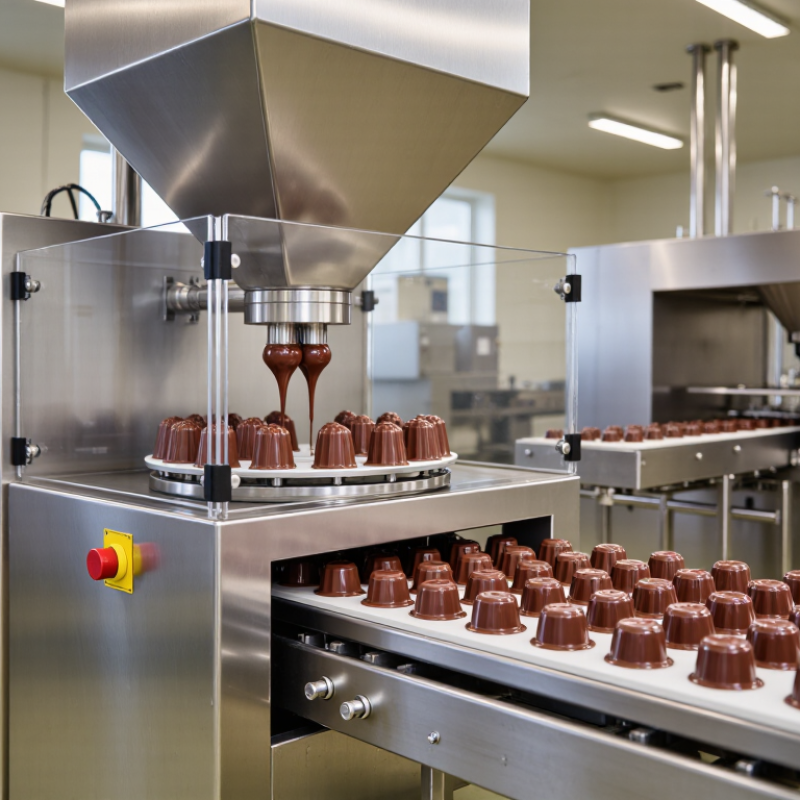
Before choosing a chocolate coin maker, define the product and production target precisely. Will the coins weigh 2, 5, or 10 grams? Will they use dark, milk, or white chocolate? Your answers affect mold size, tempering capacity, cooling time, and packaging speed. Grand View Research valued the global chocolate market at approximately USD 127.88 billion in 2022. That scale creates opportunity, but small producers should avoid buying oversized equipment too early.
Tip: Write a one-page production brief. Include daily output, coin diameter, target weight, operating hours, labor limits, and expected growth. A machine producing 30 kilograms per hour may sound efficient. It may become wasteful if your current demand is only 8 kilograms. Include seasonal peaks, too. Holiday orders can change the calculation quickly.
Use measurable goals rather than vague ambitions. For example, target 12,000 coins per shift, less than 2% weight variation, and a changeover below 30 minutes. The PMMI report on packaging and processing trends highlights automation, flexibility, and labor efficiency as continuing priorities. These factors matter when comparing molds, depositors, cooling tunnels, and wrapping systems. Ask suppliers for tested output using your actual chocolate recipe. Viscosity changes everything. A perfect forecast is unlikely. I have seen attractive capacity estimates fail when cleaning, tempering adjustments, and rejected pieces were ignored. Leave room for learning, maintenance, and honest revision.
Choosing the best chocolate coin maker starts with capacity, not the largest advertised output. The International Cocoa Organization’s 2023/24 report estimated global cocoa grindings at 4.855 million tonnes. That figure reflects strong industrial demand, but your own order pattern matters more. Compare hourly output with actual daily demand, including cleaning, mould changes, and cooling pauses. A machine rated at 200 kilograms per hour may produce far less during frequent product changeovers. Ask for tested output using your recipe, coin diameter, and target weight.
Speed should be measured beside consistency. Check depositing accuracy, cooling time, conveyor length, and recovery after stoppages. PMMI industry research continues to identify labor shortages and automation as important packaging concerns, making stable operation valuable. Request data for uptime, reject rates, and average changeover minutes. An 85% OEE benchmark is often described as world-class, but it may be unrealistic for a smaller chocolate room. Be honest about that. A reliable 70% can outperform an unstable machine promising twice the speed.
Production efficiency also includes energy, space, and operator effort. Review kilowatt usage per kilogram, tempering stability, and access for sanitation. The U.S. Department of Energy notes that motors and process equipment are major industrial electricity users, so inefficient drives can quietly raise costs. Watch a live demonstration if possible. Listen for uneven pumps, inspect chocolate flow, and time a complete cleaning cycle. Those details reveal more than a polished brochure.
7 Tips for Choosing the Best Chocolate Coin Maker
Compare Chocolate Tempering and Molding Features
Choosing a chocolate coin maker starts with tempering control. In my experience, stable temperature matters more than impressive speed. A reliable unit should heat chocolate gradually and hold a narrow temperature range. Digital sensors help, but clear calibration instructions matter too. Some machines display accurate numbers while producing uneven results. That weakness is easy to miss.
Look for separate settings for dark, milk, and white chocolate. Each type contains different levels of cocoa solids and milk fat. A useful machine should offer gentle melting, controlled cooling, and steady working heat. Check how quickly it recovers after adding solid chocolate. Slow recovery can create dull surfaces, streaks, or soft coins. Small details matter. Also inspect the bowl design. Rounded corners reduce trapped chocolate and simplify cleaning. Removable parts can save time during daily production.
The molding system deserves equal attention. Coin molds should fill evenly without excessive air bubbles. Adjustable depositing speed helps control thickness and weight. I prefer machines with visible flow paths, because hidden channels make troubleshooting harder. Test whether the mold size matches your packaging and cooling space. A compact mold may seem efficient, yet it can slow production if demolding takes too long. Ask for temperature records, cleaning guidance, and service documentation. Independent user feedback is useful, but it is not always complete. I have trusted polished demonstrations before and regretted it. Hands-on testing remains the most dependable check.
Choosing a chocolate coin maker requires more than checking output speed. CDC estimates link U.S. foodborne illness to 48 million illnesses annually. Small hygiene failures matter.
Tip 1: Inspect food-contact materials. Stainless steel should resist corrosion, while plastic parts need clear food-contact documentation. Tip 2: Examine welds and corners. A shiny surface can still hide a rough seam. Tip 3: Request compliance records for applicable food-contact and electrical standards. The FDA Food Code 2022 calls for durable, corrosion-resistant, nonabsorbent, and easily cleanable surfaces. I would not trust a brochure alone.
Tip 4: Check guarding around belts, rollers, and heated areas. Tip 5: Look for emergency stops, stable temperature controls, and accessible instructions. WHO’s Estimates of the Global Burden of Foodborne Diseases reports about 600 million illnesses and 420,000 deaths worldwide each year. Chocolate equipment is not risk-free. Tip 6: Choose tool-free access to hoppers, molds, and drainage points. Fewer hidden cavities usually mean fewer cleaning mistakes. Tip 7: Test the cleaning routine before purchase. Can one worker remove dried chocolate without scraping for an hour? The answer may expose the machine’s real design quality. Cleanup is often underestimated.
| No. | Selection Tip | What to Check | Practical Benchmark | Recommended Evidence | Why It Matters |
|---|---|---|---|---|---|
| 1 | Verify food-contact materials | Check product-contact parts such as molds, hoppers, scrapers, nozzles, and conveyor surfaces. | Prefer stainless steel or food-grade polymers with documented food-contact suitability. Avoid unknown coatings, chipped plating, and porous surfaces. | Request material specifications, food-contact declarations, and coating information for every product-contact component. | Suitable materials reduce contamination, corrosion, flavor transfer, and premature surface damage. |
| 2 | Check applicable safety standards | Review electrical safety, guarding, emergency stops, and food-hygiene design. | For U.S. use, verify relevant FDA food-contact requirements and 21 CFR Part 117 good manufacturing practice provisions. For EU use, check Regulation (EC) No. 1935/2004 and applicable machinery and electrical requirements. | Look for a risk assessment, user manual, conformity documentation, and electrical test records appropriate to the installation location. | Clear compliance documentation helps protect operators and supports hygienic production without relying on unverified claims. |
| 3 | Evaluate temperature control | Assess heating, cooling, temperature display accuracy, and control stability. | Choose independent temperature control for the chocolate reservoir and mold or cooling section, with an adjustable operating range suitable for the chocolate recipe. | Ask for a calibration procedure, sensor specifications, temperature alarm settings, and a demonstration under normal load. | Stable temperature supports consistent viscosity, release, appearance, and setting of chocolate coins. |
| 4 | Measure output capacity realistically | Compare mold cavities, cycle time, coin weight, and usable production speed. | Calculate output as: cavities per cycle × cycles per hour × average coin weight. Allow time for loading, cleaning, changeovers, and minor stoppages. | Request a test run using the intended chocolate and record actual pieces per hour, average weight, and weight variation. | A real production test is more useful than a maximum theoretical speed shown without operating conditions. |
| 5 | Prioritize easy cleaning | Inspect tool-free disassembly, drain points, rounded corners, seals, and access to hidden areas. | Prefer removable product-contact parts, smooth welds, minimal crevices, and cleaning instructions that identify detergent type, temperature, and contact time. | Conduct a timed cleaning trial and record the number of removable parts, required tools, and total labor time. | Efficient sanitation reduces downtime and lowers the chance of allergen or chocolate residue buildup. |
| 6 | Check size and recipe flexibility | Confirm compatible coin diameters, thicknesses, mold formats, chocolate types, and optional decorations. | Select a machine that supports the required mold dimensions and provides quick-change components if several coin designs are needed. | Request dimensional drawings, mold-change instructions, allowable viscosity information, and sample products made with the intended recipe. | Flexibility helps prevent expensive replacement equipment when product specifications or seasonal designs change. |
| 7 | Assess maintenance and support | Review spare parts availability, warranty terms, service response, lubrication points, and operator training. | Prefer documented preventive-maintenance intervals, replaceable wear parts, clear troubleshooting steps, and support coverage that matches the installation location. | Obtain a parts list, maintenance schedule, warranty exclusions, training plan, and estimated lead times for critical components. | Reliable support reduces unexpected downtime and makes operating costs easier to forecast. |
Evaluation note: Compare machines using the same chocolate recipe, coin dimensions, target weight, operating temperature, cleaning procedure, and production schedule. Regulatory requirements may vary by country and installation type, so confirm the rules that apply to your facility before purchase.
7 Tips for Choosing the Best Chocolate Coin Maker
A reliable chocolate coin maker should be judged by total operating cost, not its purchase price. Cheap is not cheap. Calculate energy use, labor, mold expenses, packaging losses, and expected output before comparing quotations. Ask for a test batch using your chocolate recipe. Check whether the machine produces even thickness, clean edges, and consistent weight. A minor defect can become expensive when thousands of coins are packed daily.
Maintenance support strongly affects production reliability. Confirm how quickly technicians respond and whether essential spare parts remain available. Request clear service schedules, training materials, and troubleshooting guidance. Inspect accessible components, especially heaters, cooling systems, pumps, and coin molds. Easy cleaning reduces downtime and helps maintain food safety. Ask for written warranty terms. Verbal promises are difficult to measure. Ask for evidence.
Long-term value depends on durability and practical growth. Review machine construction, control accuracy, safety features, and compatibility with future molds. A smaller unit may suit current orders but limit expansion later. However, buying excessive capacity can waste capital and floor space. I once underestimated setup time during a production trial; the machine performed well, but changeovers slowed the entire line. That experience showed why demonstrations should include cleaning, mold changes, and restart procedures. Speak with documented users, compare maintenance records, and calculate cost per finished coin over several years. Small details matter.
Use these practical procurement weights to compare equipment by purchase cost, operating performance, maintenance support, and long-term value. The percentages represent a balanced decision model and total 100%.
How to use this chart: Give each machine a score from 1 to 5 for every criterion, multiply the score by the criterion weight, and compare the final totals. A higher result indicates stronger overall value rather than simply the lowest purchase price.