
Choosing the best Tank Truck in 2026 starts with the work it must perform every day. A vehicle serving short regional routes may need different capacity, pumping equipment, and access features from one covering longer distances. The details matter. Picture a tank entering a tight loading area on a rainy morning: visibility, maneuverability, and dependable braking are practical needs, not brochure language.
Tank-truck engineer Martin Keller offers a useful principle: “The best tank is the one specified for the job, not the one with the longest options list.” Compare tank material and configuration with the intended product, operating conditions, and cleaning process. Then assess payload, chassis compatibility, safety features, maintenance access, fuel use, and the dealer’s service network. Ask manufacturers for clear documentation and have qualified professionals review technical fit and applicable requirements. Small omissions can become expensive routines.
A polished specification can still miss the daily reality. That is easy to do when purchase teams focus too heavily on upfront price. Consider driver feedback, repair history, expected annual mileage, and downtime costs alongside the quoted price. Check what is included in warranties, training, and after-sales support. Request references from fleets with similar operating needs, and compare proposals using the same criteria. This guide will help buyers weigh those trade-offs, identify questions worth asking, and build a shortlist with evidence behind it. No model is perfect. The strongest choice is the one that fits the actual duty cycle and can be supported throughout its working life.
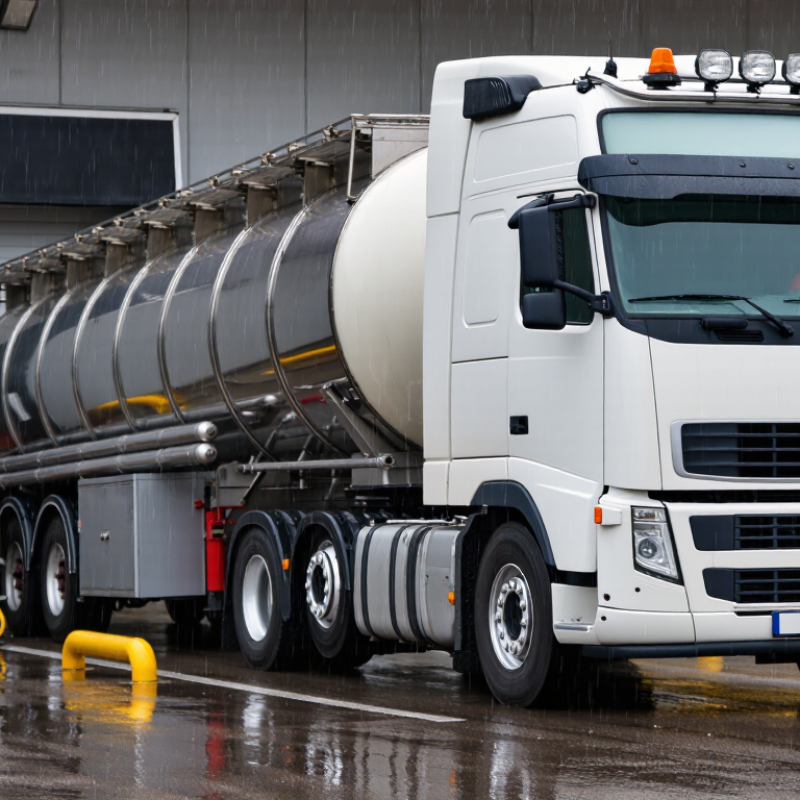
How to Choose the Best Tank Truck in 2026
Identify the Cargo, Route, and Operating Requirements
A suitable tank truck starts with the material it will carry. Check its density, temperature range, and viscosity, and determine whether it needs insulation or controlled heating. These factors affect tank capacity, lining, pump choice, and unloading time. Bigger is not always better. Extra capacity can increase vehicle weight and make small delivery sites harder to reach.
Map the actual route, not just the distance. Note steep grades, tight turns, low bridges, unpaved approaches, and seasonal weather. Compare these conditions with the truck’s axle configuration, ground clearance, braking system, and turning radius. A route that looks easy on a map may end at a cramped yard entrance. Ask drivers to flag those details; their observations can reveal what planning documents miss.
Daily operations matter, too. Estimate mileage, loading frequency, cleaning needs, downtime, and access to maintenance. Match pump flow and hose connections to the facilities you serve. Check that gauges are easy to read from safe working positions. Leave a realistic payload margin. I would not treat a spreadsheet estimate as final: real loading habits can differ, and a small mismatch may cost time every shift. Review specifications with qualified vehicle and tank professionals before purchasing.
Start with the cargo, route, and operating requirements. For U.S. Interstate routes, these federal weight limits are key constraints when planning a tank truck’s axle configuration and payload.
Federal limits generally include 20,000 lb on a single axle, 34,000 lb on a tandem axle, and 80,000 lb gross vehicle weight. These are separate limits—not additive payload allowances. Actual payload depends on the truck’s tare weight, cargo density, axle spacing, bridge formula, and applicable state rules or permits.
Source: U.S. federal Interstate weight limits, 23 CFR § 658.17. Confirm route-specific requirements before selecting a vehicle.
Choosing a tank truck starts with the cargo’s behavior. Pneumatic tanks suit dry, free-flowing materials; liquid tanks need baffles to limit slosh during braking and turns. Insulated or heated tanks help maintain temperature-sensitive loads. For wash-intensive food service, stainless steel offers a smooth, corrosion-resistant interior. Carbon steel can suit less corrosive products, but coatings and inspection matter. Details matter: a small dent near a baffle can complicate cleaning.
Material affects payload, but not as simply as “lighter is better.” The Aluminum Association’s Aluminum Design Manual lists aluminum density at about 2,700 kg/m³; carbon steel is roughly 7,850 kg/m³ in standard engineering data. That gap can reduce tank-shell weight, leaving more potential payload within vehicle limits. Yet aluminum may need thicker sections, and repairs require suitable expertise. Stainless steel typically costs more, but its corrosion resistance can lower maintenance for demanding service. Still, lighter is not automatically better. Compare the tank’s tare weight, usable capacity, lining requirements, cleaning method, and local payload limits. I would verify these figures against the proposed tank’s drawings; generic material data cannot predict a finished truck’s actual weight.
| Tank Truck Type | Typical Cargo | Common Tank Materials | Material Selection Considerations | Key Operational Considerations |
|---|---|---|---|---|
| Fuel tanker | Gasoline, diesel, and other petroleum fuels | Aluminum alloy or carbon steel | Aluminum can reduce vehicle tare weight; carbon steel is a durable option. Confirm compatibility with the specific product, fittings, and any internal coating. | May use multiple compartments for separate products or deliveries. Design and operation must meet applicable hazardous-material and road-safety requirements. |
| Chemical tanker | Industrial liquids, including acids, alkalis, and solvents | Stainless steel, compatible lined steel, or suitable fiberglass-reinforced plastic (FRP) | Select the material and lining for the exact chemical, concentration, temperature, and cleaning method. FRP suitability depends on the resin system; it is not compatible with every chemical. | Verify seals, valves, vents, and unloading equipment as well as the tank shell. Some cargoes require pressure-rated equipment or special handling procedures. |
| Food-grade tanker | Milk, edible oils, syrups, and other food liquids | Food-contact-grade stainless steel; aluminum may be used for certain products | Stainless steel is commonly selected for cleanability and corrosion resistance. Confirm that all product-contact surfaces and fittings meet applicable food-contact and hygiene requirements. | Insulation or temperature control may be needed for temperature-sensitive cargo. Cleaning and sanitation procedures should suit the product and delivery cycle. |
| Water tanker | Potable water or non-potable water | Stainless steel, aluminum, or coated carbon steel, depending on use | For potable water, use materials and coatings suitable for drinking-water contact and protect the tank from contamination. Non-potable service may allow other compatible materials. | Potable and non-potable equipment should be kept separate where required. Consider access for inspection, cleaning, and complete drainage. |
| Vacuum tanker | Wastewater, sludge, and other liquid waste | Carbon steel, stainless steel, or suitable lined steel | Carbon steel is commonly used for general-duty service; corrosive or aggressive waste may require stainless steel or a compatible lining. Confirm resistance to the actual waste stream. | Check vacuum rating, tank structure, hose connections, and cleaning access. Waste classification and disposal rules depend on the material being carried and local regulations. |
| Dry bulk tanker | Cement, flour, plastic pellets, and other dry powders or granules | Aluminum alloy or carbon steel | Aluminum can help reduce tare weight; carbon steel is a robust alternative. The tank and discharge system should suit the cargo’s abrasiveness, moisture sensitivity, and food-grade status if applicable. | Typically uses pneumatic or gravity discharge equipment. Check blower or compressor requirements, dust control, and the risk of product contamination. |
| Insulated or heated tanker | Temperature-sensitive liquids such as bitumen or certain food and industrial products | Carbon steel or stainless steel, with insulation and an optional heating system | Choose the tank material for cargo compatibility; insulation and heating are separate design features. Confirm maximum operating temperature and the suitability of the heating method. | Allow for temperature monitoring and controlled loading and unloading. Heating requirements vary by cargo and should follow product-handling specifications. |
| Selection note: Actual capacity, axle loading, pressure rating, temperature limits, material compatibility, and permitted equipment vary by vehicle configuration, cargo, and jurisdiction. Verify specifications with a qualified tank designer and the applicable transport, safety, and product regulations before purchase. | ||||
A tank truck should fit the load and route, not just offer the largest tank. Set working capacity from the liquid’s density, delivery volume, and usable fill limits. A few extra cubic feet can add substantial weight. Match the chassis to the loaded vehicle weight, axle distribution, road surface, and turning space at customer sites. The American Transportation Research Institute’s 2024 report put average trucking operating costs at $2.270 per mile in 2023. That figure makes avoidable miles and inefficient loading expensive. Small margins matter.
Choose tank material, compartments, pumps, hoses, and meters for the product’s compatibility and the work cycle. Specify baffles and rollover protection where appropriate, then confirm the chassis can support the tank and equipment without compromising handling. The Federal Motor Carrier Safety Administration’s 2022 Large Truck and Bus Crash Facts recorded 5,837 large trucks involved in fatal crashes. That is not a tank-truck-specific measure, but it underscores the value of sound braking, visibility, and stability choices. Ask operators to test hose reach and control access in gloves. A spreadsheet can miss awkward steps. Verify the proposed configuration with a qualified engineer and review axle loads before ordering.
Before comparing payload capacity or purchase price, verify the tank’s inspection records, specification plate, and intended service. For U.S. operations, check applicable requirements under 49 CFR Parts 178 and 180, including the tank’s design specification and required inspection and test dates. Match the documentation to the actual tank, not just the chassis paperwork. Small details matter.
Inspect welds, mounting points, valves, closures, and emergency shutoffs for damage, corrosion, or poor repairs. Ask for records of leakage tests and periodic inspections, then confirm that the tank configuration suits the materials and routes it will serve. NHTSA’s Large Trucks and Bus Crash Facts 2022 reported 5,837 large trucks involved in fatal crashes that year, 1% more than in 2021. That figure is not specific to tank trucks, but it underscores why safety checks deserve more than a quick walk-around.
Regulations can change, and requirements depend on tank type, cargo, and operating jurisdiction. Confirm current rules with the relevant authority and a qualified tank inspector before purchase. I would not treat fresh paint as proof of sound steel. It can hide problems, and paperwork can be incomplete; both deserve a closer look.
A truck’s purchase price is only the visible part of its cost. Estimate fuel use, scheduled maintenance, tire replacement, insurance, financing, and expected resale value across the years you plan to operate it. Then add the cost of downtime. A missed delivery can affect more than one day’s revenue.
Match the specification to actual routes and cargo. Review typical load weights, daily distance, road conditions, and loading-site access with drivers and maintenance staff. A larger tank may look efficient, but unused capacity still adds weight and fuel consumption. Check that the tank material, fittings, and cleaning requirements suit the intended service. Small details matter.
Use service records from comparable vehicles where possible, not just optimistic estimates. Model a busy year and a difficult one, including extra repairs or lower resale value. A tidy spreadsheet can still miss local labor costs or delays in getting parts; revisit its assumptions. Downtime is expensive. Before choosing, compare cost per operating hour or delivered load, alongside payload and safety requirements. The best-fit truck may not be the cheapest—or the most capable—on paper.