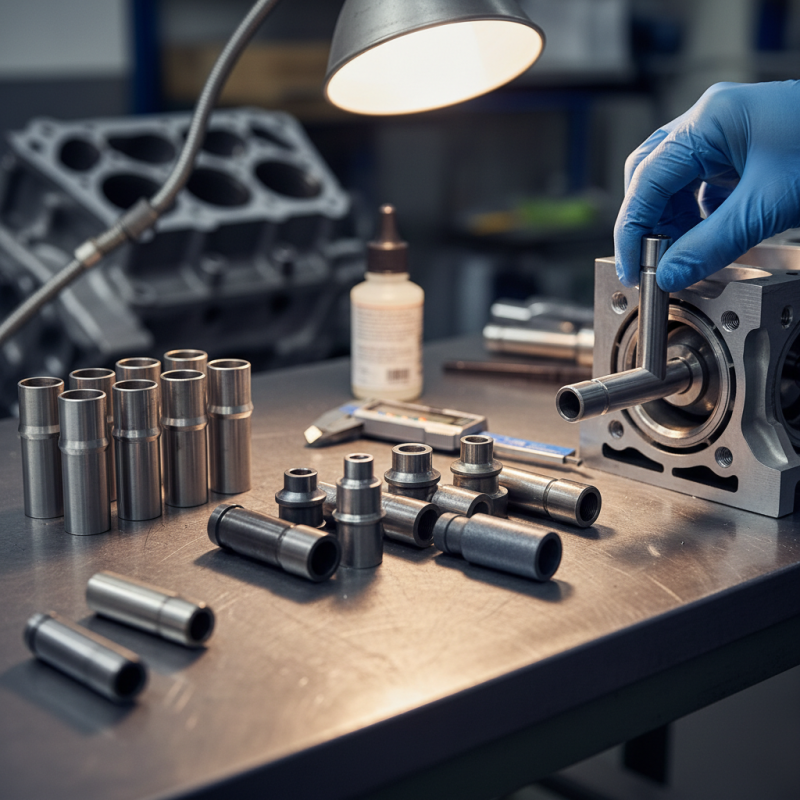
What You Need to Know About Customized Valve Guides?
In the realm of automotive performance, understanding "Valve Guide Customized" options is essential. Customized valve guides can enhance engine efficiency and durability. Choosing the right material and dimensions is crucial. These guides help maintain proper valve alignment, reducing wear over time.
However, many overlook the importance of precise fitting. An ill-fitting valve guide can lead to performance issues. This can cause engine misfires, decreased power, or even catastrophic failure. Not every manufacturer provides quality customization. Always do thorough research before making a purchase.
In summary, investing in customized valve guides can significantly impact your engine's performance. Yet, it's important to be aware of potential pitfalls. Quality matters, and informed choices lead to better results in the long run.
Understanding Customized Valve Guides: Key Concepts
Customized valve guides play a pivotal role in enhancing engine performance. These components ensure accurate alignment and provide a smooth surface for the valve stem. According to recent industry reports, the global demand for customized valve guides has surged by over 15% in the last five years. This growth can be attributed to advancements in material science and manufacturing technologies, which enable precision-engineered designs.
In terms of application, customized valve guides are critical in both automotive and aerospace industries. Their ability to withstand high temperatures and pressures is vital. A recent study indicated that optimized valve guides could improve engine efficiency by up to 8%. However, challenges remain in achieving the perfect balance between durability and weight. Engineers often grapple with compromises that can affect long-term performance.
Furthermore, while customized guides offer significant benefits, they require a thorough understanding of engine dynamics. Not every design suits every engine. Testing and validation processes can be extensive and costly. Many manufacturers need to refine their approaches continuously. Adapting to changing engine specifications compounds these complexities. The journey towards ideal customized valve guides is ongoing.
What You Need to Know About Customized Valve Guides
This chart illustrates the key factors related to customized valve guides based on their importance ratings. A higher rating indicates a greater importance in the manufacturing and selection process of valve guides.
The Importance of Valve Guides in Engine Performance
Valve guides are critical components in an engine's performance. They control the movement of the intake and exhaust valves. If the guides wear out or are not properly designed, they can lead to poor sealing. This affects engine efficiency significantly. Studies show that customized valve guides can enhance sealing by up to 15%. This improvement can lead to better fuel efficiency and power output.
Engine performance relies on precise valve operation. When valve guides are too loose or too tight, performance suffers. A report by the Engine Manufacturers Association highlighted that incorrect valve alignment can decrease engine efficiency by approximately 10%. Properly sized guides reduce friction and wear, prolonging engine life and reducing maintenance costs.
Tips for choosing valve guides: Select materials that withstand high temperatures. Look for designs that allow for optimal valve clearance. Be cautious of overly tight fits, as they can cause additional wear. Remember, a small mistake in guide design can lead to larger engine issues. Investing time and resources into customized guides may pay off in substantial performance gains.
Factors Influencing the Design of Customized Valve Guides
When designing customized valve guides, several key factors come into play. Material choice is crucial. Different materials affect durability and performance. For instance, softer materials may wear out quickly in high-performance engines. But, they offer better compatibility. Balancing performance and longevity is often challenging.
Dimensions must also be considered. The size of the valve guide can change airflow and engine efficiency. Precision in machining plays a significant role. Even slight deviations can lead to significant problems. Manufacturers often face challenges in maintaining tight tolerances.
Lastly, engine type and application influence design. A racing engine may require different specifications than a street model. This can lead to conflicts in design goals. Customization can improve performance, yet it often requires careful reflection and adjustments. Finding the right design involves trial and error throughout the process.
Materials Used in Manufacturing Customized Valve Guides
Customized valve guides are vital for engine performance. The materials chosen for these guides play a crucial role in their efficiency and durability. Typically, manufacturers use metals like bronze, iron, and even aluminum alloys. Each material offers unique advantages in terms of wear resistance and heat dissipation.
Bronze guides often excel in terms of longevity. They resist wear and can withstand high temperatures. However, they are sometimes heavier than other options. Aluminum, while lighter, may not hold up as well under extreme conditions. Consider the environment where the engine will operate. This can guide material selection for valve guides.
Tip: Always prioritize the intended use of your engine when choosing materials. Personalized needs should match the guide's characteristics. Balancing weight, strength, and longevity can be tricky. Seek advice from experts to find the best fit in materials.
Another option is to explore composite materials. These can offer the best of both worlds. Yet, empirical data on their performance can be limited. Testing is essential to validate their effectiveness in various conditions. Ultimately, material selection is both an art and a science.
Installation and Maintenance Tips for Valve Guides
When it comes to installing customized valve guides, precision is key. Make sure your engine is clean before you start. Dust and debris can interfere with proper fitting. Take your time when measuring the valve stems. A small error can lead to significant issues down the line.
During installation, align the guides correctly. Misalignment can cause uneven wear and unwanted noise. Use the right tools. A hammer might seem effective, but it can damage the guides. Instead, opt for a press. Monitor the fit after installation. A tight guide can restrict movement, while a loose one can lead to leaks.
Maintaining valve guides is just as important. Regular inspections can prevent costly repairs. Check for signs of wear, such as scratches or deformation. Keep an eye on lubrication levels as well. Insufficient lubrication can lead to premature wear. If you notice excessive play, it might be time for a replacement. Remember, meticulous attention to detail can save you from future headaches.