
PACKINT - Chocolate Machines

How to Choose a Battery Powered Pruning Saw?

Choosing a Battery Powered Pruning Saw is not simply about picking the model with the largest battery. A saw that feels balanced in your hand can matter more than one with a higher advertised cutting speed. Think of the branches you actually prune: thin shoots, dry limbs, or occasional thicker cuts. Then compare bar length, weight, battery capacity, chain adjustment, and the availability of replacement parts.

The market is changing quickly. Grand View Research estimated the global power tools market at about USD 36.8 billion in 2023, with continued growth projected through 2030. This broad market figure includes many tools; it is not a pruning-saw sales estimate. It does, however, reflect rising interest in cordless equipment. For tree-care principles, Dr. Alex L. Shigo, a pioneering tree pathologist, is often associated with the reminder: “A tree is not a machine; it is a living organism.” That perspective matters. A saw can make a clean cut, but it cannot decide which branch should go.

Good fit matters. So does safe control. Before buying, check how the saw feels with its battery installed, whether the chain can be tensioned easily, and how the manufacturer specifies maintenance. A compact tool may be tiring during repeated cuts; a larger one may feel awkward overhead. There is no perfect choice. Even a strong specification sheet can leave out what matters most in your yard.
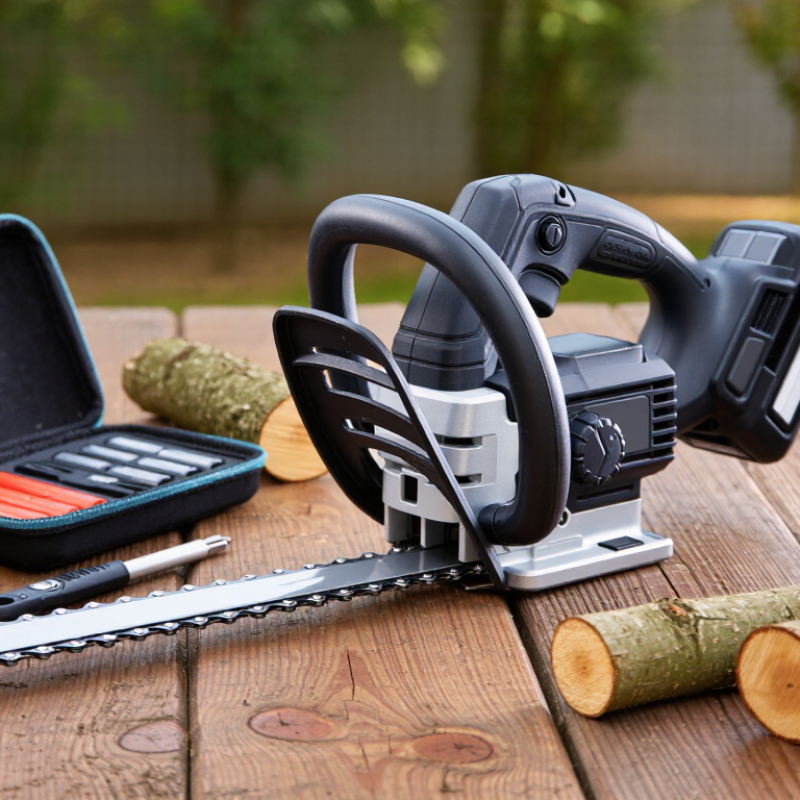
How to Choose a Battery Powered Pruning Saw?

Identify the Pruning Tasks and Branch Sizes You Need to Handle

List the jobs before comparing battery powered pruning saws: fresh shoots, seasonal canopy thinning, storm-damaged limbs, or recurring orchard work. Measure the thickest branch you genuinely expect to cut, not just the average one. Measure it first. A saw’s rated cutting capacity should exceed that diameter; treating the maximum rating as a routine target leaves little room for awkward angles or dulling.

Branch size also affects the tree, not only the tool. The International Society of Arboriculture’s Best Management Practices: Tree Pruning advises removing no more than about 25% of a tree’s live crown in a growing season in most cases, with adjustments for species and condition. That is a useful limit when a “quick cleanup” starts becoming a major reduction.

ANSI A300 pruning standards emphasize cuts that preserve the branch collar, rather than flush cuts against the trunk.

For larger limbs, choose a saw that lets you control the cut without forcing or twisting it. I would leave some capacity in reserve; the maximum number on a product label can be tempting, but it is not a sensible everyday target.

Compare Saw Types, Bar Lengths, and Cutting Capacity

A battery-powered pruning saw may be a compact handheld saw, a small one-handed chain saw, or a pole saw. Handheld models suit close, controlled cuts on shrubs and low limbs. Pole saws reach overhead branches, but their extended shafts feel less steady and can tire your arms. A small tool is not automatically easier; grip, weight, and balance matter.

Bar length helps indicate the size of wood a saw can handle, but it is not a cutting-capacity guarantee. A 4- to 6-inch bar can manage many small branches, while an 8- to 10-inch bar offers more reach for thicker limbs. Check the manufacturer’s stated cutting capacity, and leave room to position the bar safely. For example, a branch wedged between other limbs may be awkward even when it falls within the listed limit.

Match the saw to the branches you actually prune. If most are thumb-thick, a long bar may add weight without much benefit. For occasional thicker cuts, a larger saw can help, though battery runtime and tool weight deserve attention. Keep the workpiece stable, and avoid forcing the chain through wood. It can be tempting to push harder. That usually makes a cut less controlled, not faster. A few test cuts on fallen branches can reveal whether the saw feels manageable before you work overhead.

Assess Battery Voltage, Runtime, and Charging Requirements

Voltage is only one clue. A higher-voltage battery may support stronger cutting under load, but it does not guarantee longer runtime. Check the saw’s recommended voltage and compare battery capacity, usually listed in amp-hours or watt-hours. Watt-hours offer a useful way to compare packs with different voltages. For pruning small, dry branches, a compact battery may be enough. Cutting thicker or denser limbs can drain it faster.

Estimate runtime from the work, not just the number printed on the battery. Branch diameter, wood hardness, chain sharpness, and repeated starts all affect power use. A dull chain can make the motor work harder. I still underestimate this on cold mornings. If you expect a long pruning session, consider a spare compatible battery and plan brief breaks for swapping packs. Actual runtime varies, so treat published figures as a guide rather than a promise.

Charging details matter, too. Confirm that the charger matches the battery’s voltage and type, and check how long a full charge takes. A quick top-up between garden tasks is convenient, but it may not refill a depleted pack before you need it. Let a warm battery cool before charging, and follow the maker’s storage instructions during long breaks. Keep the charger somewhere dry and ventilated. Small details, easily missed. If your shed is unheated, check the battery’s stated charging-temperature range before plugging it in.

How to Choose a Battery Powered Pruning Saw? - Assess Battery Voltage, Runtime, and Charging Requirements
Battery Voltage Class Typical Battery Capacity Best Suited For Indicative Runtime Typical Charging Time What to Consider
10.8–12 V 2–4 Ah
Approximately 22–48 Wh
Light pruning, smaller branches, and occasional garden maintenance About 15–45 minutes of intermittent cutting Approximately 1–3 hours, depending on battery capacity and charger output Usually compact and easier to handle overhead. Best for lighter workloads rather than repeated cuts through thicker wood.
18–20 V 2–5 Ah
Approximately 36–100 Wh
General home-garden pruning and regular cutting of small to medium branches About 20–60 minutes of intermittent cutting Approximately 1–3 hours; higher-capacity batteries generally take longer to recharge A practical balance of handling, cutting capability, and battery availability. Check the saw’s recommended bar or blade capacity.
36–40 V 2.5–5 Ah
Approximately 90–200 Wh
More frequent use, heavier pruning, and longer cutting sessions About 30–90 minutes of intermittent cutting Approximately 1.5–4 hours, depending on battery size and charger Higher energy capacity can support demanding work, but the battery and saw may be heavier. Consider balance and comfort during extended use.
How to interpret runtime: These are broad estimates, not guaranteed operating times. Actual runtime varies with branch diameter and wood hardness, cutting frequency, chain or blade sharpness, temperature, battery age, and the tool’s power demand. Intermittent use includes pauses between cuts.
Charging tip: Compare battery energy in watt-hours (Wh), calculated as nominal voltage × amp-hours (Ah), as well as voltage. Use a charger approved for the battery system, and allow a hot battery to cool before charging if the manufacturer’s instructions require it.

Evaluate Safety Features, Weight, and Ease of Use

When choosing a battery-powered pruning saw, check the safety features before comparing cutting speed. A chain brake, hand guard, and trigger lock can help reduce risks during handling. The brake should engage easily, not require a fiddly motion. Wear eye protection and gloves, and keep both feet on stable ground. Never cut above shoulder height. Small saws still deserve respect.

Weight is more than the number on the box. Hold the saw with its battery attached, because that changes the balance. A model that feels light at waist height may strain your wrist after several minutes. Try a few slow, controlled movements. Notice whether the handle stays comfortable and your view of the branch remains clear. That small test matters.

Ease of use shows up in ordinary tasks. Can you check chain tension without guessing? Are the controls easy to distinguish with gloves on? A clear battery indicator helps prevent an unexpected stop halfway through a cut. I have found that a comfortable grip can matter more than an extra bit of power. Still, comfort is personal, and a quick store test cannot mimic a full afternoon outdoors. Remove the battery before cleaning or adjusting the chain, and follow the saw’s manual for maintenance.

Check Maintenance Needs, Tool Compatibility, and Overall Value

A battery-powered pruning saw earns its keep through dependable cutting and manageable upkeep. After each session, clear sap and wood chips from the chain, bar groove, and oil outlet. Check chain tension before cutting; a loose chain can derail, while an overtightened chain adds wear. Keep the chain sharp, and follow the manual’s lubrication and storage instructions. Small details matter.

Check that the saw, battery, and charger share a compatible platform and voltage. A battery that fits physically may still be incompatible. Compare replacement-pack cost, runtime, chain availability, and included accessories—not just the saw’s shelf price. U.S. Department of Energy data show lithium-ion pack prices fell about 90% from 2008 to 2023. Reported prices dropped from $1,355 to $139 per kilowatt-hour. This trend does not guarantee lower pruning-saw prices, but it makes battery replacement costs worth checking when weighing long-term value.

Tips: Before buying, inspect the chain specification and battery warranty. Ask whether replacement chains are easy to source locally. A low upfront price can look appealing; then a costly battery changes the calculation. Keep that in mind.

How to Choose a Battery-Powered Pruning Saw

Compare example battery energy ratings to help assess capacity and value. Energy is calculated as nominal voltage × amp-hour rating; these are example configurations, not product specifications.

A higher watt-hour rating indicates more stored energy, but does not guarantee longer runtime. Before buying, confirm the saw is compatible with your battery platform and compare battery cost as well as tool price. Include chain lubrication, tension checks, and cleaning in your maintenance routine; follow the tool’s manual.