PACKINT - Chocolate Machines

How to Choose a Chocolate Bar Packaging Machine in 2026

In 2026, choosing a chocolate bar packaging machine means balancing speed, product protection, and the realities of your production floor. A glossy specification sheet cannot tell you whether bars will feed cleanly after a recipe change, or whether the wrapper will seal reliably during a humid shift. Small details matter. Bar dimensions, foil or film type, changeover frequency, and available operator support all shape the right choice.

Industry reports offer useful context, but they are not a substitute for line trials. Grand View Research’s Chocolate Market Size, Share & Trends Analysis Report estimates continued growth in the global chocolate market, increasing pressure on manufacturers to scale output without sacrificing presentation. PMMI’s 2024 State of the Industry report also examines automation and workforce challenges across packaging operations. These are helpful signals, not guarantees of a particular machine’s performance. Buyers should request product-specific tests and inspect real operating data.

A credible comparison should cover rated speed and sustained output, seal quality, format changeover time, cleaning access, and service response. Ask suppliers to run your actual bars and packaging material—not just a standard sample. Then review rejects, film waste, and stoppages. This guide applies an evidence-first approach to selecting a chocolate bar packaging machine, from flow wrapping and feeding systems to integration and lifecycle costs. No source material was provided to verify a named specialist’s quotation, so this introduction avoids inventing one. The final decision should rest on measured trials, documented support, and a clear fit with your line.
How to Choose a Chocolate Bar Packaging Machine in 2026

Define Production Needs and Chocolate Bar Specifications

Define Production Needs and Chocolate Bar Specifications

Start with the bar. Record its length, width, thickness, weight, coating, and wrapper style before comparing machines. A 25-gram snack bar and a thick, filled bar may need different feeding, wrapping, and changeover arrangements. Note whether products arrive warm, enrobed, or fully cooled. Chocolate can mark or deform when handled too soon, so confirm the production temperature and cooling time with your process team.

Then calculate real output needs, not just the fastest shift’s target. Estimate saleable bars per minute, planned operating hours, changeovers, cleaning, and expected downtime. The Packaging Machinery Manufacturers Institute reported U.S. packaging machinery shipments of about $10.9 billion in 2023, reflecting a substantial equipment market; that figure does not indicate the right speed for your line. Ask suppliers to demonstrate your actual bar and packaging material at the intended rate. A glossy brochure is not a production trial.

Small details matter. Specify whether bars are flow-wrapped, folded, or packed in multipacks, and include wrapper dimensions and seal requirements. Grand View Research estimated the global chocolate market at $119.39 billion in 2023, but broad market growth cannot predict your order mix. Use your own sales history and forecasts instead. I would also leave room for uncertainty: product dimensions can vary slightly, and seasonal demand may change the ideal capacity. Build those realities into the specification, rather than buying a machine sized only for a perfect day.

Compare Packaging Machine Types and Wrapping Methods

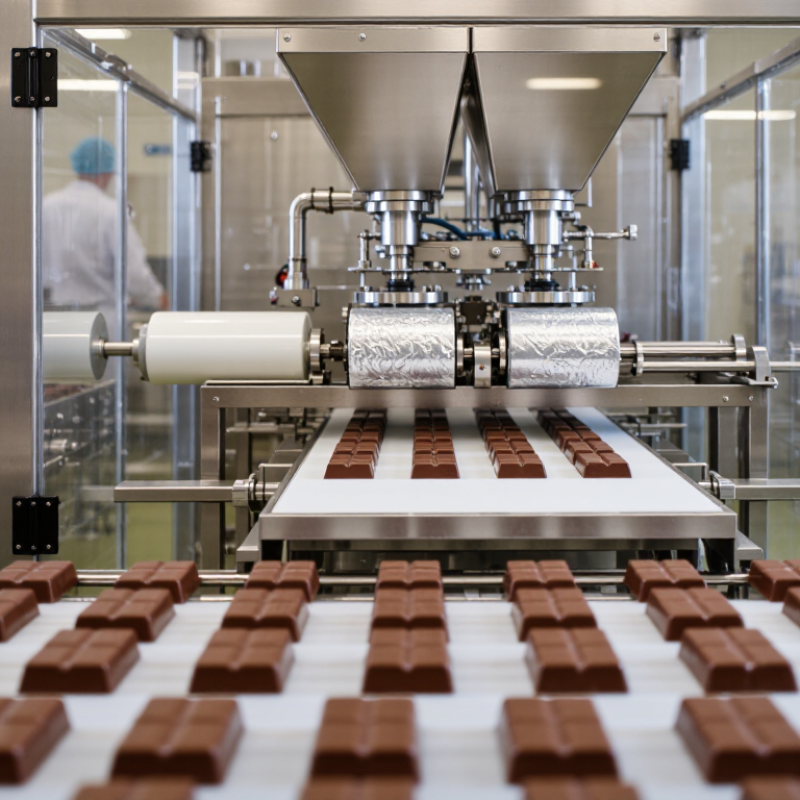
A chocolate bar packaging machine should match both the bar and its intended wrapping style. Horizontal flow wrappers feed bars through a forming box and seal film around each piece. They suit steady production and familiar pillow packs, but bars need consistent spacing and careful transfer. A warm or fragile coating can mark easily. Test the product at realistic room temperatures.

Fold-wrapping machines tuck paper or foil around individual bars, creating a close, traditional finish. They can handle delicate folding details, though format changes may take longer. Some lines use a separate inner wrap and outer sleeve; this adds presentation options but also more feeding and alignment points. Small misalignments matter. Inspect the corners.

Compare these methods using actual samples, not only quoted speed. Check bar dimensions, film or paper behavior, seal quality, changeover time, and cleaning access. Ask for a trial with the intended recipe and wrapper material. A machine that runs quickly on a sample may behave differently after an hour of production. The comparison is not always neat. I would also leave room for future bar sizes, while recognizing that extra flexibility can raise cost and complexity. Look closely at scrap rates and whether operators can clear a jam without disturbing nearby product.

Chocolate Bar Packaging Machines: Typical Speed Ranges

Indicative packs-per-minute ranges for comparing common machine and wrapping-method options. Actual speeds vary with bar size, film, sealing method, and line configuration.

How to use this chart: Flow wrapping is often suited to high-volume bar lines, while folding and twist wrapping may fit specific presentation or product requirements. Confirm achievable speeds with a machine supplier using your product and packaging materials.

Check Material Compatibility, Speed, and Changeover Needs

How to Choose a Chocolate Bar Packaging Machine in 2026

Start with the wrapper, not the advertised speed. Check whether the film seals reliably at temperatures your chocolate can tolerate. Foil, paper laminates, and recyclable films can feed differently. Ask for a test using your actual film, bar dimensions, and printed roll. Look for slipping, wrinkles, weak seals, or chocolate smears near the jaws. Small faults matter.

Compare rated output with usable output. A machine listed at 300 bars per minute may run slower after feeding, inspection, and rejects. Match its speed to the moulding and case-packing line, or bars may queue and warm. Check how operators change bar width, wrapper format, and batch settings. Tool-free adjustments sound helpful, but time them during a demonstration. Changeovers expose weak plans.

Tips: Bring several bar sizes and film samples to the factory test. Time a changeover and record wasted wrappers. Ask whether settings can be saved, then test them after a warm restart. A fast setup may still need careful cleaning. Choose equipment your crew can run consistently.

Assess Hygiene, Automation, Safety, and 2026 Standards

When choosing a chocolate bar packaging machine in 2026, inspect the product path, not just the exterior. Cocoa butter and fine crumbs collect around seals, guides, and conveyor joints. Ask whether operators can reach these points quickly without tools. A stainless-steel finish alone does not make equipment hygienic. The World Health Organization estimates that unsafe food causes 600 million illnesses and 420,000 deaths each year. That figure covers all food, but it shows why cleanable design and documented sanitation routines matter.

Automation should solve a real bottleneck. The International Federation of Robotics reported 4.28 million industrial robots in operation worldwide in 2023, up 10% from 2022. That growth signals wider adoption, not a guarantee that more automation suits every line. Compare changeover time, jam recovery, and the skill needed to adjust film tension. Small details matter. A sensor that spots a misaligned wrapper can reduce waste, but only if staff can test and maintain it reliably.

Check fixed guards, interlocks, emergency stops, and safe access during cleaning and maintenance. For EU-bound machinery, Regulation (EU) 2023/1230 is scheduled to apply from 20 January 2027; in 2026, confirm the applicable conformity route and transition documents. Also review food-hygiene and food-contact requirements for the markets served. Ask suppliers for risk assessments, cleaning instructions, and material declarations. No checklist catches everything. Test with your actual bar size, wrapper, and production conditions before committing.

Compare Total Costs and Verify Supplier Support

When choosing a chocolate bar packaging machine in 2026, compare its purchase price with the full cost of running it. Include change parts for different bar sizes, wrapping film, energy, operator training, maintenance, and expected downtime. A lower-priced machine can become expensive if format changes take an hour or replacement parts sit overseas. The IEA’s 2016 report, Energy Efficiency Policy Opportunities for Electric Motor-Driven Systems, estimates that motor-driven systems account for 53% of global electricity use. This is a broad industry benchmark, not a machine-specific estimate; ask suppliers for measured energy use under your actual production conditions.

Downtime gets expensive.

Supplier support belongs in the same calculation. Request written commissioning, training, warranty, and response-time terms. Ask how quickly common wear parts can ship, and whether technicians can support your plant’s operating hours. Have the supplier demonstrate a changeover using your wrapper material and bar dimensions, not a generic sample. Check references from factories running similar speeds and product formats. I would still budget for a few production snags; estimates rarely capture every adjustment.

Tips: Compare three-year ownership costs, not just quotes. Get energy and output figures in writing. Ask for a spare-parts list, service rates, and a named escalation contact before signing. If support is vague, treat that as a real cost.