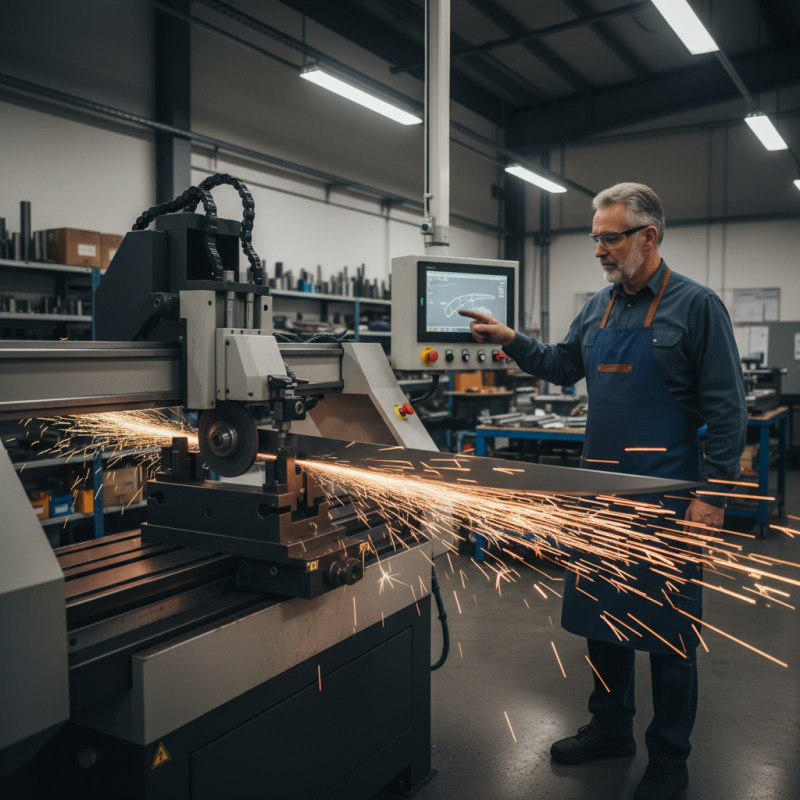
How to Choose the Best CNC Knife Grinder for Your Needs?
Choosing the right Cnc Knife Grinder can be challenging. With various options available, it's crucial to consider your specific needs. John Smith, a seasoned expert in CNC machining, once stated, "The right grinder can transform your production process, ensuring precision and efficiency."
When exploring the market, assess factors like grinding capacity, speed, and durability. A reliable CNC Knife Grinder should enhance your workflow and improve output quality. However, it's easy to overlook important features. For instance, some users may prioritize price over performance, leading to dissatisfaction later on.
Understanding your requirements is essential. Whether you need a grinder for high-volume production or detailed custom work, clarity will guide your decision. A well-informed choice can significantly impact your operations, making it worth the effort to research and consult experts.
Understanding CNC Knife Grinders: Types and Their Applications
CNC knife grinders are vital in various industries, from metalworking to woodworking. Understanding the types of CNC knife grinders is essential to selecting the right one. The most common types include flat grinders, cylindrical grinders, and tool and cutter grinders. Each serves different applications and offers distinct advantages.
Flat grinders excel at producing blades with sharp edges. They are perfect for cutting tools and knives. However, they may require more maintenance.
Cylindrical grinders, on the other hand, are better for precision tasks. They provide uniformity but can be complex to operate.
Tool and cutter grinders are versatile and can handle various shapes, making them popular in workshops.
Tips: Consider the specific materials you will be grinding. Each grinder has its strengths based on the material properties. Also, evaluate your workspace. Some grinders have larger footprints, while others are more compact. It's crucial to assess your workflow and choose accordingly. Lastly, do not overlook after-sales support. Proper guidance can significantly impact your grinding efficiency.
Key Features to Consider When Selecting a CNC Knife Grinder
When selecting a CNC knife grinder, it’s crucial to focus on key features. Precision is essential. A grinder should maintain consistent tolerances. Check the machine's accuracy ratings during operation. Look for a model that offers easy adjustments. This can help accommodate different knife profiles.
Consider the size of the grinding wheel. Larger wheels can provide a smoother finish. They often require less frequent replacements. Additionally, examine the machine’s motor power. A robust motor ensures effective grinding, especially for harder materials. Speed control is another feature worth noting. Being able to adjust speed can enhance versatility.
User-friendly interfaces make a big difference. A clear control panel simplifies operation. Yet, even the best features can have quirks. Some machines might have steep learning curves. It’s important to read user reviews. They provide insights into real-world performance. Assessing these details can lead to wiser purchasing decisions.
Evaluating Precision and Tolerance: Essential Measurements in CNC Grinding
When it comes to CNC knife grinding, precision and tolerance are key factors to consider. These measurements dictate the quality of the finished product. A well-calibrated CNC grinder can significantly enhance your efficiency. Precisely machined parts can lead to smoother operations and reduced wear on tools. Failing to account for these metrics can lead to poor outcomes and unnecessary costs.
Evaluating precision often requires understanding specific measurements. Tolerance levels can vary depending on material types and desired outcomes. A tolerance range that is too tight can lead to increased production time. Conversely, a range that is too loose may result in rejected parts. It's essential to strike a balance between these factors, ensuring both quality and efficiency.
Understanding the implications of precision in CNC grinding is vital. It allows for better decision-making when selecting the right grinder. Reliable machines often offer adjustable settings for various materials and tolerances. However, even the best equipment may require regular recalibration. Ignoring this can lead to discrepancies that impact the overall production process. Continuous monitoring and adjustment can prevent these issues from snowballing.
Comparative Analysis of Top CNC Knife Grinder Brands in 2023
When selecting a CNC knife grinder, it is vital to perform a detailed comparative analysis of the top brands in 2023. According to industry data, the CNC knife grinder market is projected to grow by 7.5% annually. This rise reflects advancements in automation and precision technology, making these tools indispensable for modern manufacturing.
Many brands focus on performance metrics such as grinding accuracy, speed, and durability. Some machines offer CNC controls that enable users to execute complex patterns, enhancing workflow efficiency. However, users often report varying experiences regarding machine reliability. Maintenance issues can arise unexpectedly in several models, leading to unwanted downtime. A comprehensive warranty can partly mitigate this risk, but assessing user reviews remains crucial.
Evaluating the cost is also essential. Entry-level models may lack advanced features, which can hinder scalability in your operations. Mid-range and high-end CNC knife grinders usually promise faster return on investment through increased productivity. Nevertheless, it’s not uncommon to find that even top-rated machines can present unexpected learning curves. Engaging with operators who have firsthand experience is invaluable. Their insights may reveal details that official specifications omit.
Comparative Analysis of CNC Knife Grinders in 2023
Cost-Benefit Analysis: Investing in CNC Technology for Long-term Gain
Investing in CNC technology offers significant long-term benefits. A study from the National Association of Manufacturers found that companies using CNC machines can increase productivity by up to 30%. This allows manufacturers to produce more while maintaining quality. The initial investment may seem steep, but the return on investment can justify the cost.
Operational efficiency is crucial. CNC grinders reduce human error and improve precision. A report by the Manufacturing Institute revealed that companies saw a reduction in waste by 20% after integrating CNC solutions. However, the learning curve can be challenging. Training staff to operate these machines requires time and resources, which some businesses may overlook.
Additionally, maintenance costs must be factored in. Regular upkeep ensures machines function efficiently. While some may underestimate these costs, they can accumulate quickly. It's essential to analyze the total cost of ownership. Understanding all expenses associated with CNC knife grinders will lead to sound financial decisions. Ultimately, the decision hinges on the potential for long-term gains versus immediate costs.
How to Choose the Best CNC Knife Grinder for Your Needs?
| Feature | Importance Level (1-5) | Cost Range (USD) | Long-term Benefits |
| Precision | 5 | 5,000 - 15,000 | Improved cut quality, reduced material waste |
| Speed | 4 | 8,000 - 20,000 | Higher throughput, faster production timelines |
| Ease of Use | 4 | 3,000 - 10,000 | Reduced training time, lower error rates |
| Durability | 5 | 6,000 - 18,000 | Longer equipment life, reduced maintenance costs |
| Support & Warranty | 3 | 2,000 - 5,000 | Peace of mind, better service response |