How to Choose the Best Autonomous Forklift for Your Business?
The rise of Autonomous Forklifts is transforming warehouse operations. According to the International Federation of Robotics, the global market for autonomous vehicles, including forklifts, is projected to exceed $37 billion by 2025. Businesses are increasingly adopting this technology to enhance efficiency and reduce labor costs. Autonomous forklifts can operate around the clock, developing streamlined workflows and minimizing human error.
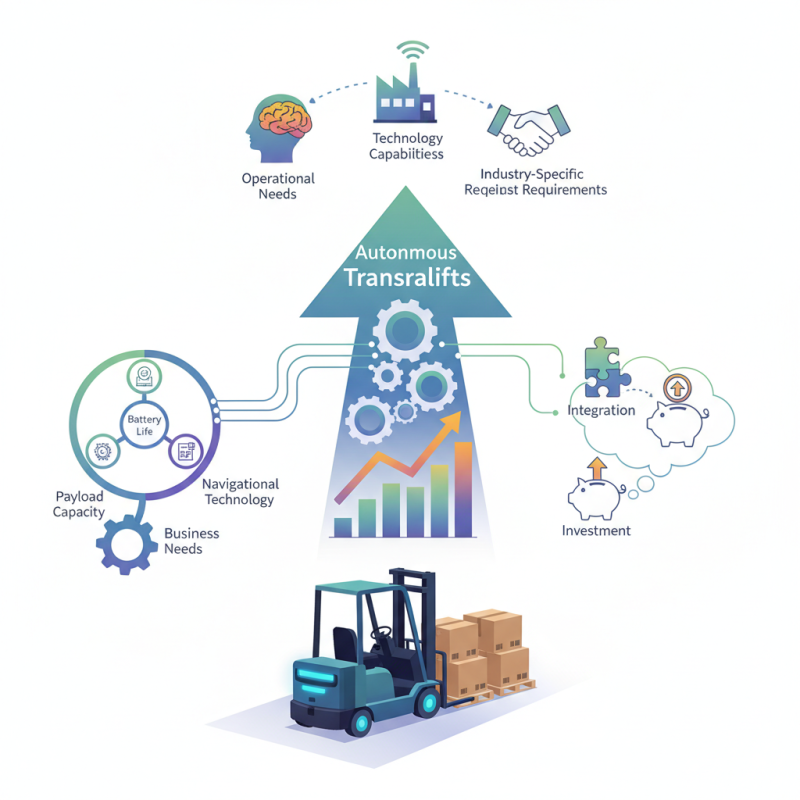
Choosing the best autonomous forklift requires careful consideration. Factors such as payload capacity, battery life, and navigational technology must align with business needs. However, as autonomous technology evolves, challenges like integration with existing systems and high initial investment can create uncertainty. Proper research and expert consultation can mitigate these risks.
Businesses must reflect on operational needs and technology capabilities. Understanding industry-specific requirements will ensure a successful transition to autonomous forklifts. Embracing innovation is key, but it also necessitates a balance of technology and operational integrity.
Factors to Consider When Selecting an Autonomous Forklift
When selecting an autonomous forklift, several critical factors come into play. First, understanding the layout of your operations is essential. Factories and warehouses often vary significantly in design. A report from the Material Handling Industry (MHI) indicates that 30% of efficiency issues arise from poorly matched equipment to physical space. Assessing aisle widths, height clearance, and storage configurations will help in identifying the right forklift model.
Next, payload capacity cannot be overlooked. Autonomous forklifts come with various load limits, often ranging from 1,000 to 5,500 pounds or more. A study from the International Journal of Robotics Research highlights that selecting an incorrect capacity can lead to operational disruptions. Also, evaluate the technology behind the forklifts. Advanced models now feature AI for improved navigation and predictive maintenance, which can reduce downtime by as much as 25%. However, technology implementation might require employee retraining, creating a need for careful planning.
Cost considerations are also significant. While high-tech models may offer superior capabilities, the initial investment can be daunting. According to industry surveys, businesses see an average ROI within three years of proper implementation. However, this benefit largely depends on the frequency of usage and the specific demands of the operational environment. Balancing these factors is crucial for making an informed choice.
How to Choose the Best Autonomous Forklift for Your Business?
| Factor | Description | Importance Rating (1-5) |
| Load Capacity | The maximum weight the forklift can lift safely. | 5 |
| Battery Life | Duration the forklift can operate before needing a recharge. | 4 |
| Navigation Technology | The type of system used for navigation (Lidar, Camera, etc.). | 5 |
| Safety Features | Inbuilt systems to ensure safe operation around personnel. | 5 |
| Maintenance Requirements | Frequency and ease of required maintenance tasks. | 3 |
| Size and Maneuverability | Dimensions and ability to operate in tight spaces. | 4 |
| Cost of Ownership | Total cost including purchase price, maintenance, and operation. | 4 |
| Integration with Existing Systems | Compatibility with your warehouse management system. | 4 |
Understanding the Types of Autonomous Forklifts Available
When selecting the right autonomous forklift, it's essential to understand the various types available. Different businesses have unique needs that can dictate the best choice for them. For example, there are automated guided vehicles (AGVs) that follow predefined paths. These are ideal for warehouses with fixed layouts. They provide efficient material handling with minimal human involvement.
On the other hand, some forklifts employ advanced sensors and AI for navigation. These dynamic models can adapt to changing environments. They are perfect for businesses with more complex operations or unpredictable layouts. Mobility and flexibility are their key advantages. However, they may also require more extensive training for seamless integration.
Lastly, consider the size and load capacity required for your operations. Smaller models might excel in tight spaces, but larger ones are crucial for heavy loads. Balance your priorities and reflect on the potential challenges of each type. Ensuring you choose an option that fits your needs will ultimately improve efficiency in your operations.
Evaluating Operational Efficiency Metrics in Forklift Options
Choosing the right autonomous forklift is crucial for maximizing operational efficiency. An evaluation of operational efficiency metrics can reveal valuable insights. Data shows that companies using autonomous forklifts can increase productivity by 20-25%. Furthermore, operational costs may decrease by up to 30%. These metrics often hinge on the specific needs of your business.
When assessing forklifts, consider the lift capacity and battery life. A model suited for heavy loads may provide better efficiency for warehousing operations. Remember, a forklift that seems efficient for one application may not be ideal for another. It's essential to align the forklift capabilities with your actual tasks.
Tips: Analyze maintenance costs as part of the decision process. High reliability often translates into lower long-term expenses. Measure the downtime associated with your current equipment. Reducing this downtime could enhance overall efficiency significantly. Keep in mind, technologies evolve, so staying updated is vital. The best choice may change as new models enter the market.
Assessing Safety Features in Autonomous Forklift Designs
When selecting an autonomous forklift, safety features are paramount. These machines operate in dynamic environments. Consequently, robust safety measures can reduce accidents and injuries. Look for models that feature advanced sensors. These sensors help detect obstacles effectively.
Tips: Test the forklift's emergency stop function during a demo. Ensure that it can halt safely if it detects an object in its path.
Another crucial aspect is the visibility of the forklift. Models with clear sightlines allow operators and pedestrians to remain aware of their surroundings. This reduces the risk of collisions. Moreover, consider forklifts equipped with warning systems. Alerts, lights, and sounds can notify when the forklift is in operation.
Tips: Observe the forklift in a busy environment. Notice how its safety features affect interactions with people and other machinery. Evaluate whether the features are intuitive for users.
Lastly, assess the machine’s overall reliability. A trustworthy forklift should perform consistently under various conditions. Check user feedback regarding the longevity of its safety systems. Ensure that these systems are not just present but effective as well.
Cost-Benefit Analysis of Investing in Autonomous Forklifts
Investing in autonomous forklifts can significantly enhance operational efficiency. However, it's crucial to perform a cost-benefit analysis before making a decision. These forklifts can reduce labor costs and increase productivity. But, the initial investment can be substantial. Assessing the long-term benefits against upfront costs is essential.
Tips: Consider the scale of your operations. Small businesses may find it difficult to justify the investment. Evaluate ongoing maintenance costs as well. Autonomous forklifts require regular updates and servicing. Understanding these factors aids in making informed choices.
While increased efficiency is a major draw, it's important to reflect on potential integration challenges. Employees may resist new technology. Providing adequate training mitigates this issue. Additionally, monitor performance metrics post-implementation. This allows for adjustments in operation and can reveal hidden costs. Such reflections ensure that the transition aligns with your business goals.
Cost-Benefit Analysis of Autonomous Forklifts
This chart illustrates the cost and potential savings associated with investing in autonomous forklifts for various business operations over a five-year period.
