Choosing a chocolate tempering machine from China may seem straightforward. In practice, it requires careful technical and supplier evaluation. A suitable chocolate tempering machine must match your product type, batch size, and daily production schedule. Temperature stability affects chocolate shine, snap, texture, and shelf life. Capacity, heating method, cooling performance, and cleaning access also influence operating efficiency. Small details matter. A machine that looks impressive may still be difficult to maintain.
When evaluating Chinese suppliers, examine their manufacturing experience and quality control process. Request clear videos showing the machine running with real chocolate. Ask for temperature accuracy data, electrical specifications, material details, and production capacity. Confirm whether food-contact components are made from suitable stainless steel. Reliable manufacturers should provide operating instructions, spare-part support, and practical warranty terms. They should explain what happens if the machine stops during a busy production day. Do not guess.
Cost deserves careful attention, but price alone can mislead you. Include shipping, installation, training, maintenance, and replacement parts in your comparison. A cheaper machine may use weaker insulation or offer limited temperature control. I have seen buyers focus on the quotation and overlook after-sales response time. That decision often creates avoidable downtime. Still, no supplier is perfect, and polished sales materials do not prove long-term reliability. This guide will help you compare specifications, inspect supplier credibility, and identify questions worth asking before placing an order. A thoughtful choice begins with evidence, not promises.
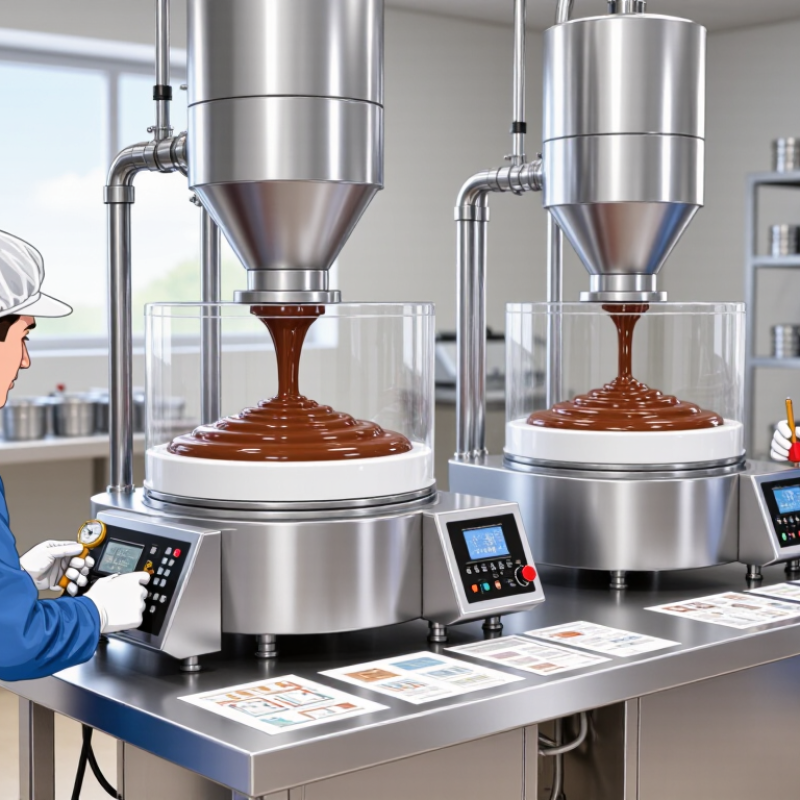
Before comparing a chocolate tempering machine from China, define the production requirement clearly. Start with the recipe. Dark, milk, and white chocolate can require different tempering curves and working temperatures. Record the chocolate type, cocoa butter content, batch size, and expected output per hour.
A small workshop may need a 6–12 kilogram batch capacity, while a factory may require continuous feeding and automatic temperature control. Also check the heating range, cooling speed, pump performance, and holding stability.
A temperature variation of even 1°C can affect shine, snap, and contraction. In practical trials, operators often discover that the listed capacity is higher than the comfortable working capacity. This is easy to miss.
Consider the working environment before contacting a Chinese supplier. Confirm the local voltage, plug configuration, table height, cleaning access, and available floor space. Ask for food-contact material details, electrical documentation, user manuals, and inspection records.
Request a sample test using your actual chocolate, not a substitute with different viscosity. Keep the process measurable. Record temperatures, processing time, and finished texture during the trial.
After-sales support also matters, especially for sensors, pumps, and heating elements. I once underestimated cleaning time; the machine performed well, but daily maintenance slowed production. That mistake changed the specification.
How to Choose a Chocolate Tempering Machine from China?
Capacity should match your real production rhythm, not an optimistic sales forecast. Tabletop batch machines often suit cafés, test kitchens, and small workshops. They usually handle several kilograms per cycle. Larger batch systems may process 25–100 kilograms, while continuous machines support stable, high-volume production. A continuous line needs reliable feeding, cooling, and cleaning procedures. Otherwise, higher capacity can create more waste, not more profit.
Tempering method also affects product consistency. Seed tempering is practical for dark, milk, and white chocolate, but operators must control crystal quality carefully. Automatic machines use programmed heating and cooling curves. They reduce manual adjustment, although sensors still require calibration.
According to Grand View Research, the global chocolate market reached about US$119.39 billion in 2023 and may grow at roughly 9% annually through 2030. This growth increases pressure for repeatable production. It does not mean every buyer needs automation.
When comparing Chinese equipment, request heating accuracy, cooling range, cycle time, hopper volume, and power consumption. Ask for videos showing chocolate flow during real operation. A machine rated at 30 kilograms may not temper 30 kilograms efficiently in every recipe. Viscosity, room temperature, and cocoa butter content change the result.
I would also inspect stainless-steel contact surfaces, drain design, spare-part availability, and remote technical support. Mordor Intelligence identifies automation and process consistency as important trends in food manufacturing, but small producers can over-automate too early. Start small. Test twice. Reliability matters more than a polished specification sheet.
When choosing a chocolate tempering machine from China, examine its heating control closely. Stable heat protects cocoa butter crystals from uneven melting. Ask for the working temperature range, sensor type, and control response time. A reliable machine should hold temperature within about 0.5°C during normal operation. Test this with a calibrated thermometer, not only the display. Small differences matter.
Cooling performance needs equal attention. Check whether the cooling system uses adjustable airflow, chilled water, or another controlled method. The machine should reduce temperature steadily without creating cold spots inside the bowl. Observe a trial batch after fifteen minutes. Chocolate should flow smoothly, without thick edges or visible streaks. Ask how quickly the machine recovers after adding fresh chocolate. Recovery often reveals more than a factory demonstration.
Precision also depends on the agitator and temperature sensor position. Poor circulation can leave one area warm and another too cool. Request a test report with repeated readings from different points. Confirm the report includes load size, ambient temperature, and testing time. I have found that impressive specifications can hide practical weaknesses. A slightly slower machine may produce better results than a faster, unstable one. Inspect stainless steel surfaces, wiring protection, and cleaning access before purchase. Keep written records of every test. Suppliers may explain differences clearly, but vague answers deserve another inspection.
How to Choose a Chocolate Tempering Machine from China?
Material and hygiene should guide your decision before heating capacity. Choose food-contact surfaces made from documented 304 stainless steel, or 316 stainless steel where cleaning chemicals are aggressive. Confirm welds are smooth, sealed, and free from sharp corners. Silicone gaskets should have food-contact documentation. Avoid painted areas inside the chocolate path. FDA Food Code 2022 emphasizes smooth, durable, and easily cleanable food-contact surfaces. This matters because WHO estimates that contaminated food causes 600 million illnesses and 420,000 deaths worldwide each year. A shiny machine can still hide residue behind a valve.
Safety needs evidence, not attractive photographs. Ask for electrical test reports, emergency-stop details, over-temperature protection, and clear operating instructions. Check whether guards protect moving pumps and belts. ISO 22000:2018 can support a supplier’s food-safety management system, but certification alone does not prove hygienic machine design. Request material certificates, cleaning procedures, and factory inspection records. Missing documents are a warning, even when the quotation looks excellent.
Tips: Open every removable cover before purchase. Check whether a brush can reach the tank’s bottom corners. Ask how long cleaning takes after dark chocolate, milk chocolate, and nut-containing recipes. Prefer drainable piping and tool-free dismantling. EHEDG hygienic-design guidance favors accessible surfaces and minimized product traps. The smallest trapped chocolate may become tomorrow’s quality complaint. No checklist is perfect; operators may still clean poorly, so simple design often beats impressive specifications.
| Evaluation Area | What to Inspect | Recommended Practical Benchmark | Why It Matters | Evidence to Request |
|---|---|---|---|---|
| Product-contact materials | Hopper, tempering bowl, agitator, pump, pipework and dispensing nozzle | Food-contact stainless steel, preferably AISI 304; AISI 316 may be useful where higher corrosion resistance is required. Avoid exposed copper, zinc, uncoated mild steel or unknown alloys. | Food-contact surfaces should resist corrosion, avoid unwanted reactions with chocolate and remain stable during repeated washing. | Material specifications, food-contact declarations and component list |
| Surface finish | Internal welds, corners, seams, weld discoloration and surface roughness | Smooth, continuous and easy-to-wipe surfaces with no cracks, pits, sharp edges or exposed weld residue. Product-contact areas should not have peeling coatings. | Rough or damaged surfaces can retain chocolate, increase microbial-cleaning risk and make complete inspection difficult. | Close-up photographs, sample inspection or factory acceptance checklist |
| Food-contact compliance | Materials used in seals, hoses, gaskets and plastic components | Every product-contact material should be identified and supported by documentation applicable to the destination market, such as EU food-contact requirements or FDA food-contact requirements where relevant. | Compliance applies to the complete product-contact assembly, not only the stainless-steel frame or tank. | Declarations of compliance, test reports and food-grade seal specifications |
| Hygienic design | Dead zones, enclosed cavities, drainability and access to internal parts | The product path should be easy to access, inspect and drain. Avoid unnecessary dead legs, inaccessible cavities and horizontal surfaces that collect chocolate or wash water. | Good hygienic design reduces residue accumulation and shortens cleaning and inspection time. | Product-path drawing, sectional diagram and cleaning procedure |
| Cleaning and disassembly | Removable bowl, auger or agitator, pump, nozzle and covers | Frequently cleaned product-contact parts should be removable without special tools where practical. Parts should be clearly labeled and reinstallable in the correct orientation. | Simple disassembly helps operators clean thoroughly and reduces the chance of old chocolate contaminating a new batch. | Disassembly video, cleaning time estimate and spare-parts list |
| Water and moisture control | Electrical enclosure, switches, sensors and cable entries | Electrical components should be protected against the cleaning method specified by the manufacturer. The manual must clearly state which parts may be washed and which must remain dry. | Chocolate equipment is often cleaned with warm water or approved detergents; uncontrolled water exposure can create electrical and hygiene risks. | Cleaning instructions, enclosure rating information and wiring documentation |
| Temperature control | Temperature sensor location, controller accuracy and overheating protection | The machine should provide adjustable temperature control suitable for the chocolate being processed, an independent over-temperature safeguard and a clearly readable display. | Accurate temperature management supports stable tempering and reduces the risk of scorching, thickening or loss of gloss. | Calibration record, controller specifications and functional test report |
| Mechanical safety | Agitator, pump, drive system, covers and moving parts | Moving parts should be guarded where accessible. Covers should be secure, and opening a protective cover should not expose operators to avoidable mechanical hazards. | Guards reduce the risk of entanglement, crushing and accidental contact during operation or cleaning. | Risk assessment, guard design, operating manual and safety test record |
| Electrical safety | Power supply, grounding, emergency stop and protection against short circuits | The machine should be correctly grounded, fitted with suitable overcurrent protection and provided with an accessible emergency-stop function where the risk assessment requires it. | Correct electrical protection helps prevent electric shock, fire and uncontrolled machine movement. | Electrical schematic, nameplate data, grounding test and applicable conformity documents |
| Operator controls | Start/stop controls, temperature settings, alarms and status indicators | Controls should be clearly labeled in English or the required operating language. Alarms should identify conditions such as overheating, low material level or sensor failure. | Clear controls reduce operating errors and make abnormal conditions easier to detect quickly. | Control-panel photos, user manual and demonstration video |
| Cleaning chemicals | Compatibility of seals, hoses, coatings and stainless-steel surfaces with detergents | The supplier should specify approved cleaning agents, concentration, temperature and contact time. Avoid undocumented chemicals that may damage seals or surfaces. | Incorrect chemicals can cause corrosion, swelling of gaskets, residue buildup or premature component failure. | Cleaning and sanitation procedure with chemical compatibility guidance |
| Maintenance and spare parts | Gaskets, seals, sensors, heaters, pumps and control components | Wear parts should have identifiable part numbers and reasonable replacement access. The supplier should provide recommended maintenance intervals. | Traceable spare parts reduce downtime and help maintain hygienic performance over the machine’s service life. | Parts catalog, maintenance schedule and spare-parts quotation |
| Factory verification | Performance, leakage, temperature stability and cleaning access before shipment | Request a documented factory acceptance test covering empty operation, loaded operation, temperature control, pump or agitator function, leakage and emergency-stop operation. | A documented test confirms that the delivered machine matches the agreed specification before export. | Signed inspection report, test video and pre-shipment inspection photos |
| Documentation and training | User manual, installation instructions, wiring diagram and sanitation instructions | Documentation should include installation, operation, cleaning, troubleshooting, safety warnings and recommended inspection points. | Complete documentation supports consistent operation and helps operators clean and maintain the machine correctly. | Sample manual, training plan and translated safety instructions |
Selection principle: prioritize documented food-contact materials, hygienic construction, verified safety functions and easy disassembly over appearance or the lowest initial price.
Choosing a chocolate tempering machine from China starts with supplier evidence, not glossy photos. I ask for factory videos, material certificates, test records, and recent export references. A serious supplier explains heating zones, cooling capacity, pump design, and temperature stability clearly. During a remote factory inspection, check welding, insulation, electrical cabinets, and product-contact surfaces. Request a live demonstration with your chocolate. A machine may temper dark chocolate well but struggle with white chocolate. Record the test conditions.
Customization should solve a production problem. Discuss batch size, belt width, hopper height, voltage, recipe controls, and cleaning access. A small outlet-height change can prevent awkward lifting during a busy shift. Ask for drawings before payment and confirm which parts are standard. One mistake I made was accepting a custom scraper without checking removal time. The design worked, but cleaning took longer than expected. That detail still matters.
Compare pricing through total operating cost, not the machine quote alone. Include shipping, installation, spare parts, energy use, training, and possible downtime. Ask for an itemized offer with warranty length, response times, remote diagnosis, and on-site service terms. Reliable suppliers provide manuals, electrical diagrams, replacement-part lists, and video training. Request a sample spare-parts package. Also speak with existing customers, if permission is available.