
China Best Toasted Garlic Supplier for Global Buyers
China has become a major force in the global garlic supply chain. FAOSTAT data consistently places China as the world’s leading garlic producer, contributing more than 70% of global output in recent reporting years. This scale supports stable raw-material access, processing capacity, and export experience. However, production volume alone does not define the best Toasted Garlic supplier.
The global dried garlic market continues to expand, according to industry analyses from Grand View Research and IMARC Group. Buyers increasingly examine flavor consistency, moisture control, microbial safety, traceability, and packaging performance. In practical terms, a reliable supplier should deliver evenly browned pieces, a clean roasted aroma, and controlled particle sizes. One burnt batch can affect an entire seasoning blend.
Garlic chemist Dr. Eric Block, author of Garlic and Other Alliums, describes garlic as “a chemically complex plant.” That observation matters during toasting. Heat changes sulfur compounds, color, aroma, and bitterness. Small temperature differences can create surprisingly different results. China’s strongest suppliers combine regional sourcing with controlled slicing, low-temperature drying, monitored toasting, metal detection, and documented quality checks.
Certifications such as HACCP, ISO 22000, BRCGS, or equivalent systems can support buyer confidence. Still, certificates should not replace factory audits and sample testing. “Best” remains a purchasing judgment, not a permanent label. Some suppliers may offer excellent pricing but weaker consistency. Others may provide outstanding flavor with less flexible minimum orders. This guide examines the details global buyers should verify before selecting a China-based Toasted Garlic partner.
What Makes China a Leading Toasted Garlic Supplier
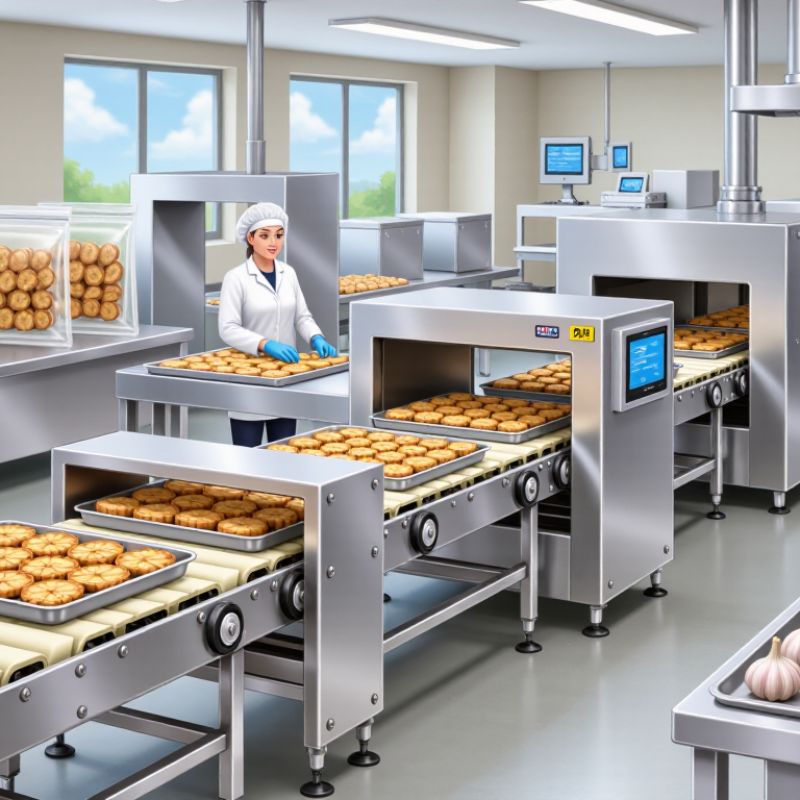
China has become a leading toasted garlic supplier through strong agricultural capacity and mature processing experience. Garlic is grown across several regions, giving processors access to different sizes and flavor profiles. After harvesting, cloves are cleaned, peeled, sliced, and slowly toasted under controlled heat. This process develops a warm aroma without relying on artificial flavoring.
Consistency matters to global buyers. Experienced Chinese processors use moisture checks, color inspection, metal detection, and microbial testing before shipment. Many facilities also track batches from farms to finished cartons. A buyer can request specific slice thickness, toast level, particle size, and packaging format. These details help food manufacturers control recipes and reduce production adjustments.
Scale is another practical advantage. Large production networks can support regular orders while smaller facilities may handle specialized specifications. Export teams often understand container loading, documentation, and destination requirements. Still, no supplier is flawless. A darker batch can appear when heat distribution changes, and seasonal garlic may vary in moisture. Reliable suppliers record these differences instead of hiding them. Buyers should review samples, certificates, factory procedures, and recent test reports before placing a large order. That careful step often reveals more than a polished product catalog.
| Supply Dimension | Key Metric | Typical Commercial Data or Capability | Why It Matters to Global Buyers |
|---|---|---|---|
| Raw Material Availability | Garlic-growing regions | Major production areas include Shandong, Henan, Jiangsu, and surrounding agricultural regions. | A broad agricultural supply base supports regular sourcing and reduces dependence on a single growing area. |
| Product Form | Toasted garlic formats | Common formats include minced garlic, flakes, granules, chips, and powder. | Different particle sizes can be matched to seasonings, sauces, snacks, instant foods, meat products, and bakery applications. |
| Particle Size | Commercial size range | Typical grades include approximately 1–3 mm, 3–5 mm, 5–8 mm, and larger flakes, subject to buyer specification. | Defined particle sizes help control appearance, texture, dispersion, and cooking performance in finished products. |
| Moisture Control | Finished-product moisture | Many dried toasted garlic specifications target moisture at or below approximately 6%, with the final limit agreed by contract. | Lower and controlled moisture improves storage stability, reduces clumping, and supports consistent flavor and texture. |
| Processing Method | Typical production sequence | Sorting, cleaning, peeling, cutting, drying, controlled toasting, cooling, screening, metal detection, and packing. | A defined process helps maintain uniform color, roasted aroma, particle size, and foreign-material control. |
| Food Safety | Common control systems | Export-oriented facilities commonly use HACCP-based controls, sanitation programs, traceability, and batch testing. | Documented controls support importer audits and regulatory reviews. Certification and testing should be verified for each facility and shipment. |
| Microbiological Quality | Routine quality checks | Typical checks may include total plate count, yeast and mold, coliforms, Salmonella, and other tests required by the destination market. | Testing against destination-country requirements helps reduce customs, recall, and formulation risks. |
| Shelf Life | Storage period | A typical shelf-life target is 12–24 months when the product is properly dried, sealed, and stored away from heat and humidity. | A longer validated shelf life is useful for international shipping, warehouse storage, and distributor inventory planning. |
| Packaging Options | Bulk and retail-ready formats | Common bulk packs include 10 kg and 20 kg food-grade bags or cartons; customized inner liners and labels may be available. | Flexible packaging supports food-service, industrial, private-label, and repacking applications without changing the core product. |
| Customization | Specification flexibility | Buyers may request adjustments to particle size, toast level, color, moisture, salt content, packaging, and documentation. | Specification control allows the ingredient to fit different recipes, equipment, sensory profiles, and regulatory requirements. |
| Export Logistics | International shipping access | Products can be shipped in dry containers through major Chinese seaports, subject to booking, season, destination, and cargo requirements. | Established logistics infrastructure can support regular replenishment and multimodal delivery to overseas markets. |
| Traceability | Batch documentation | Commercial documentation may include product specifications, batch numbers, certificates of analysis, packing lists, and origin records. | Traceable records make it easier to investigate quality issues and meet importer or retailer compliance procedures. |
| Quality Verification | Pre-shipment inspection | Buyers commonly verify appearance, aroma, particle size, moisture, microbiological results, packaging integrity, and net weight before shipment. | Pre-shipment checks help confirm that the delivered toasted garlic matches the approved sample and purchase specification. |