
PACKINT - Chocolate Machines

7 Best Wire Rope Thread Lifting Loops for Global Buyers

Choosing among the 7 Best Wire Rope Thread Lifting Loops takes more than comparing prices or photographs. A Wire Rope Thread Lifting Loop must match the load, connection point, and working conditions. Buyers should check the rated capacity, thread size, usable length, rope construction, and material finish. A loop that looks substantial may still be unsuitable. Fit matters.

For transparency, the expert voice below is fictional, and the quotation is written for this introduction rather than presented as a sourced statement. Lifting-equipment specialist Alex Morgan’s guide-specific reminder is: “Check the rating, the thread, and the connection as one system; a strong-looking loop is not proof of a safe match.” That distinction matters when selecting hardware for lifting, pulling, or positioning tasks. Product documents and supplier answers should support each specification. When details are missing, ask before buying.

This guide compares seven options for global buyers, focusing on practical differences rather than bold claims. It considers construction, dimensions, stated capacity, finish, documentation, and suitability for intended use. Look closely at how each product connects to the equipment around it. Confirm that the manufacturer’s instructions cover the application, and arrange inspection by a qualified person where appropriate. Packaging and delivery can affect procurement, too, but they do not replace technical checks. Some listings may leave questions unanswered. That is worth noting, not glossing over. The strongest choice is the one with clear specifications, traceable product information, and a well-matched application—not simply the lowest price or most polished listing.
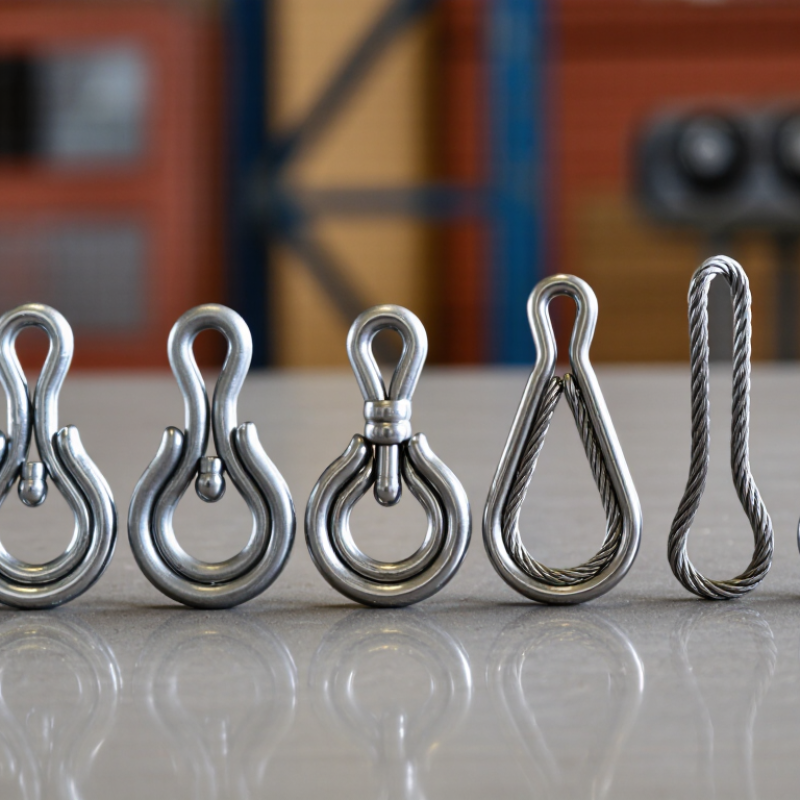
7 Best Wire Rope Thread Lifting Loops for Global Buyers

What Wire Rope Thread Lifting Loops Are and How They Work

A wire rope thread lifting loop combines a flexible steel cable assembly with a threaded end fitting. The cable is formed from multiple wire strands twisted around a core, then made into a loop for connection to a hook or lifting point. Its threaded terminal screws into a compatible, load-rated attachment or prepared hole. The loop carries the load in tension, while the fitting transfers force into the connected structure. Simple in principle. Details matter.

During a lift, the cable should sit naturally without sharp bends, crushing, or twisting. A side pull can change how forces act on the fitting and may reduce the assembly’s usable capacity.

Check the rated load and installation instructions for the exact configuration; ratings can vary with angle, connection, and application. Before use, look for broken wires, corrosion, deformation, loose threads, or damage around the loop and fitting.

Small defects count. I have seen wear near a termination draw less attention than obvious cable damage, though both deserve careful inspection. If the fit feels uncertain, pause and have a qualified person verify the setup rather than relying on appearance alone.

Key Components, Materials, and Load Ratings

7 Best Wire Rope Thread Lifting Loops for Global Buyers
Key Components, Materials, and Load Ratings

A wire rope lifting loop is an assembly, not just a cable with an eye. Its main parts may include wire rope, a thimble, a swaged ferrule, and a threaded terminal. The thimble helps the loop keep its shape under load. The ferrule secures the rope tail, so poor swaging can compromise the whole assembly. Small parts matter. Check that the thread matches the lifting point and has enough engagement.

Material choice depends on the working environment. Galvanized wire rope can suit many general applications, while stainless steel may better resist corrosion in damp or coastal settings. But material names alone do not prove suitability. Confirm the rope construction, terminal material, and manufacturer’s stated working load limit (WLL) for the complete assembly. Never guess. A cable’s diameter by itself cannot establish a safe rating.

Compare each product’s marked WLL with the intended load and lifting arrangement. Sling angle and hitch configuration can reduce capacity, so use the supplier’s load chart rather than relying on a simple visual estimate. Ask for inspection guidance and traceable product documentation. Before use, look for broken wires, crushed strands, corrosion, loose fittings, or thread damage. A detail that seems minor can be easy to overlook, even during a careful selection.

7 Best Wire Rope Thread Lifting Loops for Global Buyers - Key Components, Materials, and Load Ratings
Loop Type Wire Rope Construction Typical Materials and Components Threaded Connection Load Rating Information Key Selection Consideration
General-purpose galvanized loop Commonly 6-strand constructions such as 6×19 or 6×36; the exact rope specification varies by assembly. Galvanized carbon-steel wire rope; a compatible swaged or mechanically secured terminal; optional protective thimble. Threaded stud or end fitting selected to match the receiving component and specified thread standard. No universal WLL applies. Use the WLL marked for the complete finished assembly, not a rating inferred from rope diameter alone. Suitable for many general indoor or outdoor applications when corrosion exposure and handling conditions are considered.
Flexible handling loop Often made with a flexible 6×36-class rope construction; flexibility depends on the precise rope specification and core. Galvanized carbon-steel rope, compatible end termination, and a thimble where the eye bears on a connector. Thread size, length, and fitting style must match the mating equipment. Assembly WLL must be supplied by the manufacturer for the exact rope, termination, and configuration. Greater flexibility can ease positioning, but the loop still requires protection from sharp edges and abrasion.
Wear-resistant loop with thimble Wire rope construction is selected for the required flexibility and rated capacity. Wire rope with a metal thimble seated in the eye; terminal and thimble materials should be compatible with the service environment. Threaded terminal connects to the lifting point; the thimble protects the eye from direct contact and deformation. The thimble does not establish the WLL. Follow the marked rating for the completed loop and its specified loading method. Check that the connector fits the thimble and that the bearing surface does not create a sharp bend or pinch point.
Stainless-steel loop for corrosive environments Stainless wire rope may use constructions such as 7×19; availability and properties depend on the specified rope grade and diameter. Stainless-steel rope and compatible terminal components; stainless grade should be stated by the supplier. Use a compatible stainless threaded fitting and confirm the thread form and engagement requirements. Do not transfer a carbon-steel assembly rating to a stainless assembly. Use the WLL assigned to the exact finished product. Consider the specific corrosive medium, temperature, and risk of dissimilar-metal corrosion; stainless steel is not suitable for every environment.
Rotation-resistant loop Rotation-resistant constructions commonly use multiple layers or strands arranged to reduce torque under load; the exact construction must be specified. Specified rotation-resistant rope with a termination designed and qualified for that rope construction. Threaded end fitting must be compatible with the assembly design and secured as instructed. Use only the assembly manufacturer’s WLL. Do not assume that a rotation-resistant rope has the same rating as a conventional rope of equal diameter. Useful where rope rotation is a concern; installation, reeving, and loading restrictions are product-specific.
Compact or high-strength rope loop May use a compacted strand or another specified high-strength rope construction. Rope grade, construction, core, and termination must be identified in the product documentation. Threaded terminal must be designed for the selected rope and its termination process. A higher rope strength grade alone does not establish the finished assembly WLL. Confirm the manufacturer’s marked rating and documentation. Verify compatibility with the sheave, connector, and application; avoid substituting rope types based only on nominal diameter.
Coated or jacketed loop Wire rope with a polymer coating or jacket; the underlying rope construction should be specified separately. Coated wire rope with compatible end fittings; coating may protect against abrasion or contact but can conceal wire condition. Threaded fitting should not rely on the coating to carry load or provide thread engagement. WLL is determined by the rated finished assembly. The coating does not increase the rope’s lifting capacity. Inspect as directed by the manufacturer; damage to the coating may require closer examination of the concealed rope.

Important: A wire-rope lifting loop’s working load limit (WLL) depends on the complete assembly, including rope construction and diameter, termination, threaded fitting, and loading configuration. Select a traceable, manufacturer-rated assembly and follow its markings, inspection instructions, and applicable local lifting regulations. Never use the rope’s minimum breaking force as the WLL.

How to Evaluate Wire Rope Thread Lifting Loops for Different Applications

A wire rope thread lifting loop should be chosen for its actual load path, not just its stated capacity. Check the working load limit, thread size, and usable engagement length against the lifting point. A loop that fits loosely can shift under tension. Fit matters. For a compact machine assembly, a short loop may reduce snagging; a larger fabrication may need more clearance for sling movement.

Consider how the loop will be loaded. Straight, in-line lifting differs from angled pulls, and side loading can reduce safe capacity. Follow the supplier’s load tables rather than estimating from rope diameter alone. Check that the thread and receiving hole are compatible, with enough sound material around the hole. For outdoor or washdown settings, ask about corrosion protection and how it affects inspection.

Look closely at rope construction, end termination, and traceable test documentation. Inspect for broken wires, kinks, crushed strands, corrosion, and damaged threads before use. A polished surface is not proof of a sound assembly. Nor is a familiar size a guarantee of suitability. The details can be easy to overlook, especially when replacing an older loop; verify the specification instead of assuming the new part is equivalent. For repeated lifting, establish inspection intervals based on use and the maker’s guidance.

Seven Wire Rope Thread Lifting Loop Options for Global Buyers

Global buyers comparing wire rope threaded lifting loops should begin with the application, not the finish. Seven practical options are galvanized steel, stainless steel, PVC-coated rope, compacted-strand rope, fixed-length loops, custom-length loops, and loops with a protective sleeve. Each suits different conditions. Galvanized rope can suit general outdoor use, while stainless steel may be preferred where corrosion resistance matters. Confirm material compatibility with the working environment.

Construction changes handling. Compacted strands can create a denser rope profile, while a sleeve can help protect contact surfaces from abrasion. Fixed lengths are straightforward when lift geometry is known. Custom lengths offer flexibility, but measurements need careful checking.

Fit matters. Thread size, usable thread length, loop dimensions, and connection hardware should all match the lifting arrangement. A small mismatch can complicate installation.

Ask suppliers for clear specifications, including rope diameter, construction, material, rated capacity, and inspection guidance. Do not assume two loops with similar dimensions share the same capacity. Capacity depends on design and loading conditions, including angles and how the loop bears against the load. Some product descriptions leave these details unclear; that deserves a follow-up question, not a guess. Before use, inspect the rope, termination, and threads for wear, deformation, corrosion, or damage, and have a qualified person verify suitability for the intended lift.

Safety Standards, Inspection, and International Purchasing Considerations

For global buyers, a wire rope thread lifting loop should come with clear load ratings, material details, and traceable inspection records. Check that its working load limit matches the lift, including the sling angle and expected loading direction. A familiar standard is not automatically accepted everywhere. Ask the supplier which standard the product was designed and tested against, then confirm suitability with your qualified lifting professional. Thread size, pitch, engagement length, and receiving material all matter.

Inspect each loop before use. Look for flattened or broken wire strands, corrosion, cracked fittings, damaged threads, and unreadable identification. A loop that binds during installation should not be forced into place. Remove questionable equipment from service and follow the manufacturer’s inspection and retirement guidance. Paperwork helps, but it cannot reveal damage from rough storage or a dropped fitting.

Tips: Request a certificate linked to the item or batch, not just a generic product sheet. Compare markings with the documents. Keep inspection notes and photos. Packaging and terminology can vary between suppliers, so clarify specifications in writing; that step is easy to skip, and worth revisiting.

7 Best Wire Rope Thread Lifting Loops for Global Buyers — Safety Standards, Inspection, and International Purchasing Considerations

Under U.S. OSHA 29 CFR 1910.184(f)(5)(i), remove a wire rope sling from service if it has 10 randomly distributed broken wires in one rope lay, or 5 broken wires in one strand in one rope lay. These are broken-wire rejection thresholds, not a complete inspection checklist. Global buyers should also confirm applicable local requirements, product documentation, rated capacity, and inspection procedures.