
PACKINT - Chocolate Machines

2026 Best Kitchen Faucets for Every Budget

A kitchen faucet earns its place through hundreds of small tasks: rinsing leafy greens, filling a stockpot, and washing a muddy mug. For 2026, the best Kitchen Faucets are not automatically the most expensive. They balance dependable construction, useful reach, simple controls, and a finish that suits the room. The right choice depends on how you cook, how often you clean, and what your sink can accommodate.

Plumbing and heating expert Richard Trethewey, known for his work on This Old House, has long emphasized practical performance in plumbing fixtures. His advice points buyers toward everyday function, not showroom shine alone. Consider that when comparing a budget pull-down faucet with a premium model. A smooth hose return may matter more than a decorative handle. So can a sturdy mounting plate or an easy-to-clean spray head. Small details count.

This guide compares options across entry-level, midrange, and premium budgets, with attention to installation, materials, water flow, and warranty terms. It also flags trade-offs: an affordable faucet may have fewer finish choices, while a feature-rich model can add complexity. Some claims deserve a second look. A long warranty does not guarantee a perfect experience, and a beautiful finish can show fingerprints under bright kitchen lights. Check the measurements before buying. Then match the faucet to your sink and routine. There is no universal winner—only a better fit for your kitchen.
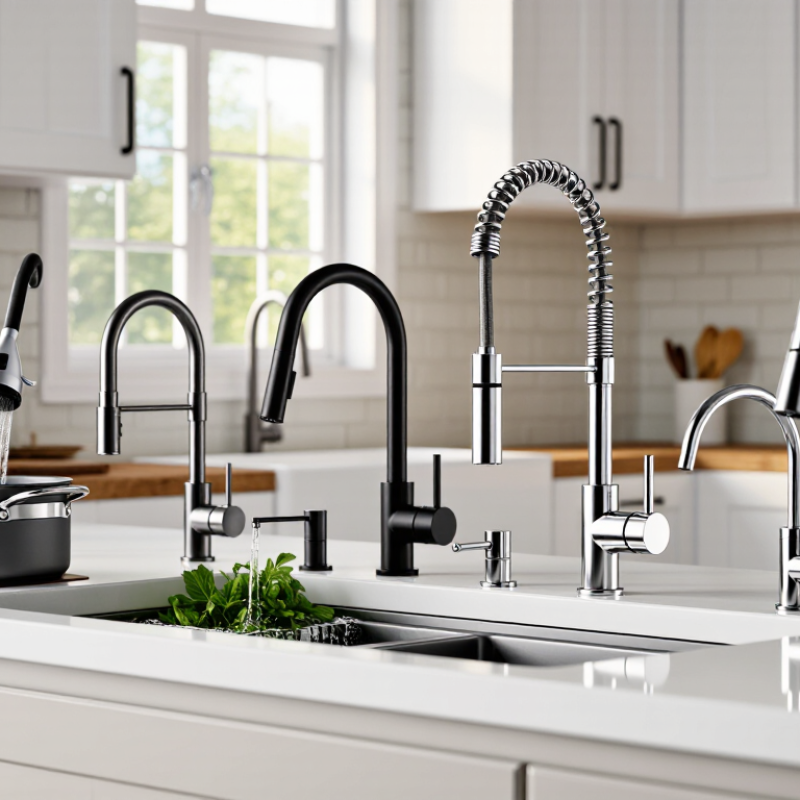
2026 Best Kitchen Faucets for Every Budget

How Kitchen Faucets Are Classified by Design and Function

Kitchen faucets are commonly classified by how they mount, how they operate, and what tasks they support. Deck-mounted models attach to the sink or countertop; wall-mounted styles need compatible plumbing behind the wall. Single-hole faucets suit compact layouts, while widespread designs separate the handles from the spout. Check the sink’s existing holes before shopping. A beautiful faucet may not fit.

Function matters just as much. Pull-down and pull-out sprayers help rinse vegetables and clean sink corners, though hose reach and docking feel vary. Fixed-spout models keep things simple. Touchless controls can reduce contact during messy cooking, but they add components that may need maintenance. Side sprays offer flexibility when a faucet lacks an integrated sprayer. Finish and construction also affect upkeep: water spots show more clearly on some surfaces, and a sturdy handle should move smoothly without wobbling. Product labels can be confusing, so compare specifications rather than relying on appearance alone.

Tips: Measure the sink holes, countertop thickness, and clearance beneath the cabinet. Test handle reach against nearby walls or windows. If you have hard water, plan to wipe the faucet regularly; mineral marks can build up. Budget matters, but a low price is not the whole story. Check the warranty and replacement-part availability before deciding.

Key Features to Compare Before Choosing a Faucet

Before comparing finishes, check flow rate and spray performance. The U.S. Department of Energy’s plumbing-product standards use 2.2 gallons per minute as a faucet-flow benchmark. EPA’s WaterSense specification sets bathroom faucets at 1.5 gallons per minute, but it does not certify kitchen faucets. That distinction matters: a lower number alone does not prove a kitchen model will rinse dishes well. Compare stated flow rates, spray options, and whether the spray head switches cleanly between stream and rinse. Test the details, not just the headline.

Fit comes next. Measure the sink’s mounting holes, deck thickness, and space behind the handle before ordering. A pull-down hose should reach the far corners without snagging, and a tall spout needs clearance beneath cabinets. Check whether the valve uses ceramic discs and whether replacement parts are available. These details affect upkeep more than a polished finish does. NSF/ANSI 61 and 372 listings can help verify materials and lead-content claims; look for the specific model, not just a general company statement. No shortcut here.

Budget changes which trade-offs make sense. A basic faucet may cover everyday tasks, while a higher-priced model may add a magnetic dock, touch control, or a longer warranty. Read warranty exclusions closely; finishes and electronic components may have different coverage. Flow-rate figures can also vary by test conditions, so compare specifications cautiously. I’d prioritize a comfortable handle, dependable spray, and easy-to-source parts over extra features. A small regret: measuring twice feels tedious, but a faucet that barely clears the backsplash feels worse.

2026 Best Kitchen Faucets for Every Budget

Compare indicative U.S. retail price bands for a faucet alone. Prices vary by finish, configuration, and retailer; installation is not included.

What to compare: faucet material and finish, spout height and reach, number of handle or spray settings, mounting compatibility, flow rate, and warranty. Check that the faucet fits your sink and plumbing before choosing.

Kitchen Faucet Options Across Budget Levels in 2026

At the entry level, a kitchen faucet should still feel stable when you swing its spout over a full sink. Check the mounting-hole layout, hose connections, and replacement-part availability before comparing finishes. A pull-down sprayer is useful for rinsing a baking tray, but a stiff hose can make daily use irritating. Small details matter.

For a midrange faucet, look for a smooth ceramic cartridge, a counterweight that returns the spray head cleanly, and a finish that is easy to wipe.

The U.S. Department of Energy’s appliance standards set a 2.2-gallon-per-minute maximum flow rate for covered kitchen faucets. That figure offers a practical baseline, not proof that one model saves more water than another. Check the product’s tested flow and installation requirements.

At higher prices, touch activation or a more flexible spray system may add convenience, but extra features also create more parts to maintain. A polished finish can still show fingerprints. Not ideal.

Before paying more, compare warranty coverage, replacement components, and whether the faucet fits your sink’s reach and clearance.

How to Match a Faucet to Your Sink and Household Needs

A faucet should fit the sink before it fits the budget. Count the deck holes, measure their spacing, and check the sink’s mounting thickness. A single-hole faucet may need a plate to cover extra openings. That small detail is easy to miss. Then measure from the faucet base to the basin drain. A short spout can leave you rinsing a large pot at an awkward angle; a high arc needs enough room beneath cabinets.

Think about the busiest moment in your kitchen. A pull-down spray head helps rinse leafy greens and clean sink corners, while a fixed spout may suit a compact basin. For a crowded household, prioritize a sturdy handle that works with wet hands and a hose that retracts smoothly. Check the stated flow rate, too. The U.S. EPA’s WaterSense guidance sets a 1.5-gallon-per-minute limit for labeled bathroom faucets, compared with 2.2 gpm for standard bathroom models. That is a useful efficiency benchmark, not a kitchen-faucet certification; compare kitchen specifications separately. Lower flow can feel slower, and that trade-off deserves an honest test. EPA estimates that replacing old bathroom faucets can save a family about 700 gallons of water annually, but kitchen savings depend on use and fixture performance. I’d bring sink measurements and a photo to the store. Research helps, but real clearance can still surprise you.

Installation, Care, and Long-Term Value of Kitchen Faucets

A low-priced kitchen faucet can be a sensible choice if its fittings suit your sink and its parts are replaceable. Before buying, measure the mounting holes and check the space below the basin. Confirm that supply lines reach the shutoff valves without stretching. Pull-down models also need room for the hose and counterweight. A neat-looking installation is not always a comfortable one.

Tips: Turn off the water before connecting anything, and keep a towel under the valves. Follow the faucet’s installation instructions; connection details vary. After turning the water back on, check each joint with a dry tissue. It reveals small leaks quickly. Wipe the faucet with mild soap and a soft cloth. Skip abrasive pads, which can dull finishes. If the spray weakens, mineral buildup in the aerator may be the cause.

Long-term value depends on more than the purchase price. A replaceable cartridge, accessible aerator, and readily available repair parts can extend useful life. Still, no faucet is maintenance-free, and hard water may leave deposits despite regular cleaning. Notice whether the handle becomes stiff or the base shifts; early attention may prevent a minor issue from becoming a cabinet leak. A modest faucet that fits well can outperform a pricier model that is awkward to use. The trade-off is real.

2026 Best Kitchen Faucets for Every Budget - Installation, Care, and Long-Term Value of Kitchen Faucets

Faucet Type Typical Faucet Price (USD) Common Features Installation Considerations Routine Care Long-Term Value
Basic single-handle $40–$120 Single lever; fixed or simple swivel spout; usually a standard aerator. Often suitable for common one- or three-hole sinks; check whether a deck plate is included. Allow about 1–2 hours for a straightforward DIY replacement. Wipe with a soft cloth and mild soap; periodically clean the aerator to remove mineral deposits. A practical low-cost choice when the sink layout is standard and replacement parts are available.
Mid-range pull-down $120–$300 Retractable spray head, selectable spray patterns, and a weighted or guided hose. Confirm cabinet clearance for the hose and weight, plus the number of sink or countertop holes. Installation is often a 1–3 hour DIY job if connections are accessible. Rinse the spray-face nozzles and check that the hose retracts freely; avoid pulling the hose against sharp cabinet edges. Useful everyday flexibility without the cost of advanced controls; hose and spray-head replacement availability matters.
Pull-out faucet $80–$250 Detachable spray head with a shorter, forward-pulling hose; often suited to compact sinks. Check hose reach and clearance around the sink. As with other replacement faucets, shutoff valves must be accessible and in working order. Clean the spray face and inspect the hose for kinks or wear; use non-abrasive cleaners on the finish. A space-saving alternative to a high-arc pull-down model; value depends on hose durability and ease of obtaining replacement parts.
Premium pull-down $300–$700+ May include a more substantial metal body, multiple spray modes, a magnetic or guided docking system, and a longer warranty. Verify dimensions, hole configuration, hose-weight clearance, and included supply lines. A plumber may be preferable if shutoff valves or connections need repair. Follow the finish-care instructions; periodically check connections for drips and clean the aerator or spray nozzles. Higher initial cost can be worthwhile for frequently used features, repairable components, and accessible service parts.
Touchless or electronic $200–$800+ Sensor-activated water flow; some models include a manual handle, temperature control, or automatic shutoff. Allow room for the control module and power source beneath the sink. Check battery or outlet requirements and sensor placement before buying. Keep the sensor window clean and replace batteries as needed; protect electronic components from moisture and follow the manual. Convenient for hands-free use, but ongoing value depends on battery life, electronic-component support, and repair options.
Two-handle or bridge-style $150–$600+ Separate hot and cold controls; bridge designs connect the handles and spout above the countertop. Requires a compatible hole layout and adequate spacing. Older sinks may need careful measurement before purchase. Clean around the handles and joints; service washers or cartridges according to the faucet’s instructions if dripping develops. A good fit when the desired look and separate controls justify the added space and more involved installation.

Price ranges are general U.S. retail estimates for the faucet only and can vary by materials, finish, features, and seller. Installation time assumes an accessible, compatible replacement; plumbing repairs, new holes, or electrical work can add time and cost. Actual service life varies with water quality, usage, installation, and maintenance.