
PACKINT - Chocolate Machines

7 Best EPS Casting Pattern Mould Suppliers in 2026

Selecting an Eps Casting Pattern Mould supplier is becoming a technical decision, not merely a price comparison. The global metal casting market was valued at approximately USD 151.7 billion in 2023, according to Grand View Research. Its projected growth through 2030 reflects continuing demand for efficient, repeatable production.

The scale is impressive. The practical risks are smaller, but costly. A weak foam bead structure can create uneven surfaces, fragile corners, or unstable vaporization during pouring. Poor dimensional control may also force pattern rework before the first acceptable casting appears. These details matter.

This guide examines seven leading Eps Casting Pattern Mould suppliers in 2026. It considers machining accuracy, foam compatibility, mold durability, cooling design, customization, quality systems, and after-sales support. Supplier evidence, production experience, and transparent technical communication receive greater weight than promotional claims.

John Campbell, a respected casting engineer and author, wrote, “Castings are not made; they are grown.” His observation remains relevant to lost-foam production. The pattern, coating, sand compaction, metal temperature, and pouring method interact continuously. A supplier cannot solve every process weakness. Buyers should remember that.

Some evaluations remain imperfect. Public supplier data is often incomplete, and published specifications may not match factory conditions. That limitation deserves attention. This ranking therefore combines reported capabilities with practical selection criteria, helping foundries compare suppliers more realistically. The best choice is not always the largest manufacturer. It is the partner that consistently delivers accurate patterns, stable communication, and measurable process support.
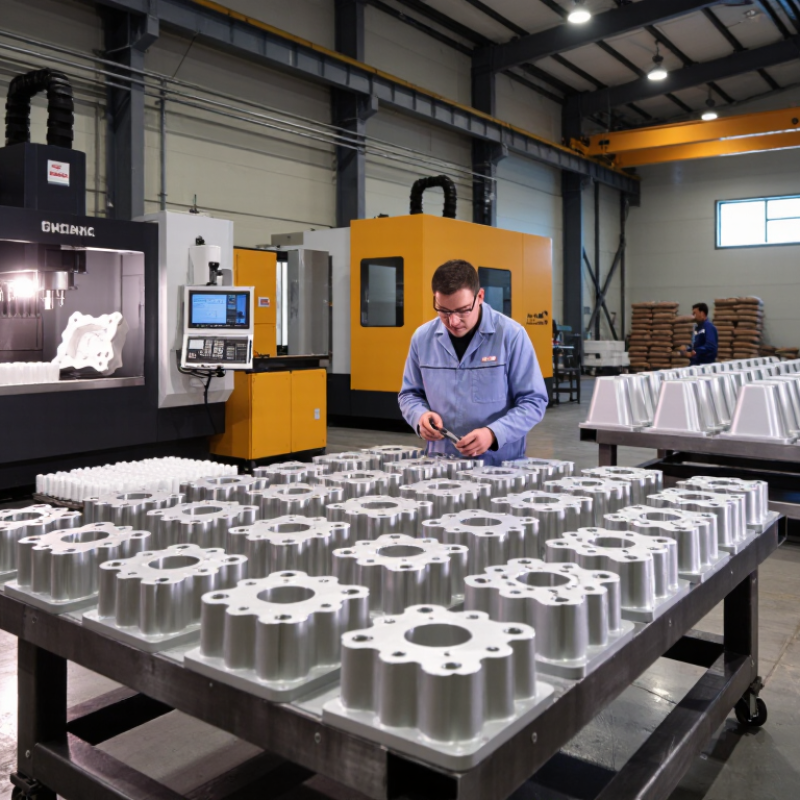
7 Best EPS Casting Pattern Mould Suppliers in 2026

Understanding EPS Casting Pattern Moulds and Their Industrial Uses

EPS casting pattern moulds are tools for producing sacrificial foam patterns used in lost-foam casting. Expanded polystyrene beads are shaped, fused, and fitted into the mould. The finished pattern is coated, placed in dry sand, and replaced by molten metal. This method supports complex shapes with fewer assembly joints. It is widely used for engine housings, pump bodies, agricultural parts, and selected construction components.

A reliable mould should provide even bead fusion and stable dimensions. Small vents matter. Without them, trapped air can create weak corners or incomplete pattern filling. Aluminium tooling often suits repeated production because it transfers heat efficiently. Mould design should also consider draft angles, foam density, shrinkage, coating thickness, and cooling time. These details influence casting accuracy more than appearance alone. Trial samples remain essential.

A practical supplier assessment should include machining tolerance records, material certificates, process inspection, and repair support. Ask for sample patterns, not only catalogue images. Check thin ribs, deep cavities, parting lines, and ejector marks under real conditions. A common shop-floor lesson is simple: a beautiful mould can still produce inconsistent foam. I have seen teams focus on cycle speed and overlook vent cleaning. That choice caused unstable pattern surfaces. The better approach combines testing, operator feedback, and measured adjustments. No mould is perfect on its first trial.

Key Criteria for Evaluating EPS Casting Pattern Mould Suppliers

Key Criteria for Evaluating EPS Casting Pattern Mould Suppliers

Supplier evaluation should begin with measurable process control, not catalogue claims. The ISO Survey 2023 reported more than 1.2 million ISO 9001 certificates worldwide. Certification alone proves little, but documented inspection routines matter. Ask for EPS bead density, expansion ratio, dimensional tolerance, and mould temperature records. A reliable supplier should explain how each variable affects surface finish and casting defects.

Industry reports continue to show strong demand for lightweight and energy-efficient casting methods. A 2024 market analysis by Research and Markets identified automation and material efficiency as major foundry investment drivers. Therefore, examine CAD data exchange, CNC accuracy, venting design, and repeatability between production batches. Request a sample pattern, inspection report, and trial-casting evidence. Small details matter: uneven bead fusion can leave a rough corner, while weak vents may trap gas inside a narrow channel.

Experience is visible in problem-solving speed. Ask how the supplier handled shrinkage, warped patterns, or late design changes. Their answer should include corrective actions, not vague promises. Traceability also deserves attention, including resin lot numbers, operator checks, and revision control. However, no supplier performs perfectly every time. A useful warning sign is the refusal to discuss failures. Evaluate communication, technical documentation, lead-time accuracy, and after-sales support alongside price. The cheapest mould can become expensive after repeated repairs and rejected castings.

Seven Leading EPS Casting Pattern Mould Suppliers to Consider in 2026

Seven Leading EPS Casting Pattern Mould Suppliers to Consider in 2026 should be judged by measurable production evidence, not attractive catalogues. Modern Casting’s 2024 World Casting Census reported global casting output above 100 million tonnes in 2023. That scale increases pressure on pattern accuracy, repeatability, and delivery control.

The seven supplier profiles worth screening include precision CNC foam cutters, bead-moulding specialists, custom pattern designers, coating providers, fixture manufacturers, inspection-service partners, and integrated turnkey teams. Experienced buyers should request sample tolerances, foam density records, dimensional reports, and documented trial results.

A reliable supplier can explain how mould temperature, bead expansion, venting, and coating thickness affect surface defects. It should also identify limitations openly.

Industry research from MarketsandMarkets continues to show strong growth across the global metal casting sector, supported by automotive, energy, and industrial equipment demand. However, forecasts differ between reports. That matters. Treat market numbers as directional, not absolute.

The best supplier may not offer the lowest quotation. It may reduce rework through stable tooling, clear revision control, and faster corrective action. Ask for evidence.

Pilot runs are useful. Very useful. Inspect the first patterns under realistic pouring conditions, rather than trusting laboratory claims alone. Supplier evaluations should also cover CAD compatibility, replacement-part support, operator training, and production capacity during peak periods.

My own caution is simple: a seven-company shortlist can still miss a capable regional workshop. Procurement teams should revisit the list after every major project.

Comparing Supplier Capabilities, Quality Standards, and Customization Options

Choosing among the 7 best EPS casting pattern mould suppliers in 2026 requires more than comparing prices. Supplier capability should match your casting size, production volume, and tooling complexity. Ask whether the workshop can process detailed CAD files, control bead density, and maintain stable dimensions after steaming. A practical review should include machine capacity, operator experience, inspection equipment, and documented production records.

Quality standards deserve close attention. Request sample reports showing dimensional tolerances, surface condition, pattern weight, and bead fusion. Inspect a physical sample, not only photographs. Small surface voids can become visible defects after coating or metal pouring. Reliable suppliers should explain their inspection process and provide traceable material information. Certifications may help, but they do not replace process evidence.

Customization often separates a suitable supplier from an average one. Confirm options for split moulds, removable sections, draft adjustments, reinforcement areas, and protective coatings. Discuss revisions before approving the tooling design. A trial pattern can reveal shrinkage or assembly problems early. Do not ignore communication speed.

It matters more than expected.

From project experience, supplier comparisons are rarely perfect. Some workshops offer excellent precision but struggle with urgent changes. Others provide flexible engineering support but have weaker documentation. A clear scorecard helps, yet an on-site audit or independent sample inspection may still be necessary. The best choice depends on consistent capability, transparent quality control, and customization that works on the production floor.

How to Select the Right EPS Casting Pattern Mould Supplier for Your Project

7 Best EPS Casting Pattern Mould Suppliers in 2026

Choosing an EPS casting pattern mould supplier requires more than comparing quotations. Start with dimensional accuracy, bead density, fusion quality, and repeatability. Ask for inspection records from similar projects. A reliable supplier should provide mould drawings, tolerance data, sampling plans, and material specifications before production. Request a physical trial pattern, not only photographs. Small details matter. Check thin ribs, deep cavities, draft angles, and lifting points.

Supplier capacity also deserves careful examination. The World Foundry Organization’s 2023 Census reported more than 109 million tonnes of global casting production in 2022. This scale increases pressure for stable, high-volume tooling. Confirm the supplier’s machining equipment, lead-time history, replacement-part process, and production backup. For EPS patterns, evaluate bead pre-expansion control and mould venting. Inconsistent density can cause filling defects, poor surface quality, or dimensional variation.

Certification helps, but it cannot replace evidence. The ISO Survey 2023 recorded over 1.26 million ISO 9001 certificates worldwide. That number shows the value of quality systems, not automatic supplier competence. Review corrective-action reports and customer acceptance records. Ask how the supplier handles failed trials. A candid answer is useful. I would also score communication speed, engineering support, and packaging protection. My own caution is simple: the lowest price may hide weak process control, yet expensive tooling is not always better. Validate both claims with samples, measurements, and documented production results.

7 Best EPS Casting Pattern Mould Suppliers in 2026 - How to Select the Right EPS Casting Pattern Mould Supplier for Your Project
Anonymous supplier-selection benchmark based on common lost-foam casting requirements. Use the profile that most closely matches your casting material, pattern size, annual volume, accuracy requirements, and tooling strategy.
Rank Supplier Profile Best Application Recommended EPS Density Typical Pattern Size Indicative Dimensional Tolerance Mould Construction Suitable Production Volume Typical Development Lead Time Key Selection Advantage Overall Fit
1 High-Volume Automotive Profile
Designed for repeatable production of complex vehicle components.
Engine housings, transmission cases, brackets, suspension parts 24–32 kg/m³ Small to large patterns
Up to approximately 1,500 mm
About ±0.5–1.0 mm, subject to geometry and casting process CNC-machined aluminium or steel moulds with replaceable inserts High volume
10,000+ patterns per year
Approximately 4–8 weeks after approved drawings Strong process repeatability, automated bead filling, and production quality control ★★★★★
2 Complex Geometry Specialist
Suited to castings containing deep cavities, ribs, and irregular surfaces.
Pumps, impellers, manifolds, valve bodies, and intricate industrial parts 20–28 kg/m³ Small to medium patterns
Up to approximately 1,000 mm
About ±0.6–1.2 mm, depending on wall thickness and shrinkage allowance Multi-part moulds, removable cores, and precision alignment features Low to medium volume
100–5,000 patterns per year
Approximately 5–10 weeks Strong capability in split tooling, venting design, and difficult parting lines ★★★★★
3 Large-Pattern Foundry Profile
Intended for oversized castings where pattern stability is critical.
Industrial machine bases, pump bodies, large housings, and structural castings 18–25 kg/m³ Large patterns
Approximately 1,000–3,000 mm
About ±1.0–2.0 mm, influenced by pattern length and handling conditions Reinforced aluminium tooling with lifting points and modular sections Low to medium volume
20–1,000 patterns per year
Approximately 6–12 weeks Better control of distortion, handling damage, and large-area cooling ★★★★☆
4 Rapid Prototyping Profile
Focused on short development cycles and design validation.
New product development, sample castings, and engineering prototypes 16–24 kg/m³ Small to medium patterns
Up to approximately 800 mm
About ±1.0–2.0 mm for early-stage prototypes Polymer or low-cost aluminium tooling; CNC or additive pattern production Prototype and very low volume
1–100 patterns per project
Approximately 1–4 weeks Fast design iteration, quick sample approval, and lower initial tooling cost ★★★★☆
5 Short-Run Industrial Profile
Balanced for recurring orders without high-volume tooling investment.
Agricultural machinery, construction equipment, general engineering parts 20–30 kg/m³ Small to large patterns
Up to approximately 1,800 mm
About ±0.8–1.5 mm Standard aluminium moulds with manual or semi-automatic filling Medium volume
500–10,000 patterns per year
Approximately 4–8 weeks Practical balance among tooling cost, durability, and production flexibility ★★★★☆
6 Cost-Efficient Standard-Part Profile
Appropriate when geometry is relatively simple and price is a major factor.
Covers, simple housings, counterweights, and non-critical cast components 16–24 kg/m³ Small to medium patterns
Up to approximately 1,200 mm
About ±1.0–2.0 mm Standard aluminium tooling with limited inserts and simple parting design Low to medium volume
50–3,000 patterns per year
Approximately 3–7 weeks Lower upfront tooling expense and simple maintenance requirements ★★★☆☆
7 High-Temperature Alloy Casting Profile
Developed for demanding alloys and casting environments.
Heat-resistant steel, stainless steel, ductile iron, and alloyed castings 24–35 kg/m³ Small to large patterns
Up to approximately 1,500 mm
About ±0.7–1.5 mm, depending on alloy shrinkage and coating system Heat-stable aluminium tooling with reinforced areas and controlled venting Low to high volume
100–10,000+ patterns per year
Approximately 6–12 weeks Better control of coating compatibility, gas evolution, and dimensional stability ★★★★☆
Selection checklist: Confirm the supplier’s actual pattern tolerance, EPS bead density control, mould material, cooling and venting design, coating compatibility, inspection method, sample approval process, packaging standard, spare-part support, and total delivered cost before placing an order. The ranges above are indicative engineering benchmarks rather than guaranteed specifications.