
What Is the Best Chocolate Panning Machine in 2026?
Choosing the best chocolate panning machine in 2026 depends on the product, batch size, and level of automation—not just the quoted price. A small confectionery workshop coating almonds has different needs from a factory running continuous batches. No single winner.
Industry figures help explain why equipment choices deserve careful review. The International Cocoa Organization’s May 2024 Quarterly Bulletin forecast a 439,000-tonne global cocoa deficit for the 2023/24 season. That forecast is not a machine-performance measure, but it highlights the value of controlling coating loss and rework. The World Bank’s Commodity Markets Price Data also tracks cocoa prices, giving buyers useful context when estimating material costs. Reports describe market conditions; they cannot tell you how a specific machine will perform with your recipe.
This guide compares practical features: pan capacity, speed control, airflow, temperature management, cleaning access, and coating consistency. It also considers whether a machine suits chocolate-coated nuts, dried fruit, or centers with irregular shapes. Look for test-batch evidence, clear service terms, and realistic throughput figures. A polished brochure is not enough. Some specifications are difficult to compare across manufacturers, and that deserves scrutiny. The best chocolate panning machine is the one that fits your product and production routine while delivering repeatable results.
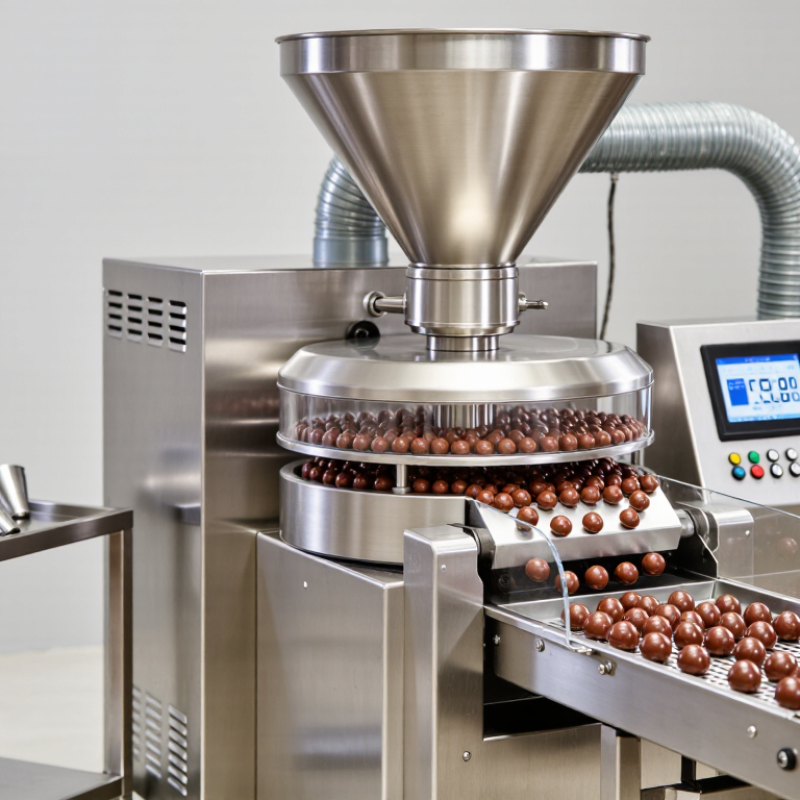
What Is a Chocolate Panning Machine and How Does It Work?
What Is the Best Chocolate Panning Machine in 2026?
What Is a Chocolate Panning Machine and How Does It Work?
A chocolate panning machine coats centers such as nuts, dried fruit, or crisp cereal pieces with chocolate. Its main parts are a rotating pan, a controlled heat source, and airflow for cooling. As the pan turns, pieces tumble over one another, exposing their surfaces for an even coating. The motion should be steady, not harsh. Too much speed can chip delicate centers.
Operators add chocolate in small amounts, allowing each layer to spread before adding more. Cool, dry air helps the coating set between applications. Temperature, batch size, and rotation speed all affect the finish. A glossy shell is possible, but results depend on the chocolate and the operator’s control. In practice, the first batch may look uneven. That is useful feedback, not a reason to rush. The “best” machine in 2026 is the one suited to the product, output, and available workspace.
Tips: Test a small batch first. Keep notes on coating weight, air temperature, and cycle time. Check that pieces move freely; clumping often signals too much chocolate or insufficient drying. Clean the pan between batches, since leftover coating can create rough spots. Don’t chase speed. A slower, consistent process often gives a better finish.
| Machine type | How it works | Best suited for | Main advantages | Points to consider | Practical selection checks |
|---|---|---|---|---|---|
| Rotating coating pan Flexible batch production |
A tilted pan rotates a bed of centers, such as nuts, dried fruit, or confectionery pieces. Chocolate is added in controlled doses while conditioned air helps remove heat and set each layer. | Small and medium batch production, product development, and facilities that make several coated products. | Versatile for different centers and coating recipes; relatively straightforward to operate and clean. | Coating uniformity depends on pan loading, rotation, chocolate dosing, and air conditions. Manual handling may limit output. | Check variable-speed control, pan access, food-contact materials, chocolate dosing method, and the availability of filtered, temperature-controlled air. |
| Perforated rotating pan Improved airflow |
Centers tumble in a rotating perforated drum. Air passes through the perforations and across the product bed as chocolate is applied in successive layers. | Producers seeking more effective heat removal and repeatable coating conditions for regular batch runs. | Air can reach more of the tumbling product, supporting more consistent cooling and setting than a solid-pan arrangement in suitable applications. | Perforation size and product shape matter: small or fragile centers may require careful evaluation to avoid loss or damage. | Confirm that the perforations suit the smallest center, inspect cleaning access, and assess air distribution across the full product bed. |
| Continuous panning system Higher-throughput production |
Product moves continuously through a rotating coating drum or a sequence of coating and conditioning zones. Chocolate application and airflow are coordinated with product flow. | Established, high-volume production of products with consistent recipes and predictable demand. | Can reduce stop-start handling and support steady production when feeding, coating, and downstream processes are properly matched. | Requires careful line integration, stable product feed, process controls, and suitable space. Changeovers and commissioning can be more involved. | Evaluate the complete line—not just the drum—including feed rate, coating stages, cooling air, collection, cleaning, and downstream packaging capacity. |
| Laboratory or pilot-scale pan Trials and small batches |
A compact rotating pan reproduces the basic tumbling, chocolate application, and cooling steps on a smaller quantity of product. | Recipe development, process trials, sample production, and testing centers before a larger-scale investment. | Uses less material for trials and makes it easier to compare coating recipes and operating conditions. | Small-scale results do not automatically translate to production scale; airflow, product movement, and heat transfer can change with equipment size. | Look for adjustable rotation and dosing, practical cleaning access, and a test plan that checks whether trial results can be scaled up. |
| Best general-purpose choice For many batch producers |
A batch rotating pan with adjustable speed, controlled chocolate dosing, and managed cooling airflow is a useful starting point for a range of panned chocolate products. | Businesses that need flexibility across multiple centers or are moving from manual coating toward more controlled batch production. | Balances versatility and process control without assuming the production volume or product mix is the same for every operation. | There is no single best machine for every producer. Required capacity, center shape, coating thickness, labor, cleaning, and available space affect the choice. | Run trials with the actual center and chocolate; compare coating consistency, breakage, cycle time, cleanability, and total line requirements before purchase. |
How chocolate panning works: Centers tumble inside a rotating pan while chocolate is added in controlled amounts. Airflow removes heat so the coating can set between applications. Repeating the application and setting steps builds the required coating. Operating conditions depend on the chocolate formulation, center, machine design, and production environment.
Related Posts
-
How to Choose the Best Chocolate Enrobing Machine for Your Business
-

Unlocking the Advantages of Chocolate Panning Machines for Your Confectionery Business
-
How to Select the Best Chocolate Panning Machine for Your Production Needs
-

What is the History and Fun of Chocolate Coins? Discover Their Sweet Magic!
-

How to Choose the Best Hot Chocolate Machines for Your Needs?
-
What is a Confectionery Machine and How Does It Transform Candy Production