Choosing the right chocolate making machines in China requires more than comparing prices and production capacity. A reliable machine must create stable results, batch after batch. It should control temperature accurately, refine chocolate smoothly, and deposit uniform pieces. Small differences matter. A few degrees can change gloss, texture, and shelf life.
Dr. Stephen T. Beckett, a respected chocolate technology author, described chocolate manufacture as “a combination of art and science.” This principle remains useful when evaluating Chinese equipment. The best suppliers combine engineering knowledge with practical experience in chocolate production. Their machines should offer dependable tempering systems, efficient cooling tunnels, hygienic contact surfaces, and accessible maintenance points. Operators should also receive clear manuals, training, spare parts, and responsive technical support.
This guide examines leading chocolate making machines from China for different production needs. It considers laboratory equipment, small workshop machines, and industrial lines. Actual performance matters more than impressive brochures. Look closely at heating stability, motor performance, cleaning time, energy use, and finished-product consistency. Ask whether the supplier can provide factory videos, test samples, and transparent specifications.
A perfect machine does not exist. Even a strong system may need careful calibration. One overlooked detail can become an expensive problem. My evaluation also recognizes that supplier communication is sometimes uneven, especially when technical terms are translated poorly. That weakness deserves attention, not excuses. By comparing machine design, manufacturing quality, service capability, and total ownership cost, buyers can make a more confident decision. The goal is simple: produce attractive chocolate reliably, safely, and profitably.
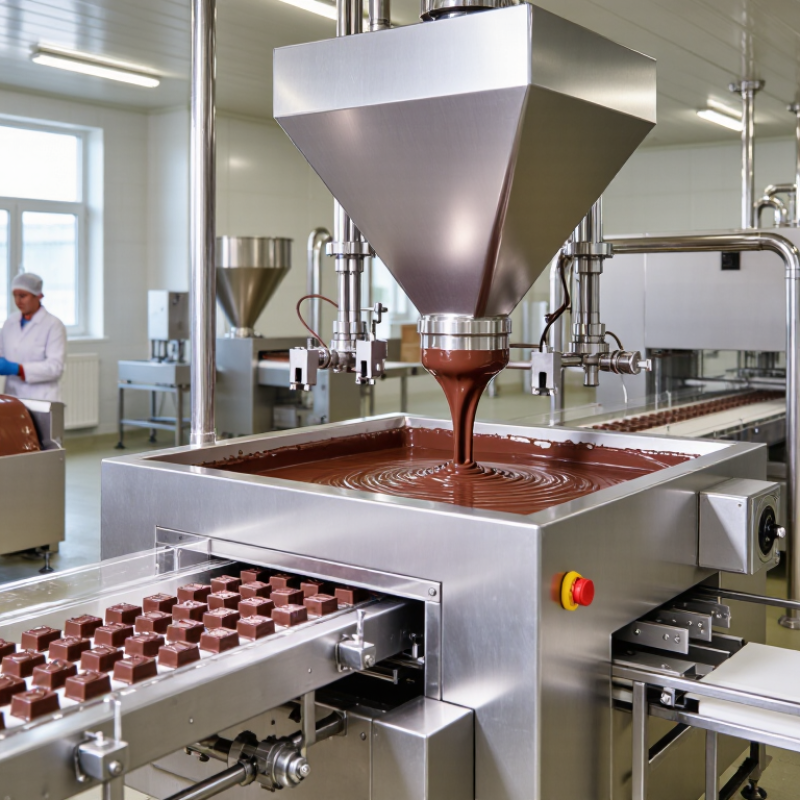
Chinese chocolate machines are best classified by both function and capacity. Small 5–20 kg/h units usually include melting tanks, compact tempering machines, and tabletop molding systems. They suit pastry kitchens, testing rooms, and small workshops. Machines producing 20–100 kg/h often combine tempering with depositing, supporting retail batches and seasonal products.
For 100–300 kg/h, manufacturers commonly offer automatic tempering, molding, cooling, and basic enrobing lines. These systems need stable chocolate temperature and accurate pump control.
Medium factories may choose 300–800 kg/h lines with refining, conching, molding, and cooling tunnels.
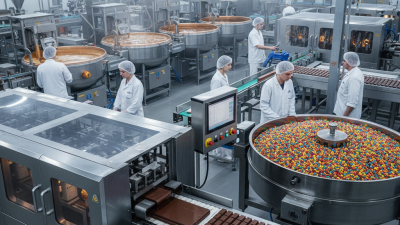
High-capacity systems, reaching 800–2,000 kg/h, are designed for continuous production. They require stronger utilities, wider conveyors, better ventilation, and trained operators.
A neat catalog number can mislead. Actual output changes with recipe, mold size, product thickness, and cleaning time. My early estimates were too optimistic.
Tips:
Test the machine with your actual chocolate before purchase. Ask for measured output, not only rated capacity. Check temperature uniformity at several points. Inspect contact parts for easy cleaning. Confirm spare-part availability and operator training. A smaller machine may perform better than an oversized line when demand is uncertain. Also review power consumption, floor space, and cooling-water requirements. Leave room for maintenance access; crowded layouts create avoidable delays.
When comparing chocolate-making machines in China, conche performance deserves close attention. Processing time often ranges from 12 to 48 hours, depending on recipe, batch size, and moisture level. A 12-hour cycle may suit a fluid dark chocolate with refined ingredients. Milk chocolate, nut pastes, or high-cocoa formulas may need longer treatment.
That difference matters. Experienced operators should test identical recipes under identical loads. Record temperature, motor current, aroma changes, and viscosity every few hours. A stable jacket system helps prevent overheating during extended conching. Scraper design also matters, because uneven wall contact can leave thick chocolate along the vessel. Some machines reach particles below 25 μm, but this figure needs verification through laser diffraction testing. A smooth mouthfeel cannot be confirmed by appearance alone.
In practical trials, the best equipment maintains consistent airflow and removes unwanted acidic notes without excessive chocolate loss. Vacuum-assisted conching can improve moisture removal, yet poor control may create foaming or unstable texture. Not every batch improves at 48 hours. Longer processing can reduce fresh cocoa aromas and raise energy costs. I would request a factory test using your actual formula, not a sample recipe. Ask for particle-size data, temperature records, sanitation procedures, and discharge losses. Small details often decide reliability. A machine may look impressive, but uneven results after several batches reveal more than a polished demonstration.
| Machine Configuration | Typical Batch Capacity | Conching Time | Typical Final Particle Size | Operating Temperature | Approx. Installed Power | Typical Production Use | Performance Notes |
|---|---|---|---|---|---|---|---|
| Compact Two-Arm Conche | 50–150 kg | 12–18 h | 20–25 μm | 45–60°C | 7.5–18.5 kW | Pilot production and small workshops | Suitable for milk and dark chocolate when the refining stage has already reduced coarse particles. |
| Standard Horizontal Conche | 200–500 kg | 16–24 h | 18–25 μm | 45–65°C | 22–45 kW | Small and medium-scale chocolate lines | Offers a practical balance between flavor development, moisture reduction, viscosity control, and throughput. |
| Jacketed Heavy-Duty Conche | 500–1,000 kg | 20–30 h | 18–23 μm | 50–70°C | 45–90 kW | Continuous commercial production | The larger working volume supports stable heat transfer and consistent long-cycle processing. |
| Twin-Shaft Intensive Conche | 500–1,500 kg | 24–36 h | 15–22 μm | 50–75°C | 75–160 kW | Premium chocolate and high-volume lines | Higher shear and improved aeration control can support smoother texture and stronger flavor development. |
| Vacuum Conche with Automated Dosing | 1,000–2,000 kg | 30–40 h | 15–20 μm | 50–70°C | 110–220 kW | Industrial production with recipe control | Vacuum processing helps remove moisture and volatile acids while automated dosing improves batch repeatability. |
| Long-Cycle Premium Conche | 1,000–3,000 kg | 36–48 h | 12–18 μm | 50–75°C | 150–315 kW | High-end couverture and specialty chocolate | Provides the longest flavor-development cycle and the lowest typical particle-size range, subject to proper upstream refining. |
What Are the Best Chocolate Making Machines in China?
Tempering accuracy separates a reliable chocolate machine from a polished-looking disappointment. For dark, milk, and white chocolate, working temperatures commonly sit between 28°C and 32°C. A serious machine should maintain the selected point within ±0.5°C under changing loads. That means 30°C should remain between 29.5°C and 30.5°C, not drift toward 31.5°C during continuous production.
Test the chocolate itself, not only the control panel. Use a calibrated probe at the outlet, then repeat measurements after five, fifteen, and thirty minutes. Check small and full batches. A 2024 food processing equipment survey by PMMI identified automation, repeatability, and process monitoring as major investment priorities. These priorities matter here. A smooth touchscreen means little if the chocolate exits with uneven crystals, dull surfaces, or visible streaks.
The International Cocoa Organization estimated 2023/24 global cocoa production at about 4.8 million tonnes. That scale increases pressure for stable, measurable processing. Ask Chinese suppliers for temperature-mapping records, calibration procedures, and test results at 28°C, 30°C, and 32°C. Verify recovery time after adding fresh chocolate. It should be recorded in minutes. One weakness remains: factory demonstrations often use ideal room conditions. Your workshop may be warmer, colder, or more humid. Test before purchase. A displayed number can still be wrong.
Tempering accuracy reference test at 28–32°C using a ±0.5°C control tolerance. The comparison uses anonymous machine categories rather than company or brand names.
Lower average temperature deviation indicates more precise tempering control. The pass rate represents the percentage of recorded readings maintained within ±0.5°C of the selected setpoint across the 28–32°C operating range.
Choosing the best chocolate making machine starts with food safety, not speed or appearance. A reliable supplier should explain how the machine supports GMP procedures, HACCP controls, and ISO 22000 systems. Ask for the certificate number, issuing body, validity period, and certified production site. A copied document proves very little.
Inspect the machine closely. Food-contact parts should use suitable stainless steel, with smooth welds and no hidden powder traps. Check the melter, mixer, pump, and cooling tunnel for easy cleaning. Ask to see sanitation records, allergen controls, temperature logs, and calibration reports. Traceability matters. Can the supplier identify the material lot used for one finished machine?
CE requires careful verification. It generally concerns applicable European safety, health, and environmental requirements, rather than chocolate hygiene alone. Request the Declaration of Conformity, risk assessment, electrical drawings, and relevant test reports. Confirm that the documents match the exact model and configuration. A generic CE logo is not enough.
Small details reveal experience. During a factory visit, open inspection doors and examine corners, seals, and drain areas. Ask operators to demonstrate cleaning and emergency-stop functions. Paperwork may look perfect, yet a loose gasket can collect chocolate residue. I would also record questions that remain unanswered. Compliance checks are not flawless, and honest gaps deserve follow-up before purchase.
The top choice for low energy use is a compact chocolate tempering machine. It heats and cools chocolate through controlled cycles, avoiding constant full-power operation. A 10–30 kilogram model often suits small workshops and reduces unnecessary waste. However, energy figures can be misleading. Ask for measured consumption under normal production, not only motor ratings.
For automation, continuous enrobing and molding machines rank higher than manual tempering units. They can control temperature, belt speed, filling volume, and cooling time with limited operator input. This improves batch consistency and reduces labor pressure. Still, advanced automation adds sensors, software, and maintenance points. I have seen simple controls outperform complicated systems when operators lack training.
Warranty and total cost deserve equal attention. A longer warranty is useful only when heating elements, pumps, and control boards are clearly covered. Request spare-part prices, service response times, installation fees, and training costs in writing.
The cheapest machine may need frequent cleaning or expensive replacement parts. That changes the real purchase price. My practical ranking places a reliable semi-automatic machine above a cheaper fully automatic model with uncertain support.
Stainless steel construction, accessible pipes, and removable food-contact parts also reduce cleaning time. Some suppliers provide impressive demonstrations, but factory testing under your chocolate recipe is more trustworthy. My judgment may change after checking noise, temperature recovery, and electricity use during a full shift.