What Is the Best Car Garage Lift for 2026?
Choosing the best Car Garage Lift for 2026 starts with the vehicles you actually own, not an optimistic guess about future projects. A compact sedan and a heavy pickup place very different demands on lift capacity, arm reach, and ceiling clearance. Measure the garage floor, note the ceiling height, and check where the vehicle’s approved lifting points sit. A tape measure can prevent an expensive mismatch.
Bob O’Gorman, president of the Automotive Lift Institute, has emphasized lift safety through proper installation, training, and inspection. In paraphrase, his guidance is: “Rated capacity alone does not make a lift safe; correct setup, training, and inspection matter.” That principle belongs in every buying decision. Look for clearly documented capacity, compatible vehicle specifications, available service support, and a design suited to your floor and ceiling. Do not treat a low price or a polished product photo as proof of quality.
Details matter. A two-post lift may suit a clear, high-ceilinged bay, while a four-post model can offer a different approach for storage or routine service. Portable options may save space, but they still need a stable, suitable surface. Check the locking system, instructions, warranty terms, and inspection requirements before purchase. Then compare total cost, including installation and maintenance.
There is no perfect choice for every garage. Even careful buyers can miss a constraint. This guide weighs real-world fit, safety features, and value to help you choose a Car Garage Lift with fewer surprises. Start with measurements. Then question the marketing.
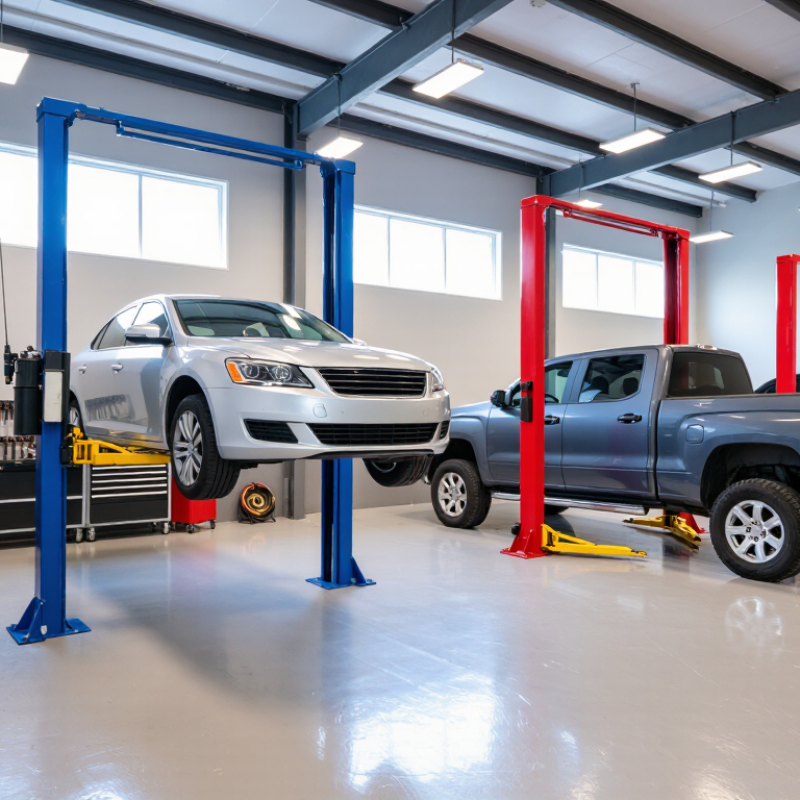
How Automotive Garage Lifts Work and What They Are Used For
A garage lift creates working space beneath a vehicle by raising it on a platform or a set of support arms. Most models use hydraulic pressure, electric motors, or a combination of both. The operator positions the vehicle over the lift, aligns its approved lifting points, and raises it slowly. Mechanical safety locks then help hold the load at working height.
That gap matters.
Technicians use lifts for jobs that are difficult or uncomfortable at floor level, including brake inspections, oil changes, exhaust repairs, and suspension work. A two-post lift leaves much of the underside accessible, while a four-post design supports the tires on runways and can suit storage or tire service. Scissor lifts rise from beneath the vehicle and often take up less space. The right type depends on the work, ceiling height, floor condition, and vehicle weight—not just the maximum capacity printed on a specification sheet.
Safe operation starts before the vehicle moves. Check that the lift is installed on a suitable, level floor, inspect its arms, cables, and locks, and follow the lift and vehicle manuals. Keep people clear while raising or lowering, and confirm the locks engage before working underneath. Small positioning errors can matter. I would never assume a vehicle’s frame or lifting points are identical to another model’s; verify their locations every time.
Main Types of Car Garage Lifts Available in 2026
Two-post lifts are a common choice for home garages because their open sides leave room to work around wheels and suspension. They need a suitable concrete floor, correct anchor placement, and enough ceiling height. Four-post lifts support the vehicle at its wheels and often suit storage or routine underbody work. They take up more floor space. Clearance matters.
Scissor lifts raise vehicles using a compact, linked platform. Some models are portable, but lifting height and access beneath the car vary. Grand View Research’s automotive lift market report valued the global market at about $2.2 billion in 2022 and projected 4.5% annual growth from 2023 to 2030. That market figure does not prove one lift type is safer or better for a particular garage. ANSI/ALI ALOIM provides guidance on lift operation, inspection, and maintenance. No lift is perfect.
Tips: Measure ceiling height, bay width, and vehicle weight before choosing. Check the floor condition and the lift’s rated capacity against the heaviest vehicle you plan to raise. Keep the lift’s operating manual nearby, and arrange inspection under applicable guidance. A tight fit can look workable until a door or support arm gets in the way.
What Is the Best Car Garage Lift for 2026?
Main Types of Car Garage Lifts Available in 2026
The chart compares typical rated-capacity ranges for common lift types. Actual capacities vary by model; choose a lift rated for the vehicle and installation conditions.
Key Factors for Choosing a Garage Lift
Choosing the best car garage lift for 2026 starts with the space and vehicles you actually have, not the tallest model on a spec sheet. Measure ceiling height, door tracks, and the vehicle’s raised height. Leave room for the hood, roof, and your hands. A lift that fits on paper may feel cramped in daily use. Don’t guess.
Match the lift’s rated capacity to your heaviest vehicle, with a sensible margin. Check the vehicle’s lifting points and the lift’s arm reach; these details affect balance and safe positioning. Two-post lifts can provide broad access underneath, while four-post designs may suit storage or routine service better. The right choice depends on the work you plan to do. A shiny truck and a compact car need different clearances.
Inspect the garage floor and confirm its condition and thickness with a qualified installer before choosing an installation. Also consider power requirements, safety locks, emergency lowering, and access to replacement parts or service. Stand where you would work beneath the raised vehicle and picture the job. Awkward? That matters. I used to treat lift capacity as the main comparison, but reach and clearance can be just as limiting. A clear manual and dependable support are worth checking before purchase.
Space, Power, Installation, and Safety Requirements
What Is the Best Car Garage Lift for 2026? Space, Power, Installation, and Safety Requirements
The best lift is the one that fits your vehicles and your garage—not simply the one with the highest capacity. Measure ceiling height, door tracks, vehicle length, and walking clearance before comparing models. A two-post lift needs enough room for its arms to reach approved lifting points; a four-post lift takes more floor space but can suit storage and routine service. The EPA’s 2023 Automotive Trends Report puts the average new light-duty vehicle weight at 4,329 pounds for model year 2022. Trucks and electric vehicles can weigh more, so check each vehicle’s weight and choose an appropriately rated lift.
Installation details matter. Confirm that the slab meets the lift maker’s thickness and strength requirements; an older-looking concrete floor is not proof of adequate support. Check ceiling clearance with a vehicle raised, including roof racks and open hatches. Verify the required electrical supply, and leave room to access controls and safety locks. The Automotive Lift Institute’s ANSI/ALI ALCTV standard covers lift construction and testing, but correct installation and operator training still matter. A certified lift cannot compensate for a poor site plan.
Tips: Measure twice, including the tallest vehicle. Keep the lift’s inspection and maintenance records, and arrange periodic checks by a qualified inspector. Small details are easy to miss. Note any cracks, uneven floors, or obstructed exits before installation, and ask a qualified installer to assess them rather than guessing.
Matching a Lift to Your Vehicle and Garage Needs
What Is the Best Car Garage Lift for 2026?
Matching a lift to your vehicle and garage needs starts with measurements, not a capacity guess. The U.S. EPA’s Automotive Trends Report for model year 2022 puts the average new vehicle’s weight at roughly 4,300 pounds. That is context, not a safe buying limit: check your vehicle’s manual and the lift’s rated capacity. Leave room for tools, accessories, and future vehicles. A truck’s weight distribution can differ from a sedan’s. Check the lift points, too.
Then measure the garage. Record ceiling height, door tracks, floor condition, and the distance between parked vehicles. A two-post lift needs suitable floor support and clear access to lifting points; a four-post model needs room for its longer runways. S&P Global Mobility reported that the average U.S. light vehicle age reached 12.6 years in 2024, so a home garage may need to accommodate more than a new car. Still, one number cannot predict your next vehicle. Measure twice. I would not trust a tidy spec sheet alone; real garage obstructions are easy to miss. Have a qualified installer assess floor suitability and installation requirements before purchase.
What Is the Best Car Garage Lift for 2026? — Matching a Lift to Your Vehicle and Garage Needs
The best lift depends on the vehicles you service, available ceiling height and floor space, and whether you need full underbody access or occasional wheel work. The ranges below are general planning figures, not specifications for a particular lift.
Garage lift types at a glance | Lift type | Typical rated capacity | Typical lifting height | Garage and vehicle fit | Best suited to | Main trade-off |
| Two-post lift | About 9,000–12,000 lb | Often about 69–75 in of rise; varies by model | Many full-height models need roughly 11–12 ft of ceiling clearance. Check the lift’s overall height, vehicle height, and overhead obstructions. | Cars, pickups, and repair work requiring access to the wheels and most of the underbody. | Vehicle positioning and correct lifting-point placement are critical. Requires suitable concrete and careful installation. |
| Four-post lift | About 8,000–12,000 lb | Often about 70–84 in of platform rise; varies by model | Requires space for the runways and ramps. Ceiling clearance must account for the raised vehicle as well as the lift structure. | Vehicle storage, routine inspections, and jobs where the tires can remain supported on runways. | Runways can limit access to some wheels and underbody areas; rolling jacks may be needed for wheel-off work. |
| Mid-rise scissor lift | About 6,000–10,000 lb | Often about 36–48 in of rise; varies by model | Typically needs less overhead clearance than a full-height lift, but the raised vehicle still needs adequate room. Confirm the lift’s closed height and footprint. | Tire, brake, and general service work in a lower-ceiling garage. | The lift structure beneath the vehicle can obstruct access to parts of the center underbody. |
| Low-rise portable lift | Commonly about 6,000–7,000 lb | Often about 20–28 in of rise; varies by model | Generally easier to store than a permanent full-height lift. Verify pad placement, vehicle clearance, and the manufacturer’s surface requirements. | Occasional wheel, brake, and tire work where portability and compact storage matter. | Limited lift height means less working room underneath the vehicle. |
Before choosing: Check the exact lift’s rated capacity, lift points, overall height, required clearances, electrical needs, and installation instructions. Vehicle weight must remain within the rating and be distributed as specified. Concrete strength and thickness requirements differ by lift and site; have the slab assessed and follow the lift manufacturer’s requirements and applicable local safety rules.
