
2026 Top Automotive Motor Tester Suppliers?
Choosing among the 2026 Top Automotive Motor Tester Suppliers requires more than comparing product names or headline specifications. An Automotive Motor Tester may be used to check winding resistance, insulation, phase balance, or performance under load. The right features depend on the motor types, test volume, and working conditions at your facility. A bench tester in a controlled laboratory has different needs from equipment used near a production line.
A careful supplier review should examine measurement ranges, stated accuracy, calibration procedures, software compatibility, and available technical support. Ask for sample test reports and clear instructions for connecting motors safely. Check whether the equipment supports your voltage and power requirements, and whether its probes, fixtures, and data exports fit your workflow. Small details matter. A hard-to-read display or awkward cable connection can slow repeated tests. Reliability also depends on service response, training, spare parts, and documentation—not just the instrument itself.
This guide compares supplier options through practical criteria rather than assuming one brand suits every buyer. Published specifications are useful, but they do not replace testing a unit with representative motors. Where possible, request a demonstration and verify results against your existing process. No shortlist can remove uncertainty. Supplier claims should be checked against independent records, actual operating needs, and the conditions in which the tester will be used. That extra scrutiny takes time, but it can prevent a costly mismatch.
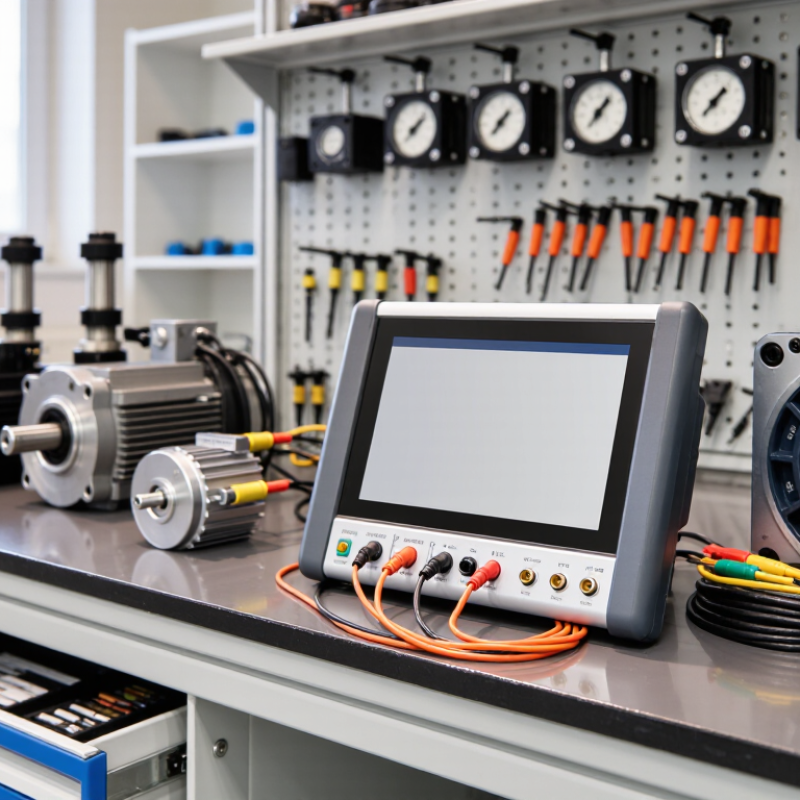
Automotive Motor Testers: Purpose, Scope, and Core Functions
An automotive motor tester verifies whether an electric drive unit performs consistently, from component inspection to end-of-line checks. Depending on the setup, it measures winding resistance, insulation resistance, surge response, phase balance, speed, torque, vibration, and temperature. These readings can reveal winding faults, excessive mechanical noise, or performance drift before a vehicle leaves production. Not every station measures everything; test scope depends on the motor design and production stage.
The need for reliable testing is growing. The International Energy Agency’s Global EV Outlook 2024 reports nearly 14 million electric cars sold worldwide in 2023, equal to about 18% of all car sales. That expansion puts pressure on manufacturers to validate motors across varied operating conditions, including changing loads and temperatures. A useful tester therefore needs repeatable measurements, clear pass/fail limits, and traceable records—not just a fast cycle time.
No single reading tells the whole story. A motor may pass a brief electrical check yet behave differently under sustained load. Test plans should combine electrical and mechanical measurements, with calibrated instruments and suitable fixtures. This detail is easy to overlook. Results also need context: a limit that works for one motor family may not suit another, so engineers should review thresholds against design requirements and real operating data.
2026 Top Automotive Motor Tester Suppliers? — Automotive Motor Testers: Purpose, Scope, and Core Functions
Supplier-neutral guide to common automotive motor testing systems. Actual configurations depend on the motor design, production stage, applicable standards, and required test limits.
| Tester or Test System | Purpose | Typical Scope | Core Functions | Common Outputs | Typical Applications |
|---|---|---|---|---|---|
| End-of-line motor tester | Verify that a completed motor or drive unit meets defined production acceptance criteria. | Automated checks at the end of assembly; test sequences are configured for the product and production process. | Electrical checks, rotational or functional checks, parameter comparison, pass/fail decisions, and test-data recording. | Test results, measured parameters, acceptance status, and traceability records. | High-volume production of traction motors, pumps, fans, compressors, and other automotive motor assemblies. |
| Motor dynamometer test system | Measure motor performance under controlled load and operating conditions. | Steady-state and, where configured, transient testing across selected speed and torque points. | Load application, speed and torque measurement, power calculation, and performance mapping. | Torque, speed, mechanical power, efficiency-related data, and performance curves. | Development, validation, and production sampling of traction motors and other driven components. |
| Electrical winding and insulation tester | Check winding condition and electrical insulation properties. | Tests selected according to winding construction, test procedure, and applicable safety requirements. | Resistance measurement, insulation-resistance testing, and dielectric withstand testing; surge comparison may be included where appropriate. | Winding resistance, insulation readings, withstand-test status, and comparison results when supported. | Motor manufacturing, repair, process checks, and investigation of winding or insulation faults. |
| NVH test system | Assess noise and vibration behavior during motor operation. | Measurements at defined operating points using specified sensors, mounting arrangements, and test conditions. | Acoustic and vibration acquisition, signal processing, spectral analysis, and comparison with product limits. | Sound-pressure or vibration data, frequency spectra, and limit-check results. | Quality control and engineering analysis of motors where noise, vibration, and harshness are important. |
| Rotor balancing system | Measure and help correct rotor unbalance to reduce vibration in rotation. | Balancing of compatible rotors using the specified fixture, correction method, and acceptance grade. | Rotor-speed control, vibration or force measurement, unbalance calculation, and correction guidance. | Unbalance magnitude and angular position, correction data, and balance acceptance status. | Motor rotor production and repair processes where balance requirements are specified. |
| Thermal and environmental test system | Evaluate motor behavior under defined temperature or environmental conditions. | Temperature-conditioned operation or exposure; test duration and conditions depend on the validation plan. | Temperature control and logging, motor operation monitoring, and measurement of selected electrical or mechanical parameters. | Temperature profiles, operating measurements, and condition-specific test results. | Design validation and reliability testing for motors exposed to varying automotive operating conditions. |
| Motor and inverter test bench | Evaluate an electric drive system or its components under controlled electrical and mechanical conditions. | May test a motor, inverter, or combined drive unit, depending on the bench configuration. | Controlled power delivery, operating-point control, synchronized electrical and mechanical measurement, and data logging. | Voltage, current, speed, torque, power, and calculated performance data. | Engineering, validation, and production testing of electrified vehicle drive systems. |
Note: The listed outputs are common measurement categories, not guaranteed features of every test system. Test limits and methods should be defined for the specific motor, process, and applicable requirements.